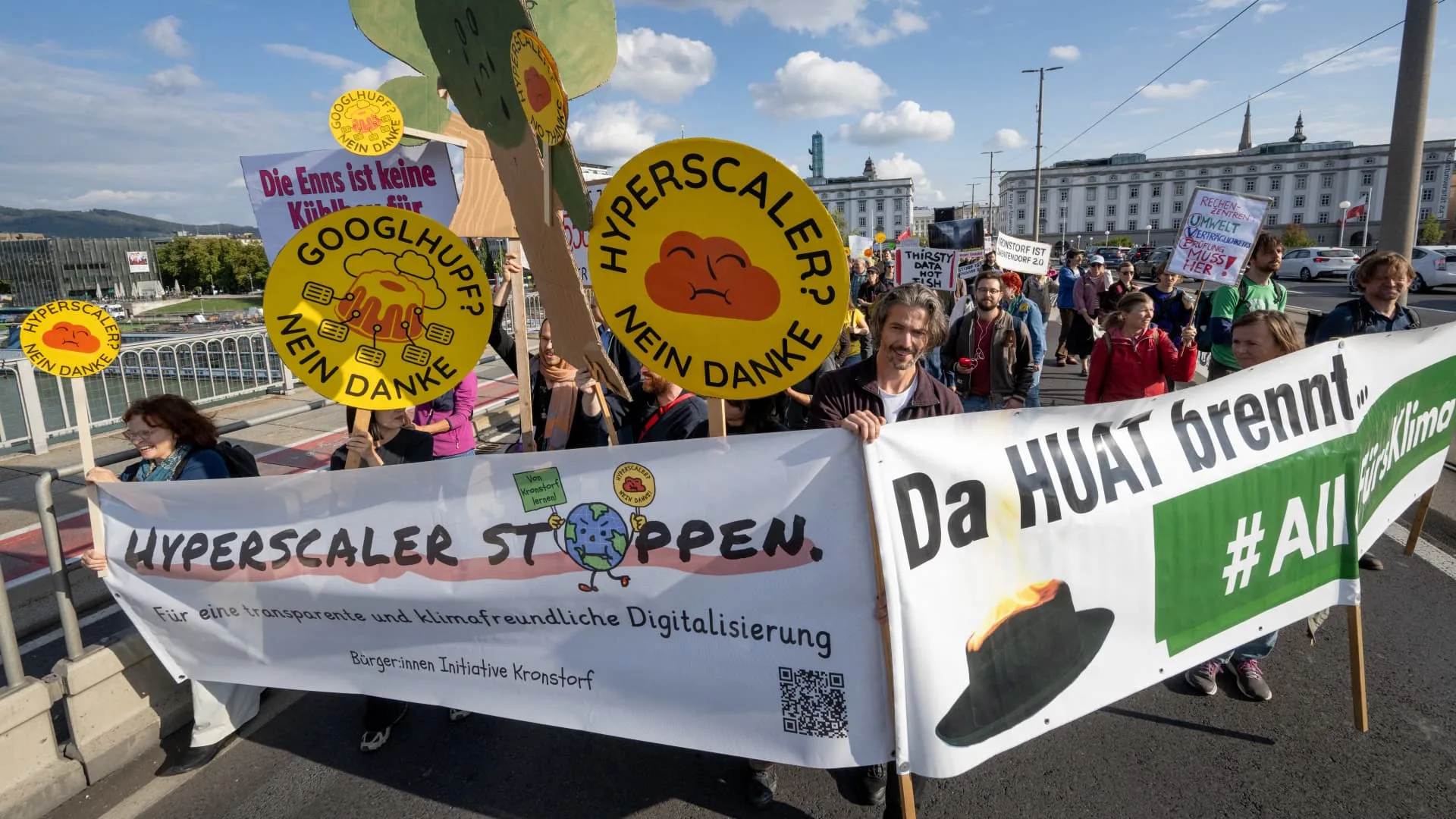
As the artificial intelligence boom gathers pace, public backlash against data centers is spreading from the U.S. to Europe and Asia. CNBC reports that local communities are increasingly raising concerns over electricity demand, water consumption and land use, adding new risks for investors.
According to STL Partners, public opposition has already affected about $42 billion of data center investment in Europe through delays and cancellations. The comparable figure in the U.S. is around $77 billion. Olivier Darmouni, an associate professor at HEC Paris, told CNBC that the backlash could become the factor that finally tips the balance for the sector.
Data from the European Data Center Monitor show that more than 70 projects in Europe were rejected or restricted between January and April, exceeding the total for all of 2025. The group said resistance has moved beyond town halls and into courts, regulators and parliaments.
Several countries have already taken visible steps. Scotland has paused planning approvals for new hyperscale data centers, Denmark has passed an emergency law that could push data centers to the back of the queue for grid power applications, and Spain has proposed rules requiring data centers to source 80% of their electricity from renewables. Projects in the U.K. have also stalled after local opposition.
Much of the criticism centers on water use, power consumption, electricity prices and the large amount of land such facilities require. Darmouni said AI’s gains are widely spread, while the burden is often borne by specific communities that end up hosting vast, resource-intensive infrastructure with uncertain local economic benefits.
CNBC said similar tensions are emerging in South Korea, where the national government wants to accelerate AI infrastructure development but local resistance is increasing. The result is a growing clash between governments’ AI ambitions and community pushback.