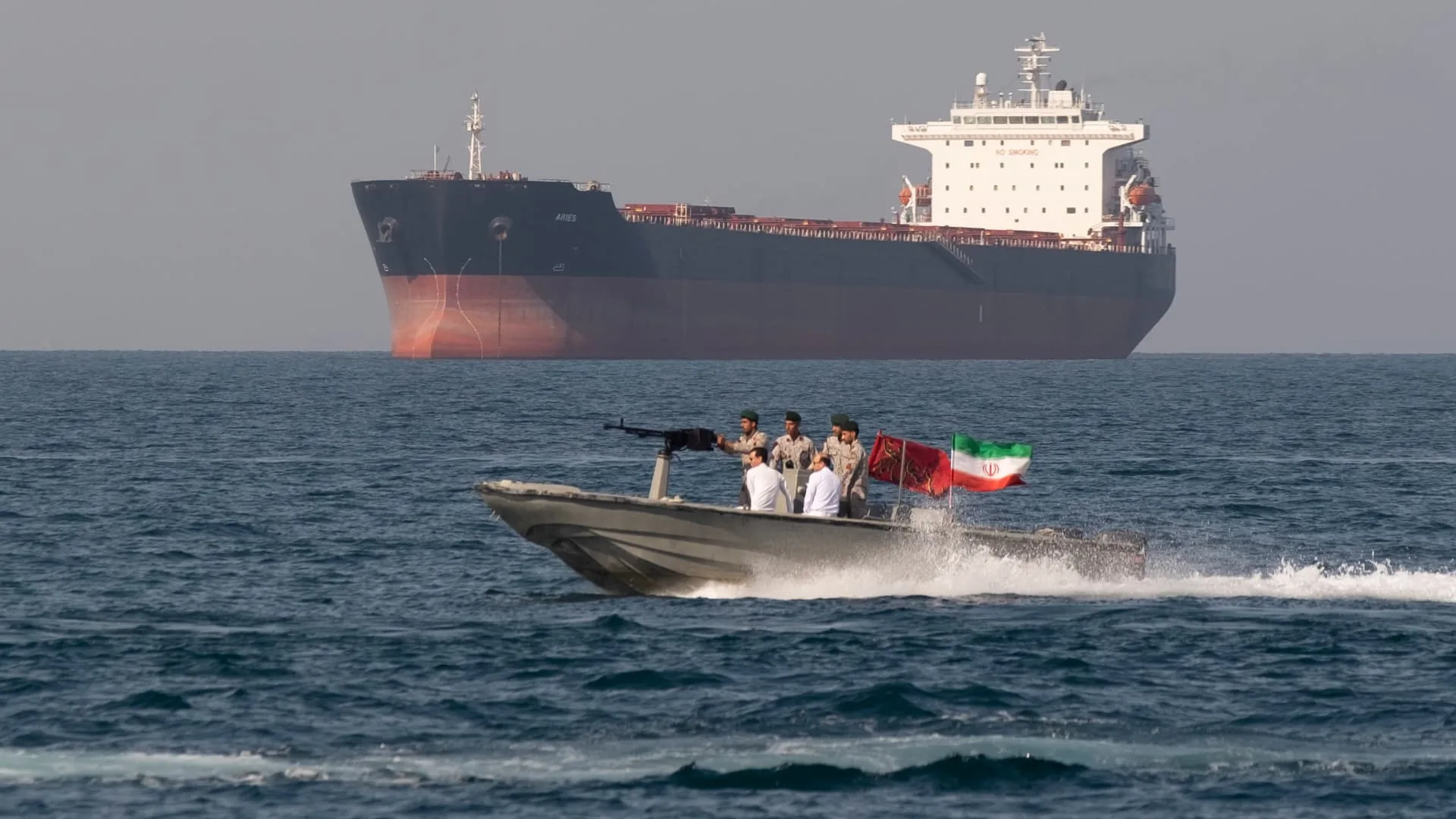
Attacks on oil tankers transiting the Strait of Hormuz have surged to their highest level since the war began. Data from the International Maritime Organization show that 11 tankers were attacked while passing through the strait in the week ending Oct. 4.
Another five tankers were attacked this week. On Monday, 12 sailors were injured after a projectile struck their vessel during its Hormuz transit. According to Marisks, the injured crew were Indian nationals and the ship, On Peace, is owned by the United Arab Emirates.
The Joint Maritime Information Center, a Bahrain-based coalition of U.S.-allied militaries, warned commercial vessels that the attacks show Iran’s intent to keep pressure on ships using the route. At the same time, Fars News Agency reported that a senior Iranian Revolutionary Guard official said Iran would block all “illicit routes” through Hormuz.
The escalation comes as Middle East crude exports rebounded in September to prewar levels, helped largely by U.S. military escorts guiding ships along a route near Oman’s coast. But maritime risk remains extreme. Windward analyst Michelle Wiese Bockmann said volumes are still moving, though under exceptionally high risk, while Lloyd's List editor in chief Richard Meade said the situation is not a sustainable “new normal.”
U.S. Central Command said 20 million barrels of crude moved through the strait on Wednesday, rejecting Iranian claims that the waterway was closed. Even so, Kpler data show exports through Hormuz stood at 8.5 million barrels per day in the week ending Wednesday, about 40% below normal prewar levels. Total Middle East shipments were 15.3 million barrels per day, 10% below prewar levels.