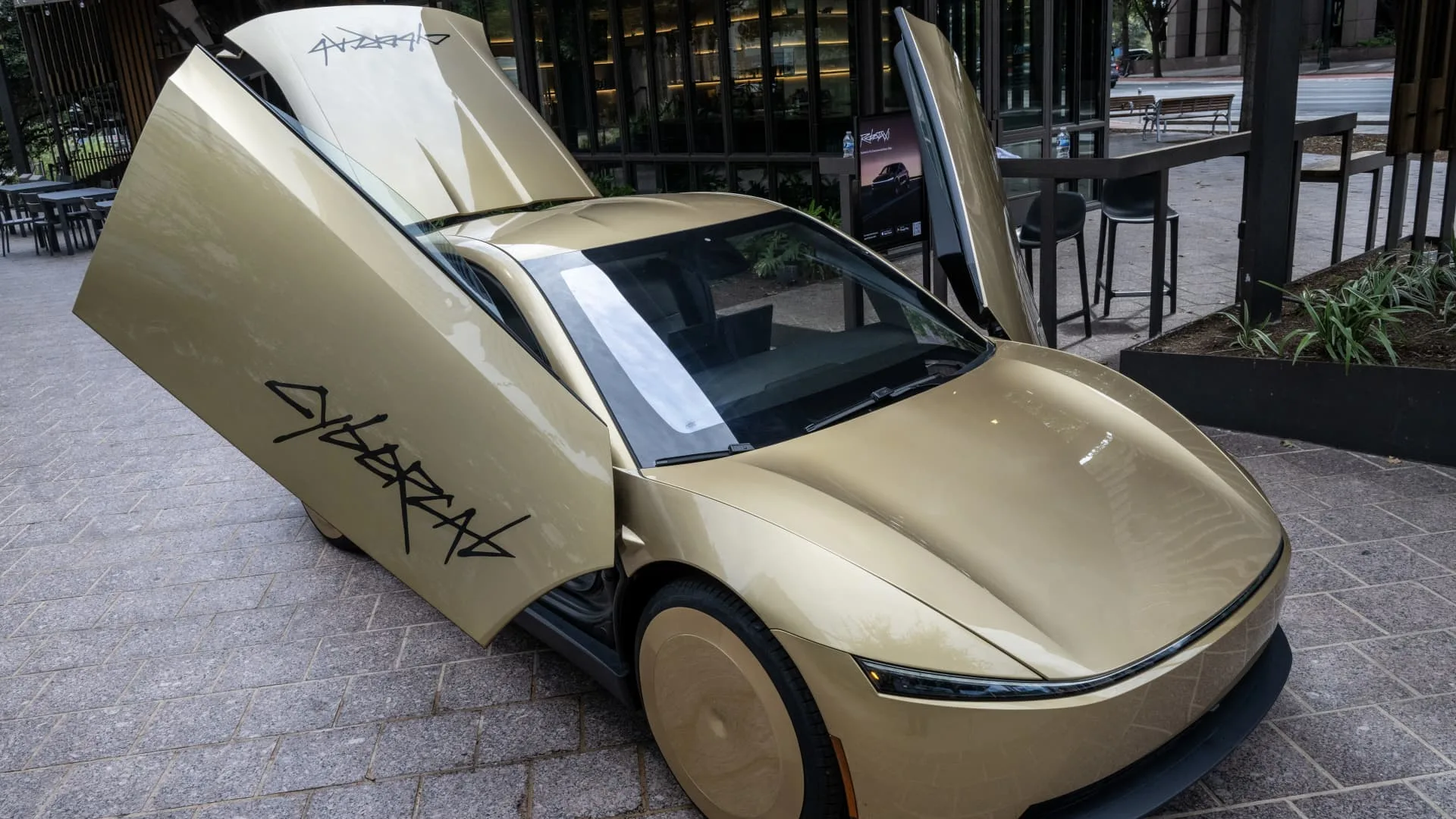
One month after launching its Cybercab service in Austin, Tesla has sharply increased the number of driverless vehicles cleared for commercial use in Texas. Public records from the Texas Department of Motor Vehicles show the company had 45 Cybercabs authorized at the Sept. 3 unveiling and 169 as of Friday.
The rollout has been uneven. Paying riders have posted mixed reviews online, citing long wait times, drop-offs in the wrong location and technical issues involving the vehicles’ butterfly doors and trunk closures.
For Tesla, scaling Robotaxi and Cybercab is strategically important as its core automotive business faces mounting pressure. Chinese EV makers BYD and Xiaomi are intensifying competition with cheaper and more innovative models in key Tesla markets, especially in Europe and Asia. Tesla shares are down 18% this year, though the stock rose almost 5% on Friday after better-than-expected third-quarter delivery figures.
While Tesla is running Cybercab only in Austin for now, Alphabet’s Waymo is expanding much faster. According to its website, Waymo is already active in 15 U.S. markets and plans to enter 15 more, while also preparing launches in London, Tokyo and Munich. In Texas alone, Waymo had 1,154 autonomous vehicles authorized for commercial use as of Friday, including 359 of its new Ojai models.
Tesla’s Robotaxi fleet in Texas also includes 420 Model Y vehicles equipped with Tesla automated driving systems, which are not yet available to individual buyers. Austin has become an early robotaxi battleground thanks to relatively light state regulation and a strong local tech ecosystem. The next big test for Tesla is whether it can overcome technical and regulatory hurdles and expand beyond Austin.