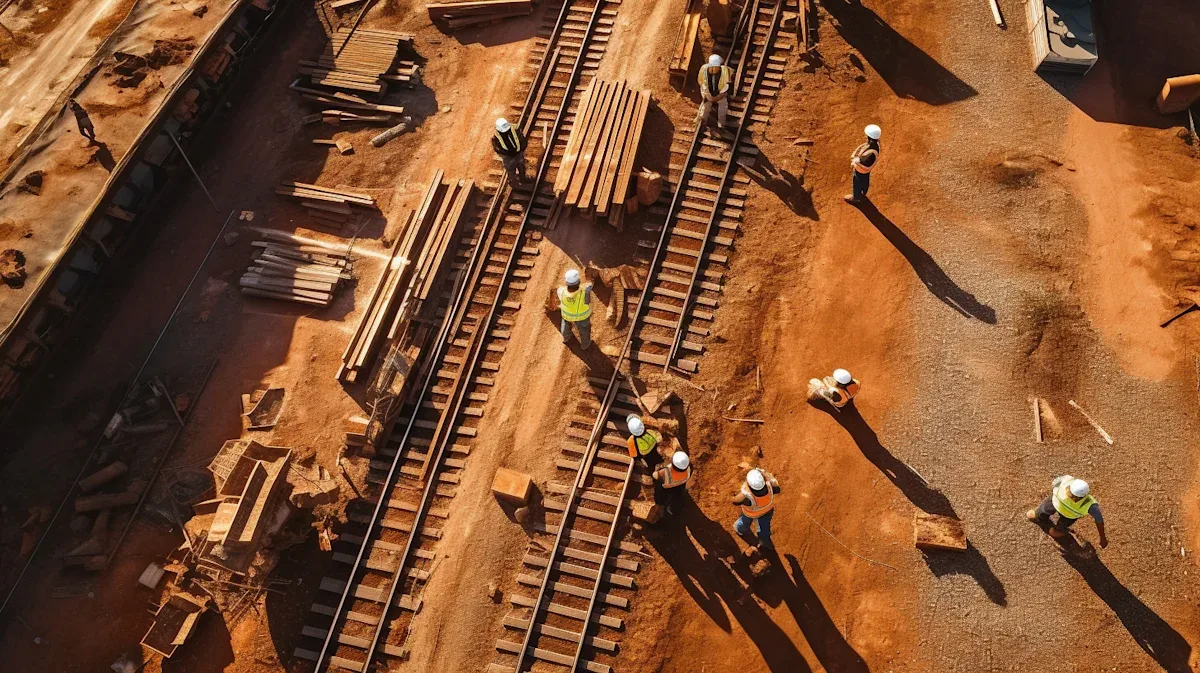
Westinghouse Air Brake Technologies Corporation (NYSE:WAB) said on September 21 that it had signed a services agreement worth more than $700 million with La Compagnie du TransGuinéen. Together with locomotive orders placed in 2024, announced agreements tied to the Simandou project now top $1.2 billion.
The project involves a railway of more than 600 kilometers linking the Simandou mine to Guinea’s Port of Morebaya. The new deal broadens WAB’s role from equipment supply to longer-term operational support across the fleet’s service life.

Under the agreement, Westinghouse Air Brake Technologies Corporation will provide scheduled and unscheduled maintenance, parts supply, component overhauls, logistics support, remote diagnostics and training. That gives the company a chance to generate revenue not only from the initial locomotive sale, but also from ongoing support for the same fleet.
The article argues that this model can be attractive because it creates repeat business and extends the customer relationship well beyond delivery. Familiarity with the locomotives may help technicians diagnose issues and plan repairs more efficiently, while remote monitoring could reduce the risk of long outages.
At the same time, investors are cautioned that the $700 million figure represents the value of a multiyear contract, not annual revenue or immediate cash receipts. The combined $1.2 billion total also includes earlier equipment orders, meaning the full amount should not be treated as fresh business generated solely by this announcement.
The report also notes that the company did not disclose the contract’s exact term, when revenue will begin to be recognized, the annual revenue cadence or the expected service margin. Those details will be critical in determining the actual financial impact of a headline-grabbing deal.
Execution risk in Guinea remains another key issue. Delivering on the contract will require dependable parts availability, efficient logistics and trained personnel. If labor, inventory or transport costs run ahead of expectations, revenue growth could come with weaker margins. Building local capabilities may also require upfront spending before the benefits are fully realized.
Cash collection is another test. If parts inventories and customer receivables rise faster than payments are received, accounting profit could exceed the actual cash generated by the agreement.
WAB’s broader freight business, meanwhile, continues to provide a profitable base. In the second quarter, freight revenue rose 16.9% to $2.24 billion, while GAAP operating margin improved to 22.5% from 21.6%. Still, the ultimate contribution of the new deal will depend on pricing, execution costs and cash-flow discipline.
According to Insider Monkey, 67 hedge funds held Westinghouse Air Brake Technologies Corporation (NYSE:WAB) at the end of 2Q2026, up from 63 three months earlier. Those filings, however, reflect positions taken before the company disclosed its Simandou services agreement.
The article’s conclusion is that WAB has credibly extended locomotive sales into recurring fleet support, creating a longer customer relationship and potential earnings beyond equipment delivery. Whether that translates into lasting shareholder value will depend on revenue timing, service margins, cost control and cash collection.



