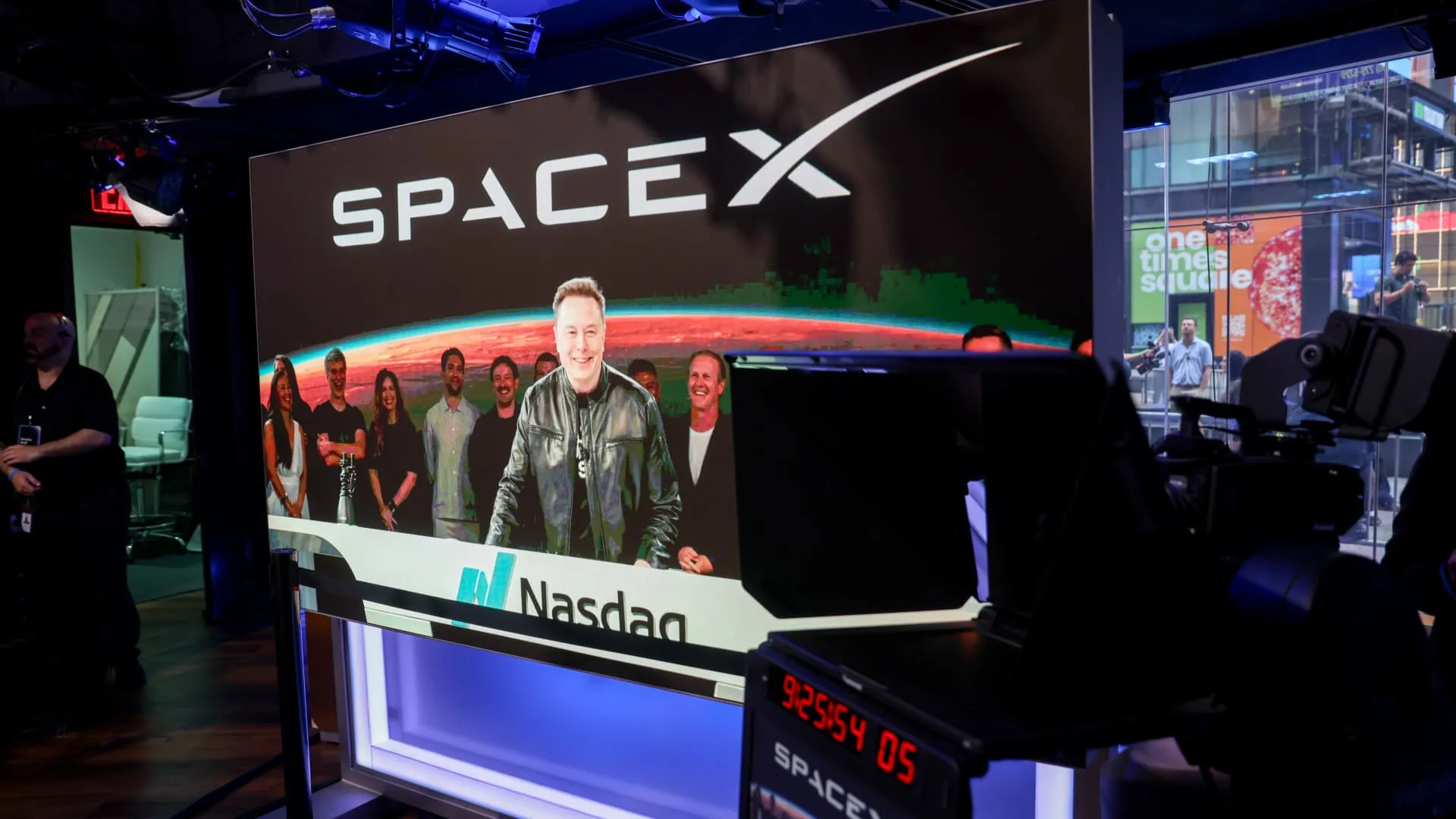


In a CNBC Pro column, KKM Financial founder and CEO Jeff Kilburg laid out why he has bought SpaceX shares despite the stock’s volatile trading since its June IPO. He said the shares surged from the $135 offering price to more than $225 before sliding to roughly $105, and that pullback was the point at which he added the company to the Mango Growth ETF.
In Kilburg’s view, SpaceX should not be seen only as a rocket company. His central argument is that the larger opportunity lies in the businesses its launch capabilities make possible in orbit, especially the Starlink satellite internet network.
Starlink as a recurring-revenue engine
According to the column, Starlink had 12 million subscribers at the end of the second quarter, twice the level of a year earlier. That expansion helped lift SpaceX’s Connectivity revenue by 66% to $4.3 billion.
The article also says Starlink has opened up a substantial lead in satellite scale, with roughly 11,000 active satellites in orbit versus about 650 for Eutelsat OneWeb. Kilburg argues there is still considerable room for growth. Starlink is adding direct-to-cell service through partnerships with mobile carriers to connect phones in areas with unreliable coverage. Airlines are another growth market, with Starlink already providing high-speed internet on commercial flights.
SpaceX’s edge in launch
Kilburg argues that Falcon 9 and Falcon Heavy allow SpaceX to carry out dozens of launches each quarter, a pace that rivals including Blue Origin, United Launch Alliance and Arianespace have not yet matched. A major reason, he says, is reusability: the company can land and reuse boosters, lowering the cost of each mission.
He also points to another strategic advantage: SpaceX is its own customer. Unlike satellite operators that must buy launch services from third parties, the company can use its own rockets to continue expanding the Starlink network.
Why the next Starship flight matters
Kilburg describes the planned first orbital flight of Starship on Sept. 28 as an important milestone. The vehicle is expected to carry 26 next-generation Starlink V3 satellites, which he sees as a key step toward deploying larger satellites with much greater capacity.
If SpaceX can make Starship a reliable platform, its larger payload capability could broaden the range of missions the company can pursue and create fresh opportunities in communications and defense.
Why now
He notes that the stock has rebounded about 41% from its August low, and argues that the retreat from the post-IPO high has helped establish a more durable base. He is also watching the 50-day moving average, which sits around the $135 IPO price and serves, in his view, as near-term support.
Kilburg says there could still be volatility as the market absorbs shares that became eligible for trading after the latest post-IPO lockup expiration. Still, he sees that as a short-term technical issue rather than a change in the long-term investment case.
His bottom line is that rockets made SpaceX famous, but the bigger opportunity is using that launch advantage to build its own businesses, from Starlink to national-security systems in space. He also acknowledges the risk that computing in space may not develop as quickly or prove as practical as expected, but says he is willing to accept that risk given the long-term opportunity he sees.





