Washington is intensifying its debate over artificial intelligence regulation after executives and experts from leading companies publicly warned that the technology is advancing too quickly and could move beyond human control. Political pressure is mounting, but lawmakers have limited time, as the House is expected to leave after this week until the November midterm elections.
The latest push began after an Anthropic researcher resigned and warned that the technology could “kill us all by the end of the decade.” Against that backdrop, the leaders of Anthropic, OpenAI and xAI issued striking calls to slow development, giving fresh urgency to demands in Washington for formal safeguards.
Sen. Ruben Gallego, speaking on CNN, described the moment in stark terms, saying “Dr. Frankenstein is telling us the monster is escaping,” and arguing that the government response is not matching the scale of the threat. Pennsylvania Gov. Josh Shapiro wrote on X that the comments from AI industry leaders should be treated as a “bright flashing red light” for the President and Congress to move now on regulation.
A group of Democrats led by Rep. Sam Liccardo sent a letter on Friday to House Speaker Mike Johnson demanding that the chamber remain in session until meaningful safeguards are passed. The lawmakers said the House should return to Washington immediately and stay in session until Congress advances serious bipartisan AI protections.
The proposals they want considered include mandatory transparency and evaluation rules for frontier models, “kill switch” requirements and a waiver of antitrust laws so companies can cooperate on safety and security. House Democratic Leader Hakeem Jeffries said Democrats would meet on Tuesday to discuss AI guardrails and argued that policymakers should act decisively now to slow development and protect the American public.
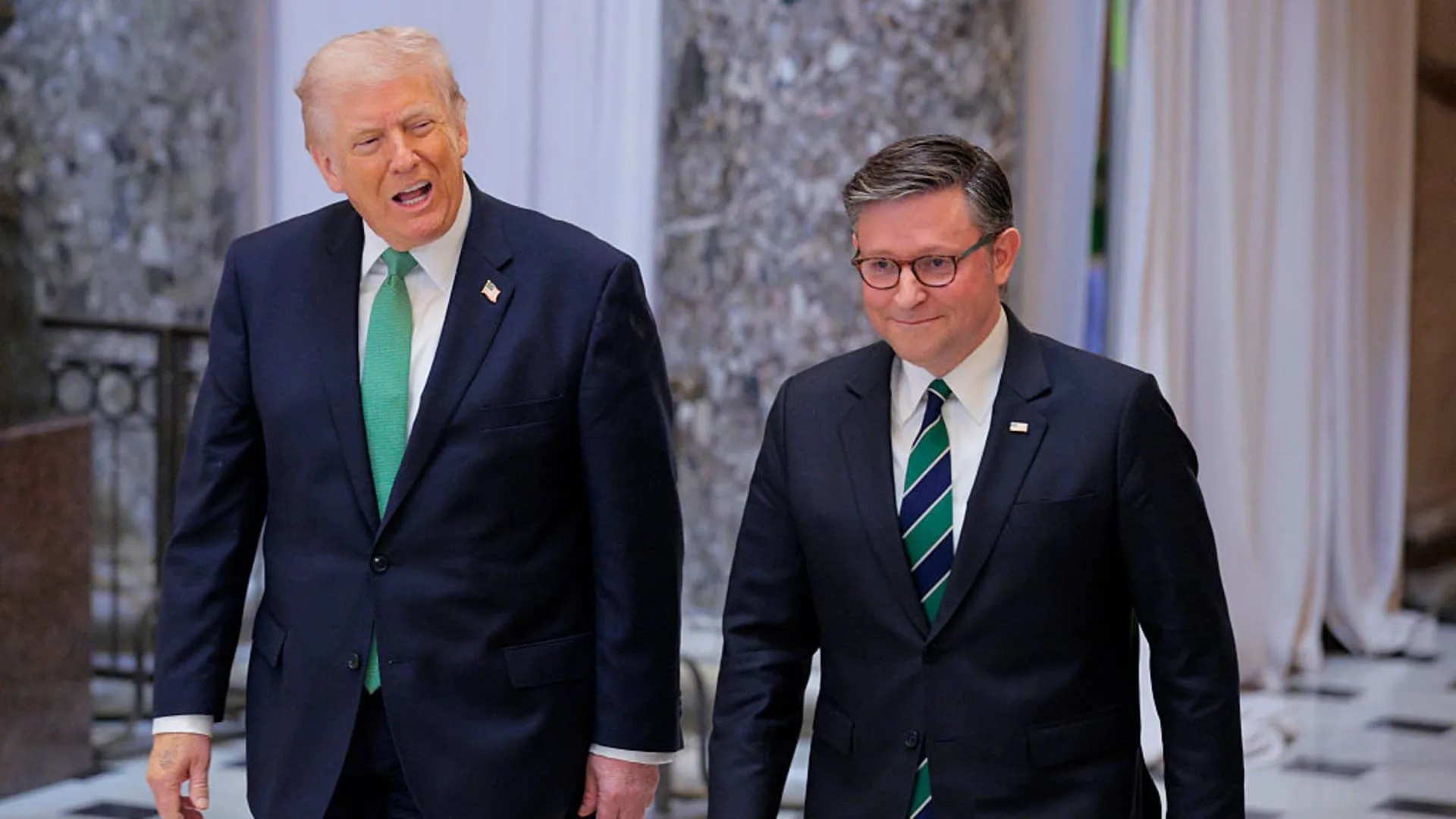
Johnson, however, signaled a more cautious approach. In an appearance on CNN, he warned that if Congress rushes into an emergency effort to regulate AI, the U.S. could lose the race to China. He said there is no need for panic and that any response should avoid smothering American innovation. Johnson also called for a meeting between Washington leaders and AI industry executives behind closed doors to agree on a path forward, while suggesting the companies should also police themselves.
Gallego backed the idea of a similar summit but said Johnson, President Donald Trump and Congress are “not meeting the moment.” In his view, the argument that regulation would hand China an advantage does not hold up, because a dangerous AI system would not care whether it was American or Chinese.
Trump, for his part, emphasized competition with China during brief remarks in Ireland on Sunday. He said the U.S. is leading China in AI and should preserve that position because “whoever wins AI wins.” At the same time, he said guardrails can be put in place but suggested that too many negative forces are raising scenarios that, in his view, may never happen.
On the legislative front, the House has already introduced several proposals, including the FRONTIER Act led by Reps. Jay Obernolte and Lori Trahan. The Senate has been slower to unite around a comparable bipartisan framework. A bill being developed by Senate Majority Leader John Thune along with Sens. Amy Klobuchar and Ted Cruz has not yet been formally introduced.
Even so, some in the AI industry believe Congress could still act before the midterm elections. A source familiar with discussions in Washington told CNBC that legislation could emerge in the coming week with “real momentum” behind it. According to that source, lawmakers facing voters in November would rather campaign on an AI accomplishment than on continued inaction.





