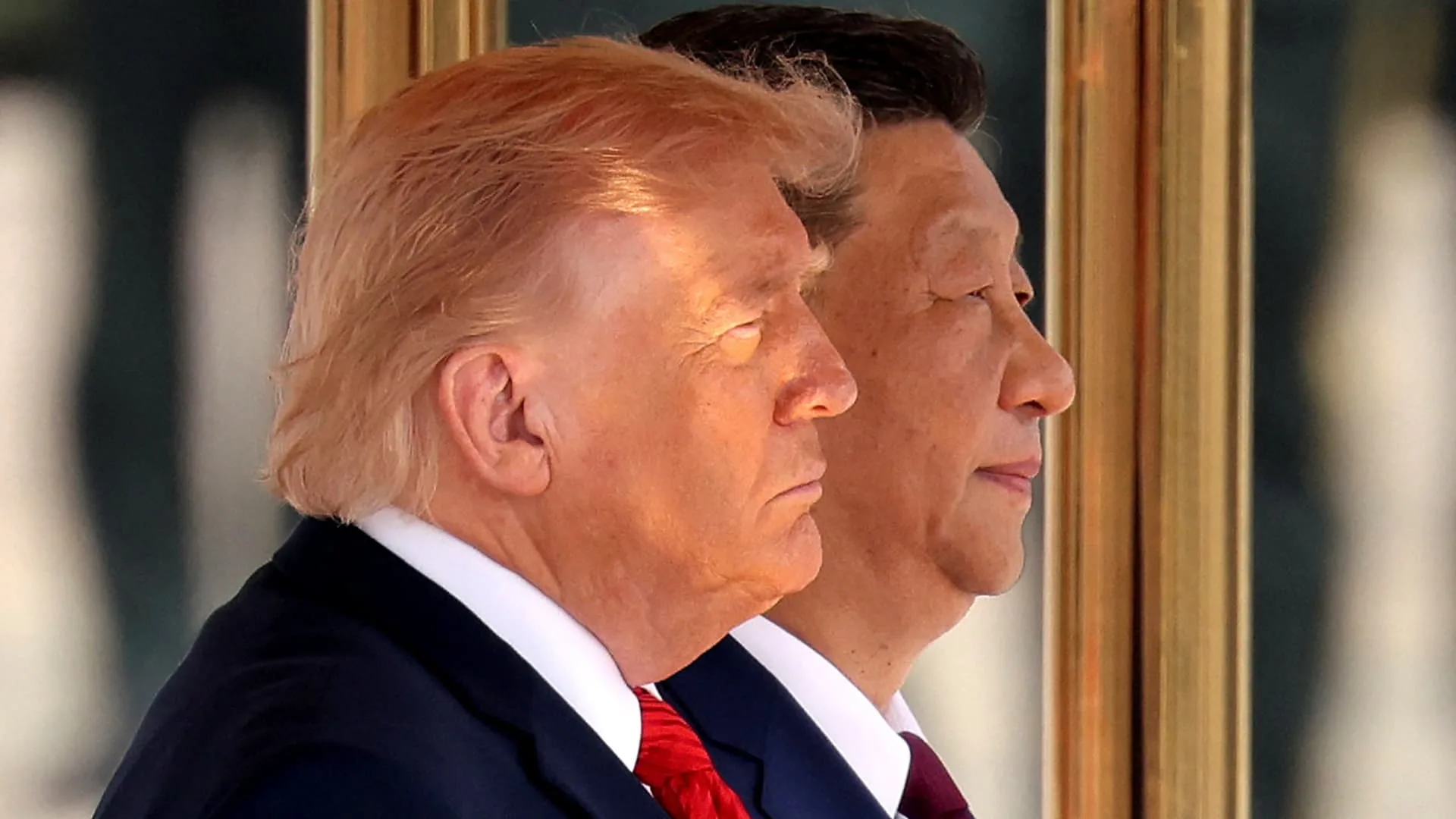
As U.S. President Donald Trump prepares to meet Chinese President Xi Jinping this week, debate is intensifying in the United States over whether Chinese automakers should be allowed into the American market. Politicians and industry leaders warn that opening the door could deliver a major shock to domestic manufacturers.
Earlier this month, Trump said he might be “OK” with Chinese automakers entering the U.S. if they built vehicles domestically. That prompted a coalition of trade groups representing major parts of the American auto industry to urge him to rethink the position.
More than two dozen Democratic lawmakers have echoed that message in a separate letter, calling on Trump to keep current restrictions on Chinese automakers in place. Michigan Senator Elissa Slotkin told reporters the issue is no longer partisan, but instead goes to the heart of whether the U.S. wants to preserve its carmaking base and broader manufacturing capacity.
Trump is due to host Xi Jinping and a Chinese delegation on Thursday and Friday. Reports say the group could include Wang Chuanfu, founder of BYD, and Robin Zeng, founder of CATL. Michael Dunne, a China auto expert and former General Motors executive, said even the prospect of those executives attending highlights how important Xi’s visit is for the U.S. auto sector.
Reuters reported that GM CEO Mary Barra is expected at Trump’s state dinner for Xi, alongside several other U.S. executives, including Tesla CEO Elon Musk. Ford Motor declined to say whether CEO Jim Farley would attend after the Department of Transportation criticized the company’s China ties, including its licensing deal with CATL. Reuters also said Stellantis indicated CEO Antonio Filosa is out of the country and does not plan to attend.
The debate is unfolding as bipartisan bills moving through Congress seek to bar Chinese automakers from the U.S. market. Pressure is also building because Chinese carmakers have been rapidly expanding beyond their home market, especially into Europe and Central and South America.
Industry participants fear rivals such as BYD and Geely, which are widely seen as heavily backed by their governments, could flood global markets and undercut domestic production and vehicle prices. Dunne argues those concerns are not overstated, saying Chinese automakers could “quickly overwhelm America’s auto industry, just as it is now ravaging Europe.”
According to GlobalData, the global market share of Chinese brands rose nearly 70% from 2020 to 2025. Dataforce says their share in Europe was close to zero in 2020 but reached 12% in August. Dunne wrote that China’s many automakers are locked in a “fight-to-the-death price war” at home, making access to the U.S. — the world’s most lucrative car market — especially important.


Christian Meunier, Nissan Motor chairman of the Americas, told CNBC that competing with Chinese automakers in markets outside the U.S. is extremely difficult. In his view, companies are not just competing with manufacturers, but with the governments backing them. He said Nissan is trying to respond by building greater global scale, lowering costs and improving efficiency.
Meunier also warned that the U.S. needs to prepare for the day Chinese automakers attempt to enter the American market. Dunne added that China’s ambitions and business methods differ sharply from those of U.S. allies, meaning the situation is not comparable to allowing imports from Japan, South Korea or other countries.



