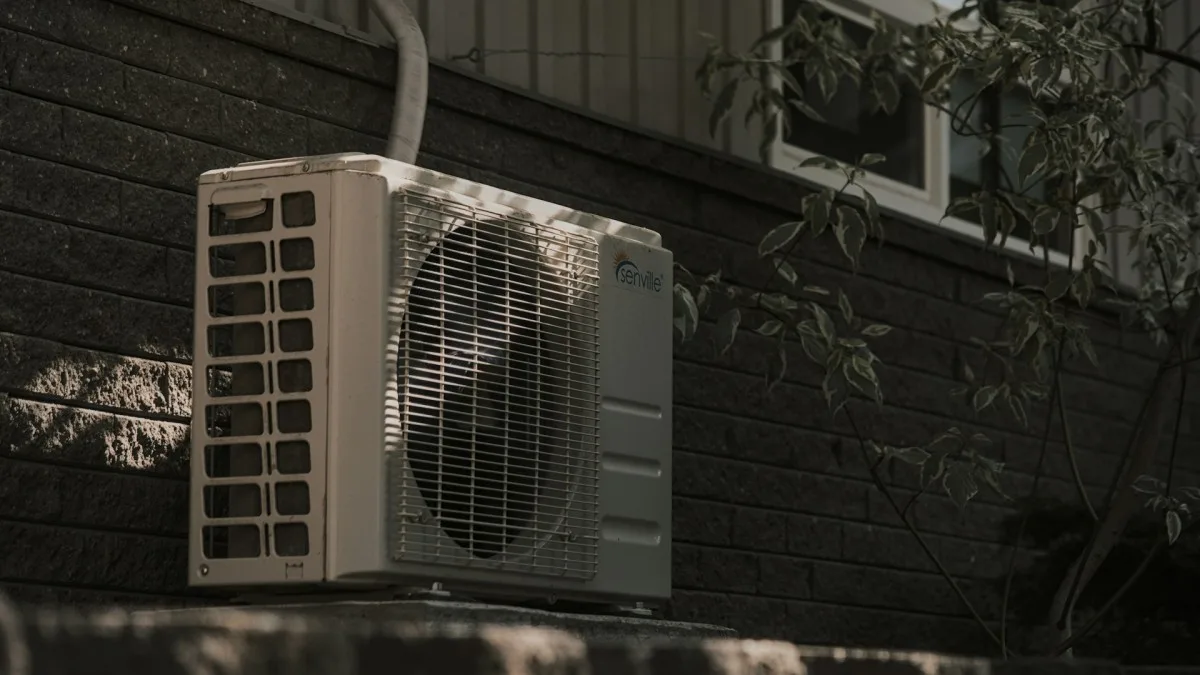
Heat pumps are gaining ground worldwide as an alternative to gas-fired heating systems. Demand is rising both in new-build housing and in existing homes, with government support schemes helping to speed up adoption in several markets.
The technology works in a similar way to a refrigerator or an air conditioner, drawing heat from the surrounding environment, boosting it and transferring it into a building. Because most of the heat is moved rather than generated, heat pumps are far more efficient than conventional boilers or electric heaters and are often cheaper to run. In buildings, heat is typically delivered through radiators or under-floor heating, and the system can also be linked to a tank for sanitary hot water.
Heat pumps can also be used for cooling in summer, reducing reliance on air conditioners. In industry, they are used to supply hot air, water or steam, or to heat materials directly. Their heat output is typically several times higher than the electricity needed to power them, making current models three to four times more efficient than gas boilers.
That said, heat pumps do not eliminate carbon emissions if the electricity that powers them is still generated from fossil fuels. More than one-sixth of global natural gas demand and one-third of demand in the European Union is tied to heating in buildings. Building heating accounts for 4 gigatonnes of carbon emissions a year, or about 10 percent of global emissions. But when powered by renewable electricity, heat pumps become a cleaner heating and cooling option and can help shield users from fossil-fuel price volatility.
In 2021, roughly 10 percent of global space-heating demand was met by heat pumps, while global sales rose by almost 15 percent that year, double the average pace of the previous decade. Some countries have already adopted the technology widely. In Norway, 60 percent of buildings are equipped with heat pumps, while Sweden and Finland are above 40 percent. That has weakened the argument that heat pumps are unsuitable for cold climates.
Researchers are continuing to improve the technology to make it cheaper and more efficient. In the United States, a recent report says heat pump sales have doubled over the past 15 years. In the first quarter of 2026, shipments outpaced natural-gas furnaces by 32 percent, even after a tax credit worth up to $2,000 expired at the end of 2025. Lucas Davis, an energy economist and UC Berkeley professor, said in a new analysis that the U.S. market appears strong enough not to depend on tax credits.
In Massachusetts, Boston-based startup Reservoir said earlier this year that it had raised $8 million in seed funding, which should help it expand from 100 local installations to as many as 1,000 by the end of 2027. The company says it has built an ultra-efficient water heater that can predict hot water demand, store energy and detect plumbing leaks. The unit spends its first month in a home gathering information about water-use patterns, after which the model identifies the most efficient and cost-effective times to operate without limiting supply.
Reservoir has also equipped the product with an ultrasonic flow sensor to help identify leaks. Its higher-end models include added features such as a recirculation valve for instant hot water and a mixing valve that can help prevent pipes from freezing in cold weather. The system can be managed through a mobile application.
In the United Kingdom, heat pumps are also giving some households relief during increasingly hot summers. Only around 3 percent to 5 percent of homes have air conditioning, but demand is rising quickly as temperatures above 30°C become more common. Households that originally installed heat pumps for heating are now also seeing their cooling potential. The government’s boiler upgrade scheme offers grants of $10,100 to help homeowners in England and Wales cover the cost of installing an air-to-water or ground-source heat pump. Households that are not connected to the gas grid can qualify for an additional $2,000 in support.
Overall, heat pumps are becoming a more popular replacement for gas heating in multiple markets. Their ability to provide cooling as well as heating, together with further innovation and potentially lower prices, could significantly broaden adoption in the coming decades.




