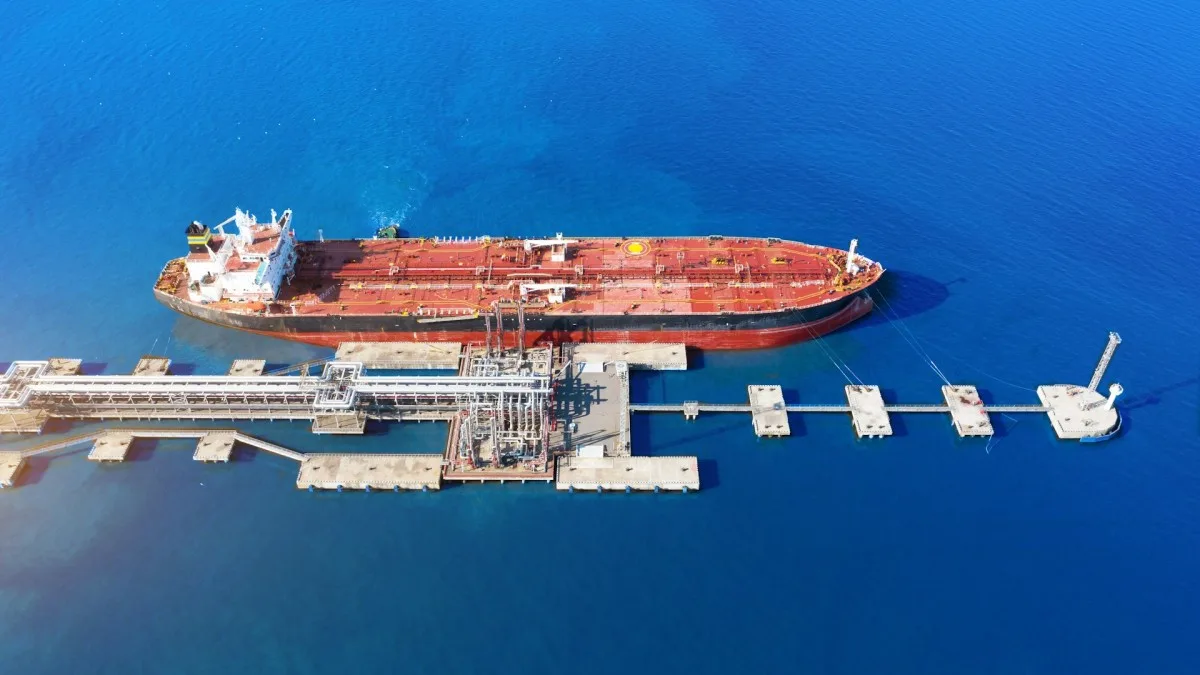
Rising tensions around the Gulf have sharply increased the cost of chartering large crude tankers. On the Baltic Exchange benchmark route from the Middle East to China, supertanker rates have climbed to $800,000 a day.
According to ZeroHedge, the market reaction followed the destruction by US forces of five Iranian-linked tankers and Tehran’s threats of further escalation in recent days. That has left little room for expectations of near-term stabilization.
The jump in freight rates suggests that crude oil and refined products are still moving out of the region, but at a much higher cost to global buyers. Bloomberg data cited in the report show that shipments from the US Gulf to Asia on very large crude carriers average about $29.5 million per voyage, or $15 a barrel, before any added war-risk charges or unexpected delays.
Kpler expects VLCC earnings to remain above $100,000 a day into early next year, versus a historical norm near $45,000. Morgan Stanley analysts also say two-year leasing rates could rise by another 20% to 30%.
Manu Sehgal, vice president of strategy and feedstock supply at Indian refiner HPCL-Mittal Energy, told Bloomberg the issue is not a shortage of crude itself. “Crude volume is there. What's hampering it is the transit; what's hampering it is the shipping,” he said.
At the same time, a fleet carrying out ship-to-ship transfers in the Gulf of Oman is helping keep oil flowing through the Hormuz chokepoint. Vitol’s CEO estimated earlier this week that around 10 million barrels a day were moving through the waterway, while Goldman analysts put the figure closer to 15 million barrels a day.
The Baltic Exchange’s new Gulf of Oman-to-East Asia benchmark has risen 85% since launch and reached nearly $386,000 a day this week.
The report argues that surging tanker rates could add another layer of inflation pressure for central banks worldwide, as higher transport costs can feed into gasoline, diesel, freight and, ultimately, consumer goods prices.




