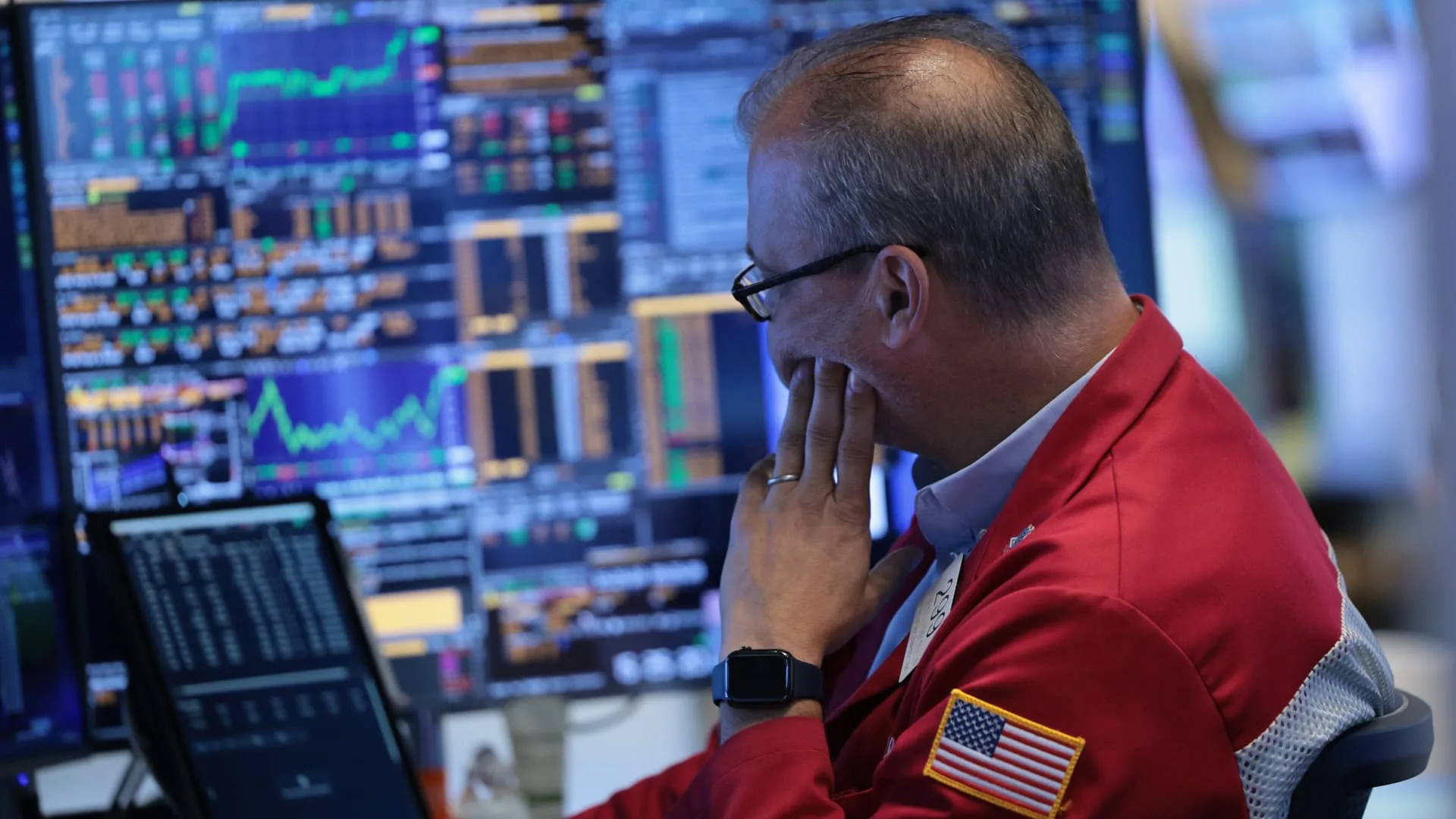
U.S. stocks finished the week lower, even though Friday’s rally softened some of the damage. The Dow Jones Industrial Average, the S&P 500 and the Nasdaq each closed up nearly 1% on Friday as oil prices and bond yields eased. For the holiday-shortened week, however, the Dow fell 1.6%, while the S&P 500 and Nasdaq lost 0.8% and 0.7%, respectively.
The main source of pressure was a renewed inflation scare. As tensions between the U.S. and Iran escalated, West Texas Intermediate climbed above $100 a barrel on Thursday for the first time in nearly four months. Even after pulling back on Friday, WTI still advanced more than 9% over the week. At the same time, the yield on the 10-year Treasury moved above 4.95% on Thursday, its highest level since October 2023.
Investors are increasingly worried that higher energy costs could keep inflation elevated and push the Federal Reserve toward a rate increase at its upcoming meeting. Last week’s economic releases did little to calm those concerns. The producer price index rose 0.4% for the month, matching expectations, while the consumer price index also increased 0.4% month over month and 3.4% from a year earlier. Core CPI, which excludes food and energy, rose 0.3% on the month, slightly above expectations.
Those figures are the last major inflation readings before the Fed’s Sept. 15-16 meeting. According to CME FedWatch, the market-implied probability of a September rate hike jumped to 87% from 58% a week earlier. Investors are also beginning to price in the possibility of a second increase before year-end.
Still, CNBC’s Investing Club argued that the week was not entirely negative, pointing to Meta Platforms and Apple as two holdings that offered fresh reasons for long-term optimism, especially around artificial intelligence.
Meta’s AI push is becoming harder to dismiss
The article says Meta’s latest AI releases are forcing investors to reassess the company’s valuation. Muse Spark 1.3, released on Sept. 2, quickly emerged as a credible challenger to frontier models from OpenAI and Anthropic. Meta then followed up with the launch of its Muse personal AI agent, integrated with Facebook, Instagram and Whatsapp and built on a user base of 3.6 billion daily active users.
In the authors’ view, those moves strengthen the case that Meta’s heavy AI spending is producing valuable assets with monetization potential. They also argue that this upside is still not fully reflected in the stock price. Meta trades at roughly 19 times 2027 earnings estimates, even as its core Family of Apps business is expected to deliver 20% revenue growth. The company’s large-scale computing infrastructure adds another layer of optionality, whether it is used internally or eventually monetized through a public cloud offering. Meta shares rose 5% over the week.
Apple leans on a new form factor and AI
Apple was another bright spot. Its foldable iPhone launch last Wednesday, which Jim Cramer said had real “wow factor,” gave the company a new form factor rather than another incremental refresh of its flagship device. The headline product was the iPhone Duo, starting at $1,999.
Meanwhile, the iPhone 18 Pro and Pro Max received the expected hardware upgrades along with $100 price increases, which the article argues should help offset higher memory costs without causing significant damage to demand. Apple shares gained nearly 4% during the week.
Over the longer term, AI may be the bigger story. New Apple CEO John Ternus described the iPhone as an “intelligent personal hub,” with an AI-upgraded Siri able to tap into more than 300,000 apps. That places Apple directly in the emerging competition around personal AI agents alongside Meta’s Muse and SpaceX’s Grok Bot. The article does not view that market as winner-take-all. Instead, consumers may end up using multiple agents for different tasks, while Apple’s key edge is the deep integration of AI into a device already embedded in the daily lives of hundreds of millions of users.





