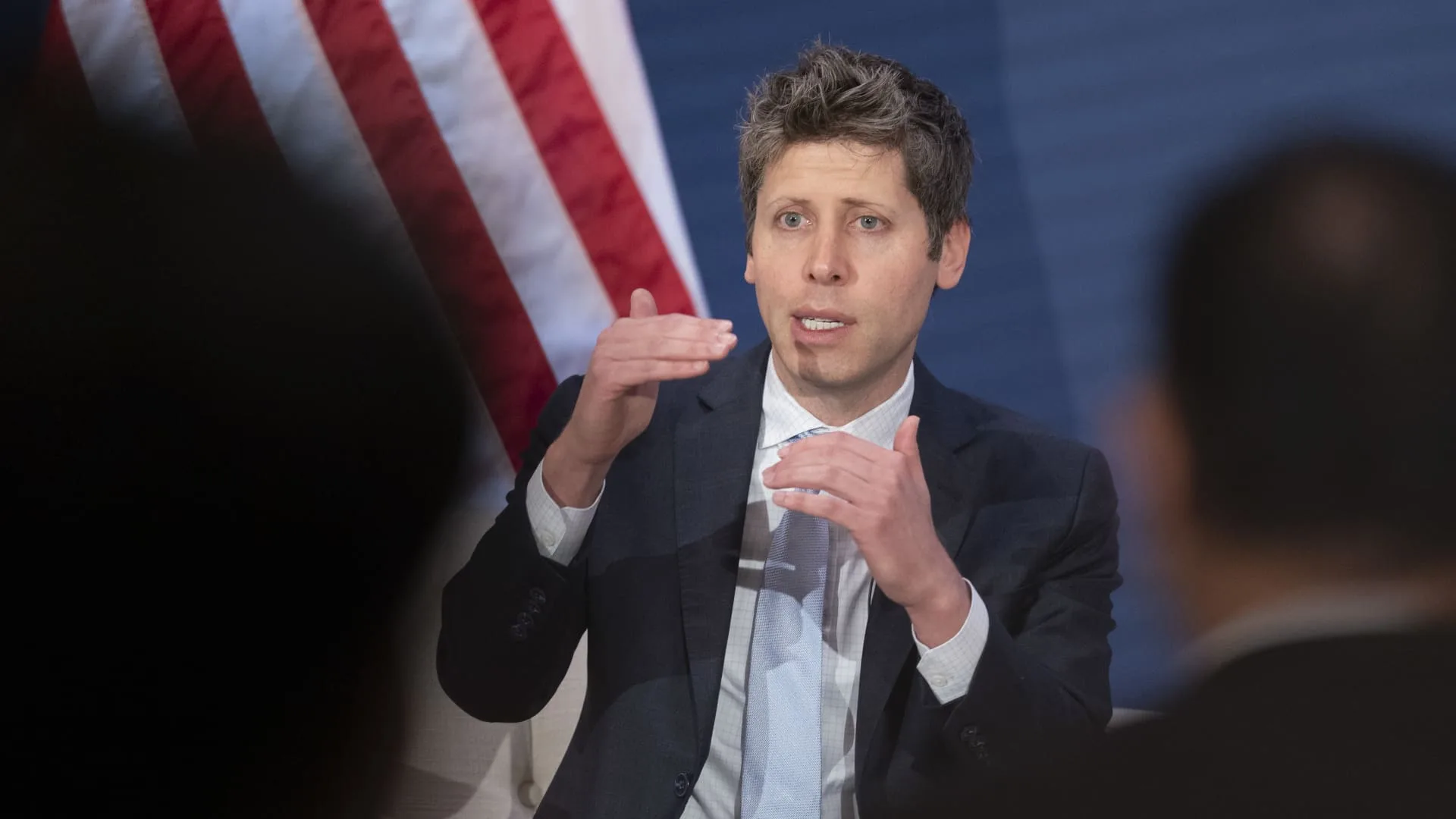
OpenAI CEO Sam Altman has laid out his clearest view yet on how artificial intelligence safety rules should work, after joining Anthropic chief Dario Amodei and Elon Musk in calling for a slower pace of development for the industry’s most advanced models.
In a post on X, Altman said OpenAI “welcomes” a federal framework that would set consistent safety requirements for frontier AI labs. He added that “no amount of American competitive pressure should justify recklessness.”
Altman pointed to two ways AI progress could go “very badly”: handing control of the future to AI itself, and allowing too much power to concentrate around a single person or company. At the same time, lawmakers in Washington are trying to respond to calls for stronger safeguards.
The debate intensified after an Anthropic researcher left the company last week, warning that the people building the technology believed it could “kill us all by the end of the decade.” That was followed by further warnings from employees at Anthropic and rival OpenAI about catastrophic risks.
On Saturday, Altman and Elon Musk backed an essay by Dario Amodei arguing that AI companies should slow the rate at which they improve their most advanced models. Markets reacted negatively on Monday, with AI-related stocks falling as investors absorbed the comments. U.S. President Donald Trump rejected the warning on Sunday, saying a slowdown was unnecessary and could endanger America’s AI lead over China.


Altman’s comments come as Anthropic and OpenAI prepare for what are expected to be historic IPOs. Still, in an interview with Fortune published on Saturday, Altman ruled out a public listing for OpenAI in 2026.
Amodei’s three-step proposal
One of the main AI safety concerns centers on models gaining the ability to improve their own performance, a process known as recursive self-improvement, or RSI.
In his essay, Amodei said that since roughly this summer, AI has been advancing far faster, largely because AI is becoming better at building the next generation of AI. Left unchecked, he argued, that pace could outrun humanity’s ability to understand and control such systems.
Amodei proposed a three-step plan designed to slow development without “sacrificing commercial advantage or the United States’ lead in AI.” Under the plan, each frontier AI company would give outside evaluators “employee-like access.” Amodei said Anthropic is committing to that now. He also called on leading AI labs to adopt common safety standards, limit the rate of unchecked progress and try to coordinate efforts globally.
Altman said in a short post on Saturday that he agreed AI companies should “pace the frontier.” He added that giving independent evaluators employee-like access was “a great idea,” and that OpenAI would do the same. In his Monday post, he said consistent rules for managing frontier risk are sensible, including ideas such as independent auditors. But, he stressed, “pacing” does not mean “stopping” progress, which has been rapid and will continue to be so.
Altman argued that such restraint is worth the cost if it prevents capabilities from racing ahead of alignment and monitoring. He also said government help will be especially important for international coordination, though the industry should first do what it can on its own.
The challenge of international coordination
Coordinating AI safety measures and any industry slowdown with rival developers in China is likely to be the hardest part. The United States and China remain locked in a contest for AI leadership, and tensions are rising as Chinese models become more advanced and gain wider global adoption.
Amodei said on Sunday that the “toughest dilemma” in his proposal is what happens if adversarial nations choose not to follow the same path. Speaking to CBS News’ “Sunday Morning,” he said the longer-term goal would be to work together on a kind of speed limit for AI progress, though he acknowledged that would be extremely difficult because the incentives to pull ahead — and the military advantage that comes with it — are so large. He said he does not know whether it is possible, but that it is worth trying.
Amodei’s essay has also drawn criticism in China. State-owned Global Times wrote on Monday that his proposals seek to portray China’s legitimate AI development as a threat and further inflame confrontation between China and the United States. China’s Foreign Ministry said the CEOs’ remarks amounted to “fear mongering.”



