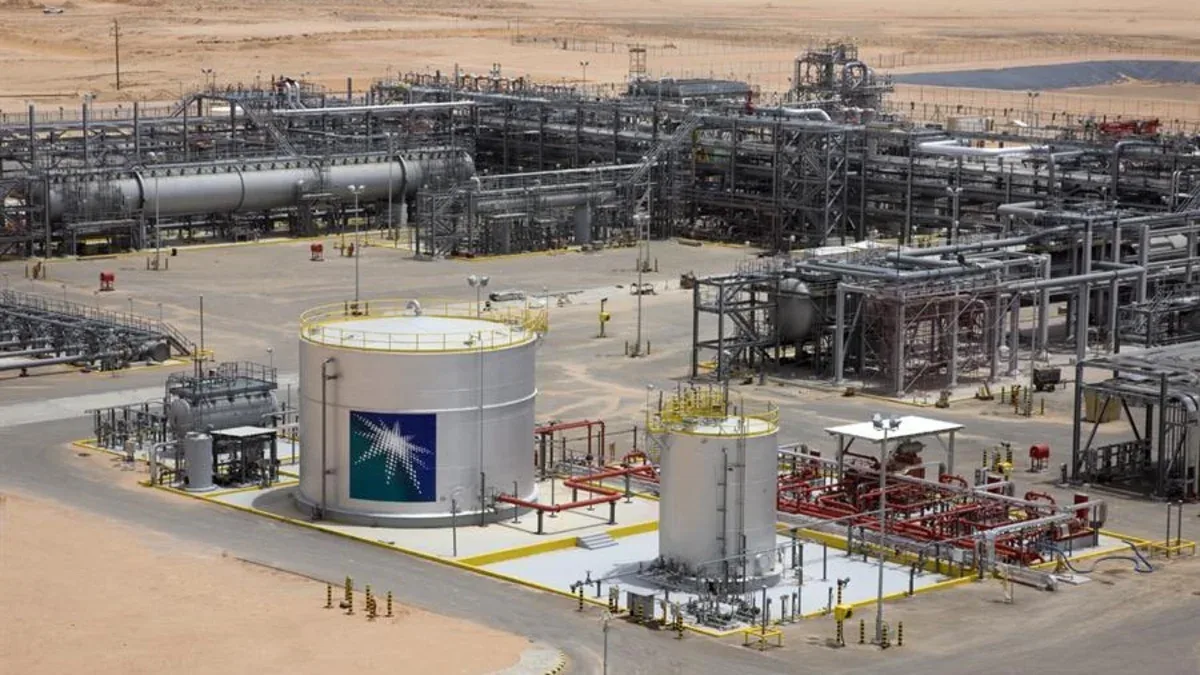

Saudi Arabia’s oil supply crisis is increasingly becoming a European problem. The September 10 attacks on the East-West Pipeline hit several parts of the system and damaged at least one pumping station, forcing Riyadh to shut down the kingdom’s key alternative route to the Strait of Hormuz.
The 1,200-kilometer Petroline can move about 7 million barrels a day from Saudi Arabia’s eastern producing regions to Yanbu on the Red Sea. Since the war effectively closed Hormuz, the line has become one of the world’s most important pieces of energy infrastructure. Kpler estimates it had been moving roughly 4 million bpd around Hormuz before the attack. If the outage drags on, 3.5–4 million bpd of Saudi crude exports could ultimately be at risk.
The immediate issue is storage. Kpler says crude inventories at Yanbu have fallen below 15 million barrels, down from almost 21 million barrels in July and close to their lowest levels since 2018. At an export pace of 3.5 million bpd, that amounts to little more than four days of theoretical supply. Aramco can also use its global storage network, but sustained Red Sea exports ultimately depend on fresh crude reaching Yanbu.
The larger risk is the next stage of the conflict. Saudi Arabia says the drones that struck Petroline were launched from Iraq, raising the possibility of retaliation against Iran-aligned Iraqi militias. At the same time, another front is developing quickly in Yemen. After gains along the Red Sea coast and the capture of Mokha, Houthi forces are reportedly building up troops and equipment around Marib, fueling fears of another major offensive.
Marib is especially important because it remains one of the internationally recognized Yemeni government’s main strongholds and contains major oil and gas fields, military bases and an important power station. The article argues that Aden does not appear to be the most immediate objective, while leverage over Marib and Bab el-Mandeb would give the Houthis greater strategic influence over both energy assets and one of the world’s most critical maritime chokepoints.
For energy markets, the core concern is that the conflict is moving steadily closer to producing assets. Pipelines, pumping stations, ports and tankers have already been attacked. Any escalation toward Saudi processing facilities such as Abqaiq—or ultimately the producing fields themselves—would amount to a much larger global supply shock.
Washington, meanwhile, appears reluctant to open another front. U.S. officials reportedly met Houthi leaders in Oman over the weekend and received assurances that the group would continue to honor its 2025 ceasefire with Washington and would not target U.S. shipping. Saudi-linked vessels, however, remain targets in the group’s view. The Trump administration has so far declined to intervene militarily, adding pressure on Riyadh either to negotiate or to build broader regional backing.
For Europe, the fallout is already becoming tangible. Saudi Aramco has told European customers that some September-loading cargoes will be cancelled or postponed, while loadings from Yanbu have been suspended. Argus reporting cited by Euronews indicates that at least three European refiners have had late-September cargoes cancelled or delayed, in some cases until November.
Europe can replace those barrels, but only at a cost. The main alternatives include North Sea crude, U.S. Gulf Coast barrels such as WTI Midland, as well as Kazakhstan, Algeria, Guyana, Brazil and West Africa. The problem is that Asian refiners hit by the same Middle East disruption are competing for many of those same supplies. That leaves Europe paying twice: through higher crude differentials and higher freight costs.
Saudi Aramco barrels shipped from Yanbu were well positioned for European and Mediterranean refiners. Replacing them with crude from the Americas or West Africa reshapes Atlantic Basin trade flows and increases transportation expenses.
Libya adds another layer of risk. The article notes that production at Hamada, Tahara and NC5 was temporarily halted after Petroleum Facilities Guard members shut the Hamada-Zawiya pipeline, prompting NOC to warn of possible force majeure. Although output later returned to normal, the incident highlighted another vulnerability for Europe: Libya is one of its nearest alternative crude suppliers just as European refiners are scrambling to replace disrupted Saudi barrels.
Consumers may not have to wait long to feel the impact. Wholesale diesel and gasoline prices react quickly when crude and refined-product markets tighten, and some of that increase could start showing up at European filling stations within one to two weeks. By late September and October, the effect should become clearer as European refiners physically replace cancelled or delayed Saudi Aramco cargoes with more expensive Atlantic Basin barrels.



