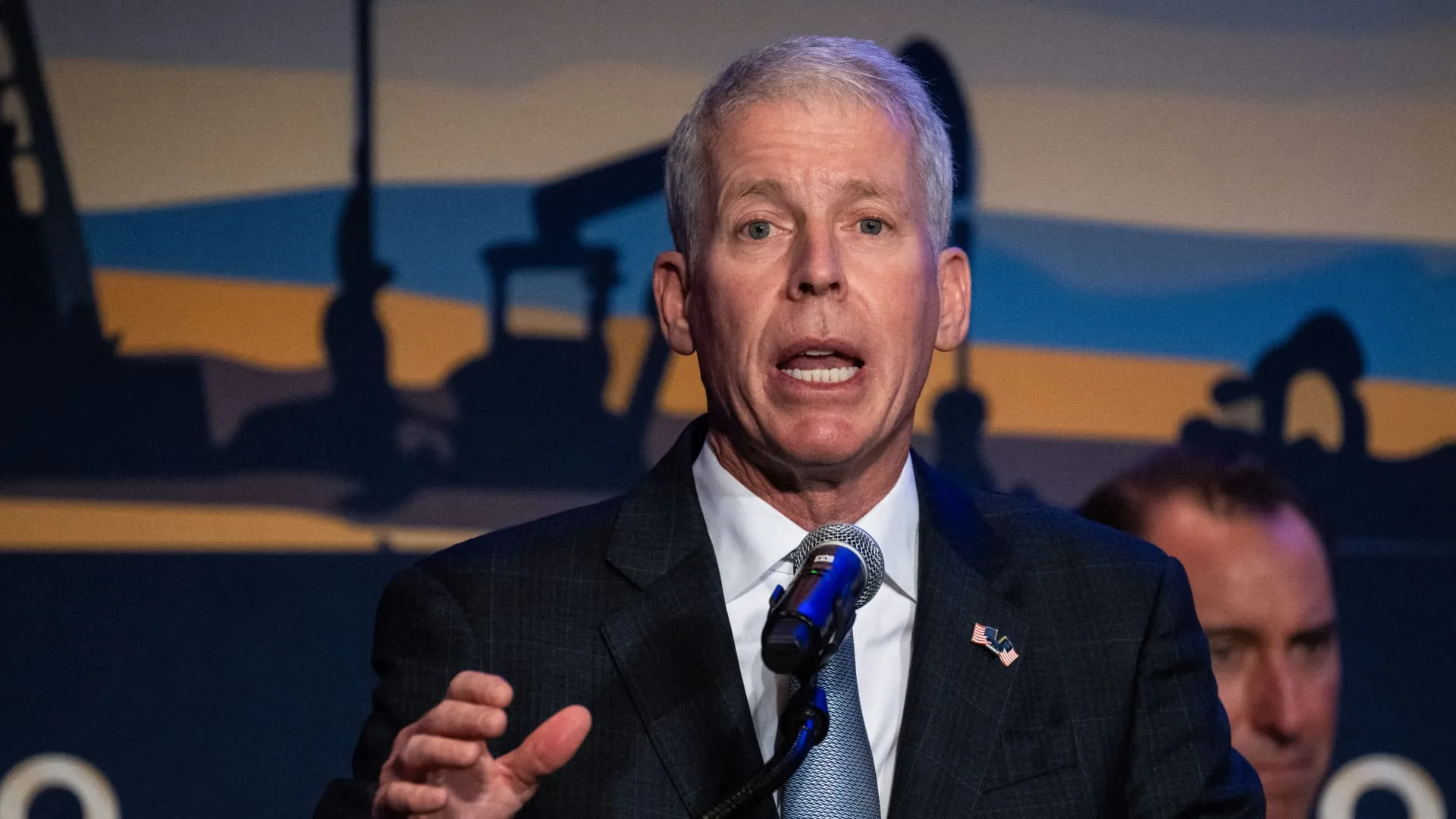
Saudi Arabia’s critical East-West crude oil pipeline will return to service “very soon,” U.S. Energy Secretary Chris Wright said, after Iran-backed attacks forced the kingdom to halt operations.
Speaking to CNBC from Houston, where G20 energy officials are meeting, Wright said the disruption would be “brief and temporary.” In his view, the outage will “be measured in days.”
Saudi authorities shut the pipeline late last week after drone attacks launched from Iraq damaged the infrastructure. Wright said the strikes were carried out by Iran-backed proxy groups.
Riyadh has relied on the pipeline to move crude exports to the Red Sea as the U.S. and Iran compete for control of the Strait of Hormuz. While the line is offline, Saudi Arabia is shifting some exports back through Hormuz with U.S. military support, Wright said.
Markets are still trying to gauge the scale of the supply disruption. U.S. crude prices have risen more than 5% this week, trading above $105 per barrel.
At the same time, satellite imagery cited in the report appears to show extensive damage at one of the pipeline’s pumping stations. In a Monday note, Lipow Oil Associates President Andy Lipow said that, “Judging from the on-line pictures, it will take months to repair.”
Riyadh has described the shutdown as a “precautionary measure” but has not released a damage assessment or said how long the pipeline will remain closed.
The potential hit to the market is also under scrutiny. According to Matt Smith, director of commodity research at Kpler, the market could lose 120 million barrels if the pipeline remains shut for a month. That estimate assumes 4.5 million barrels per day of exports move through the pipeline and that 15 million barrels are stored at the Yanbu terminal on the Red Sea.





