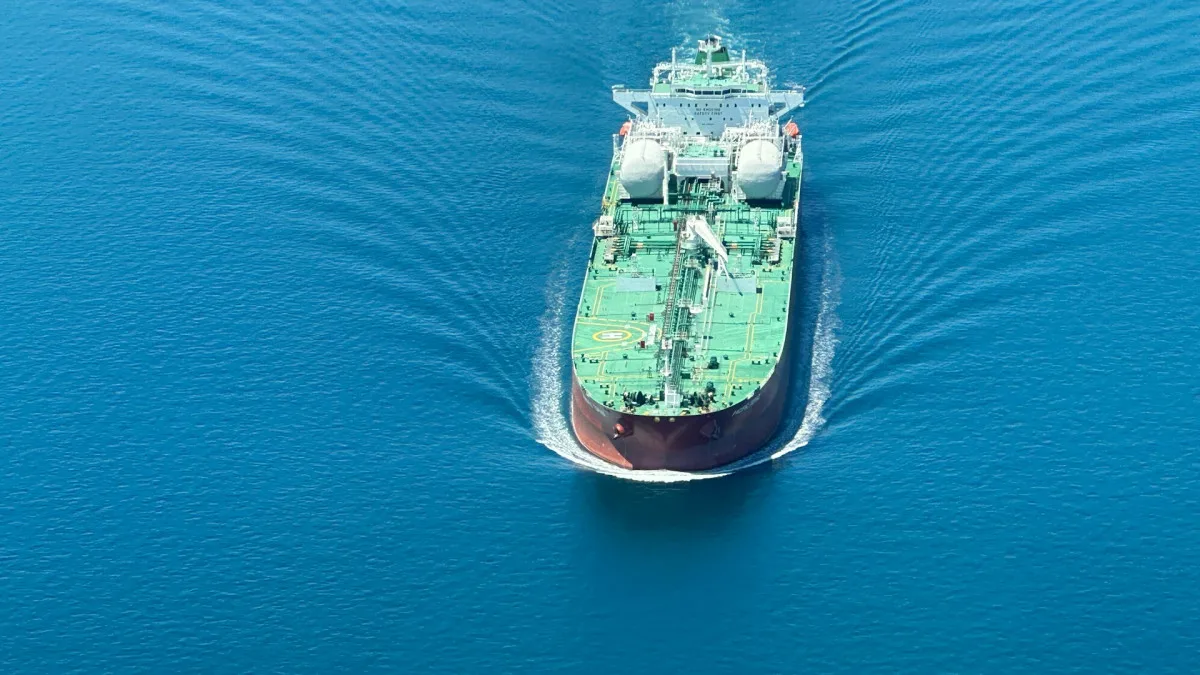
Saudi Arabia is reshaping its oil export logistics after Houthi strikes again put the Red Sea port of Yanbu under pressure. Satellite images compiled by Bloomberg showed supertankers with combined capacity of 14 million barrels at the kingdom’s Gulf export terminals over the weekend. Based on European Union Sentinel-2 data, that was the highest tanker count seen since at least June.
At the same time, overall traffic through the Strait of Hormuz kept falling. Reuters, citing Kpler data, reported that only 12 commodity vessels crossed the strait over the weekend, down from 35 a week earlier. On Thursday, just four tankers made the passage, versus a 10-day moving average of 16.
In a Friday note, JPMorgan said Saudi Arabia had moved 2.9 million barrels per day through the strait over the past six days, calling the shift “the most notable pivot” among Gulf producers.
On September 11, drone strikes launched from Iraq shut down the East-West pipeline, also known as Petroline. The line normally carries as much as 7 million barrels a day across 1,200 kilometers from Eastern Province fields to the Yanbu terminal on the Red Sea. The attack knocked 4-5 million barrels a day of that capacity offline, while total Saudi crude loadings fell from 7.5 million bpd in January and February to about 2.1 million barrels a day by mid-September, a drop of more than 70%.
U.S. Energy Secretary Chris Wright said on September 15 that the pipeline would restart within days. But an industry analyst told Al-Monitor that pump stations were destroyed in the strike and full restoration could take six weeks or more.
Yemen’s Houthi movement said it had launched cruise missile, ballistic missile and drone strikes overnight on September 18-19 against Riyadh and Aramco facilities in Yanbu. Saudi Arabia confirmed that the Houthis targeted civilian infrastructure at the port where the East-West pipeline ends. The missile aimed at Riyadh was intercepted, and authorities said there were no casualties or damage, but the attempted strike underscored the renewed vulnerability of Yanbu, which had become the kingdom’s main outlet after the Hormuz freeze.
Aramco is now routing crude to its Ras Tanura terminal on the Persian Gulf, shipping it on smaller vessels to the Gulf of Oman and then transferring it onto larger tankers there. The company is using that route to move about 60 million barrels loaded at Ras Tanura for September and October delivery, mainly to refiners in China and South Korea. Gulf exports have recovered to an average of 1 million to 1.5 million barrels a day, roughly in line with August levels.
Oil prices moved lower as the market reacted. By 9:33 a.m. ET on Monday, Brent crude had fallen to $100.90 a barrel, down 2.82%, while WTI slipped to $97.18, down 3.11%.




