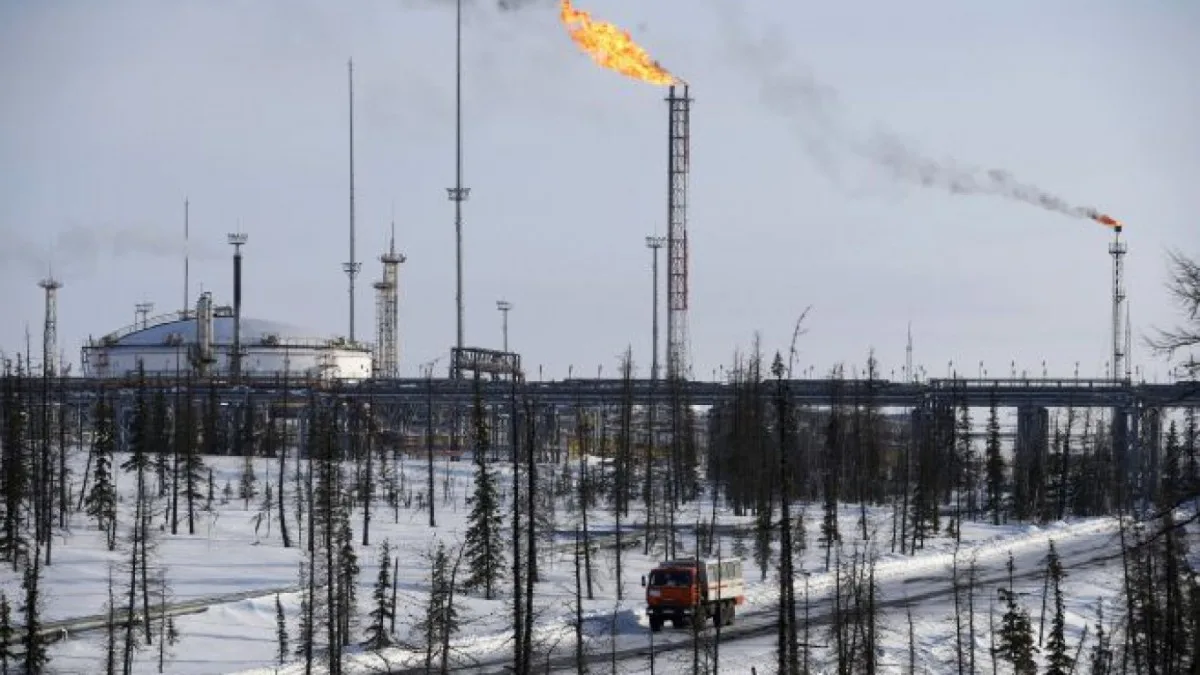

Rosneft, Russia’s largest oil producer, has announced a new milestone for its Vostok Oil project, opening a pipeline that links the Vankor and Payakha fields to Bukhta Sever port on the Kara Sea. The company also said the first crude cargo has been loaded from Bukhta Sever onto the Arc7 ice-class tanker Valentin Pikul.
According to Rosneft, the new pipeline has a design capacity of 100 million metric tons a year. Igor Sechin said that, under current sanctions constraints, commissioning Vostok Oil should make it possible to supply 30 million metric tons of oil as early as the second half of 2027 and up to 50 million metric tons by 2030.
Vostok Oil, located in Russia’s Far North, includes the Vankor cluster, the Zapadno-Irkinsky block, the Payakhskaya group of fields, and the East Taimyr cluster. The source says these assets hold proven liquid hydrocarbon reserves of at least 6 billion metric tons, or about 51 billion barrels.
The project is strategically important for Moscow as well as commercially significant. Russia sees the Northern Sea Route as an energy corridor to China and other Asian markets, allowing Arctic oil and LNG resources to be shipped despite the loss of Western technology, investment, and financing.
The article notes that the full Vostok Oil project had previously been valued at RUB10 trillion, or around USD135 billion at the time. Plans also included two airports and 15 “industry towns.” Back in early 2022, Igor Sechin said Vostok Oil and the build-out of the Northern Sea Route would create a “new oil and gas province” on Siberia’s Taymyr peninsula.
Rosneft says Bukhta Sever port already has one oil-loading berth, two cargo berths, one berth for the port fleet, and 14 storage tanks with total capacity of 30,000 metric tons of oil.
The report also links Russia’s Arctic push to deeper energy cooperation with China. In early February 2022, Rosneft signed a 10-year USD80 billion deal with China National Petroleum Corporation (CNPC) to supply 100 million metric tons of oil.
Those shipments are set to move from Kazakhstan to refineries in Northwest China. Separately, Transneft said Russian crude shipments to China via pipelines totaled 40 million metric tons in 2021. The East Siberia-Pacific Ocean pipeline and exports via the port of Kozmino also remained in place as key channels for Russian oil sales to China.
The source adds that Russia’s Arctic gas and oil reserves are estimated at around 35.7 trillion cubic metres of gas and more than 2.3 billion metric tons of oil and condensate. Most of those resources are located on the Yamal and Gydan peninsulas on the southern side of the Kara Sea.



