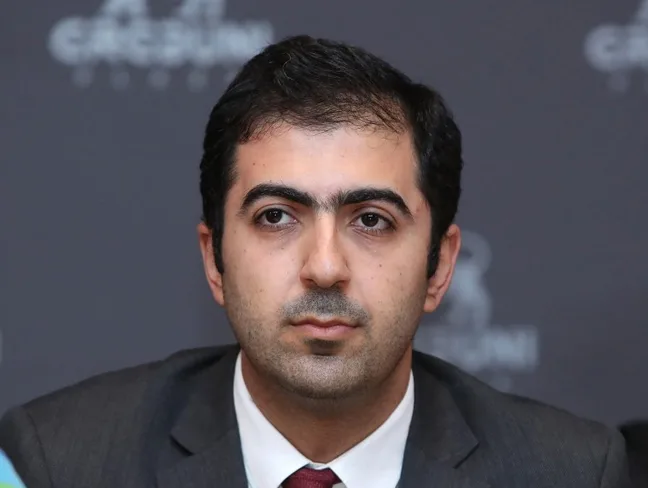


Aram Orbelyan, managing partner and lawyer at Concern Dialog, has criticized as misleading the proposal to abolish settlement agreements in cases involving the confiscation of assets of illicit origin. He was commenting, as cited by PAN, on Prime Minister Nikol Pashinyan’s recent statement on the law.
Pashinyan said he had instructed officials to amend the law on the confiscation of assets of illicit origin and remove the provision allowing settlements. According to the prime minister, former officials involved in such cases have already had enough time to return what he described as assets looted from the state, and the next step should be the confiscation of 100% of those assets.
Orbelyan argued that, within the logic of the current system, a settlement based on paying 75% is inherently contradictory. He said that 75% is not a standard negotiated figure but the minimum threshold below which the prosecutor’s office cannot settle. In his view, if prosecutors are confident in their evidence and expect to win in court, then there is no reason to discuss a settlement at all.
At the same time, he said proceedings in such cases have often been unnecessarily delayed, including through the fault of the prosecutor’s office itself. As a result, citizens have frequently preferred to pay a certain amount, avoid lengthy litigation and move on with their affairs. However, Orbelyan said the prosecutor’s office has not agreed to settlements below the 75% threshold.
He also maintained that in many cases the sums claimed were unjustifiably inflated, rising from 100 million drams to as much as 10-20 billion drams. According to the lawyer, a person trying to pay that 75% can end up facing an amount greater than what they actually possess at the time. For that reason, he said, it may be more rational to take the case to its conclusion: in the worst-case scenario, the person goes bankrupt and surrenders what they have, but does not end up below zero as they might under a settlement.
Orbelyan further said the mechanism established by law was designed not to recover what had already been stolen, but to prevent looting from happening and to stop it. He described Pashinyan’s assertion that former officials had been given enough time to make payments as another deception, arguing that in practice no one had been offered a real opportunity to close the process by paying money.
He added that the only exception might be cases that entered what he called the realm of “coordinated deception.” In his view, such an approach would deepen corruption rather than fight it.
Under the current Law on Confiscation of Assets of Illicit Origin, adopted in 2020, a person facing such proceedings may conclude a settlement agreement if they undertake to transfer to the state up to 75% of the value of assets deemed illicit. Data published by the Prosecutor General’s Office show that 11 settlement agreements have been concluded so far, with the amount confiscated exceeding $15 million.



