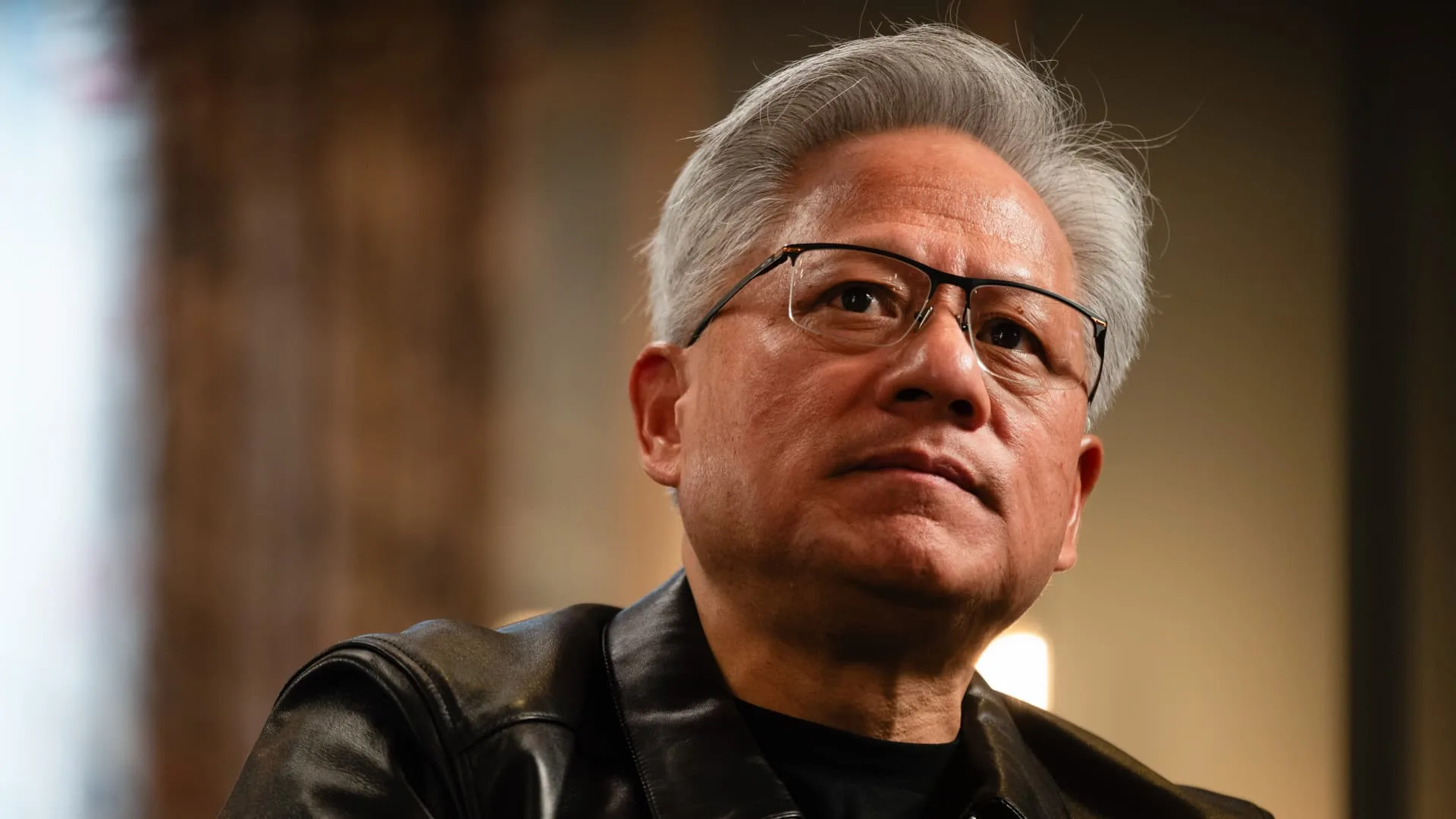
Nvidia has been thrust into a difficult leadership transition after the sudden resignation of founder and chief executive Jensen Huang, at a time when the company remains one of the main beneficiaries of the artificial intelligence boom. Experts cited by CNBC say such an abrupt exit by a founder from a company of this size is highly unusual.
Over 33 years, Huang helped build Nvidia into the world’s most valuable company. He resigned on Thursday amid reports of extramarital affairs, including with a woman U.S. intelligence believes is a spy for China. The board is now searching for a new CEO, while CFO Colette Kress is serving as interim head of the company.
Analysts say Huang’s charismatic leadership and aggressive growth focus will be difficult to replicate. Michael Withers, a management professor at the University of Notre Dame’s Mendoza College of Business, told CNBC that whoever succeeds Huang will face challenges that go far beyond those of a typical CEO replacing a founder.
CNBC notes that Apple, Alphabet and Uber all navigated the departures of high-profile leaders, but those transitions were materially different. Apple had an internal successor in Tim Cook before Steve Jobs stepped down, Larry Page and Sergey Brin’s exit from Alphabet was expected, and Travis Kalanick’s departure from Uber unfolded over several months. Nvidia’s transition is both more abrupt and tied to scandal.
Nvidia’s management structure adds another layer of complexity. Huang reportedly had 60 direct reports, reflecting the company’s flat structure and preference for rapid communication. Analysts say the next permanent CEO will need to manage the fallout from Huang’s departure while preserving Nvidia’s competitive position as rivals develop their own chips.