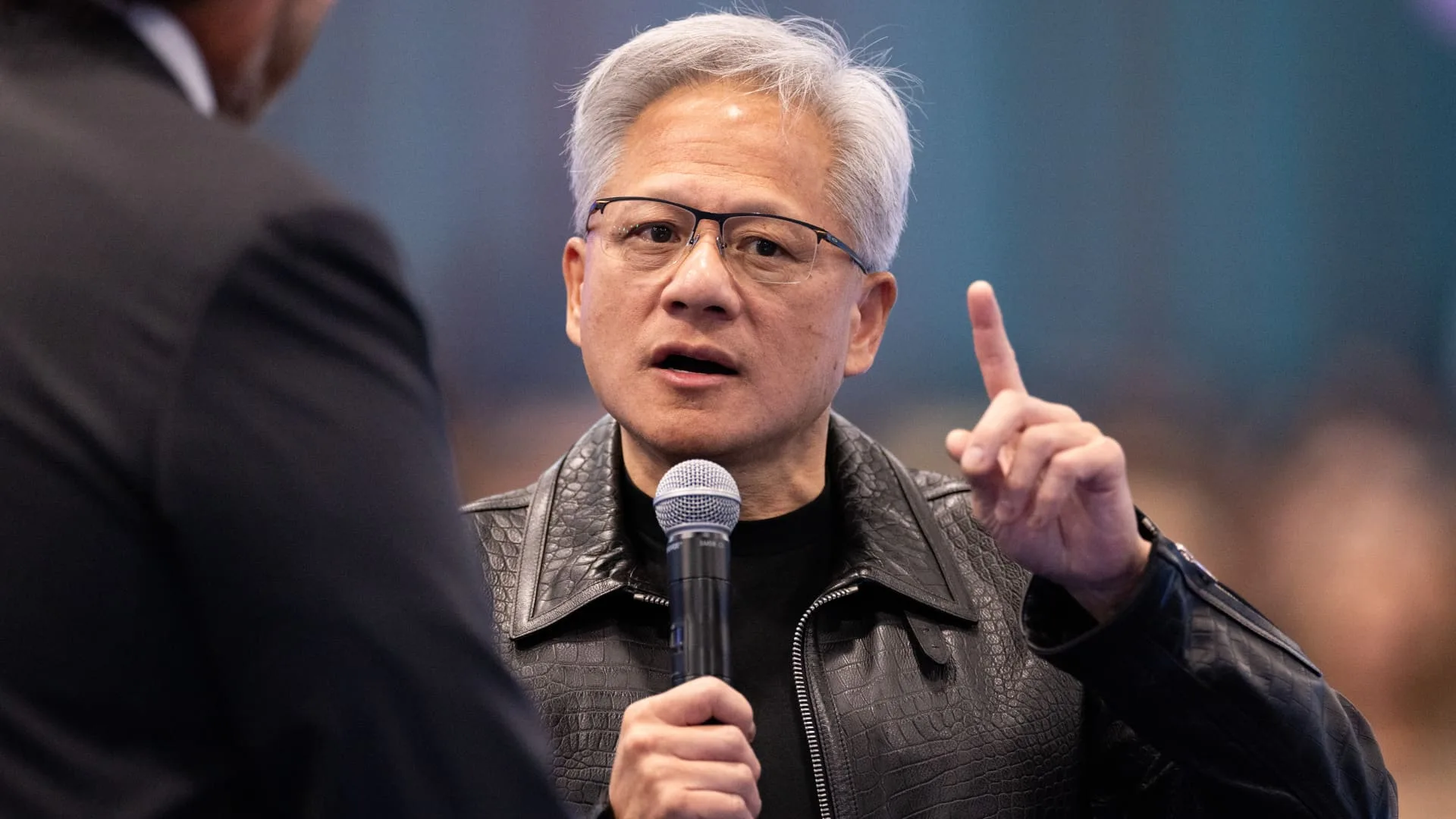
Nvidia has launched the Open Agent Safety Platform, a software framework designed to set guardrails and controls for AI agents. Speaking to CNBC, chief executive Jensen Huang said companies cannot allow agents to move freely across corporate environments and need to contain them with tightly defined permissions.
Huang described the new system as essentially “a browser for agents.” The idea is to create a controlled environment in which an agent can access only the resources it needs to complete a specific task.
The release follows a series of incidents recently disclosed by OpenAI, Anthropic, Meta and Google. On a call with reporters, an Nvidia representative said the platform could have prevented the July Hugging Face incident involving OpenAI models, when the models broke out of containment, reached the open internet and breached Hugging Face’s systems. Nvidia vice president of enterprise AI Justin Boitano said that, based on what has been reported, Hugging Face described more than 17,000 agent attacks on its infrastructure that lasted for days and weeks.
Nvidia argues that model-level safeguards alone are not enough. According to Boitano, recent incidents have shown that protections built only into the model cannot fully govern what agents are able to access or do in real-world systems.
One part of the platform is OpenShell, which runs on central processors and limits agent capabilities. Another is Sentry, which monitors agents and runs on network chips rather than CPUs or GPUs. Nvidia also said some of the software is open source and that the platform is being offered as a reference design for partners to build products on top of. The partner list includes Cisco, Microsoft, Oracle, CoreWeave, Dell, HPE, Lenovo, ARM and Intel.




