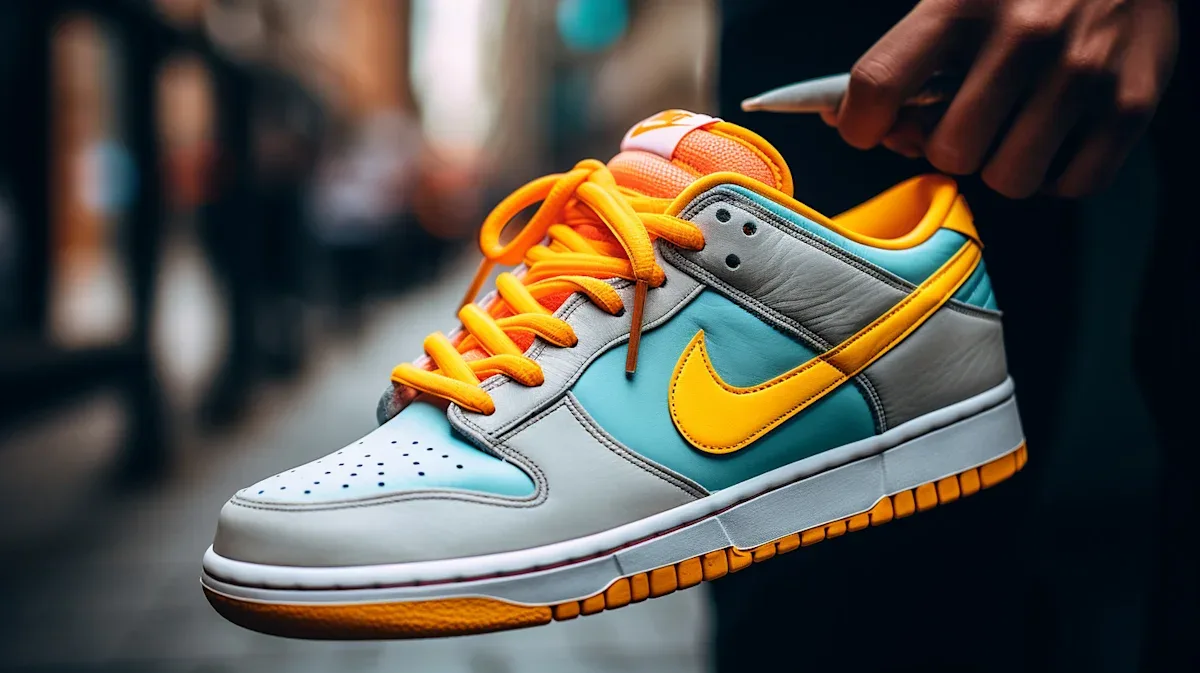
Nike, Inc. (NYSE:NKE) said on September 16 that Alexandre Arnault has joined its board of directors. He is deputy chief executive of LVMH’s Moët Hennessy division and the son of LVMH chairman and chief executive Bernard Arnault. Nike shares rose nearly 2% the following day, a rare gain in a year when the stock has lost roughly 43% and fallen to its lowest level in more than a decade.
The appointment came during a difficult stretch for the company. On September 17, UBS cut its price target on Nike to $42 from $48. Then, on September 21, Nike dropped out of the S&P 100, the index of the largest US companies, although it remains in the S&P 500. Nike and three other companies were replaced in the index by technology names. Nike is due to report first-quarter results on October 1.
A board appointment seen as a signal
Investors are reading Arnault’s arrival as a sign that Nike’s board wants to restore the brand’s premium positioning and discipline. The source argues that Nike’s core problem is not distribution or scale, but weakened brand pull. The company pushed too much product through its own channels, relied on discounting to clear inventory, and then lost ground in lifestyle and, for a period, running to smaller rivals.
Alexandre Arnault has spent his career working on the opposite challenge. He ran Rimowa for four years and later oversaw product and communications at Tiffany. Nike credits him with helping revive both heritage brands: at Rimowa by cutting wholesale doors and leaning on collaborations, and at Tiffany by moving price and product further upmarket. That thinking is close to what chief executive Elliott Hill says he wants on pricing, even as Nike rebuilds the wholesale accounts it previously walked away from.
Still, a board seat does not give Arnault direct control over pricing or product decisions. The real test is whether Elliott Hill’s team can execute the discipline his appointment represents. Nike’s board has not previously included an executive from a luxury house.
The turnaround has yet to show up in the numbers
UBS analyst Jay Sole maintained a Neutral rating but said the bank’s channel checks show Nike’s global sales trend has worsened over the past three months. He expects first-quarter earnings to miss estimates by about five cents a share and sees Nike guiding second-quarter earnings to between 31 and 43 cents, well below the 53 cents expected by the Street.
A second reset to fiscal 2027 expectations less than three months after Nike set them would test the patience of investors who bought into the turnaround story. The source notes that few funds track the S&P 100 directly, so the index exit is unlikely to trigger major forced selling. Even so, the move underlines Nike’s decline alongside the technology companies taking its place.
The source also points to a third problem that Arnault cannot solve from the boardroom. Restoring scarcity means selling less product for a period. But Nike is a $46 billion revenue company, and its largest US wholesale partner, Dick’s, now owns Foot Locker while also dealing with a weak outlook of its own. Unlike luxury brands, whose customers may wait for years, sneaker buyers can shift to On, Hoka, or Adidas. The weak sales trend described by UBS suggests some already have.
What investors will watch next
The source concludes that Arnault’s appointment signals the board wants the kind of discipline that helped restore the appeal of Rimowa and Tiffany. But Nike is trying to rebuild pricing power while also widening distribution through wholesale, and the luxury playbook has not been proven for a mass-market sneaker brand.
The October 1 report is expected to show whether the first quarter missed as UBS anticipates. Insider Monkey data also show that at the end of Q2 2026, Nike, Inc. was held by 56 hedge funds with a combined stake value of about $1.3 billion, down from 71 hedge fund holders with just over $1.3 billion in the prior quarter.



