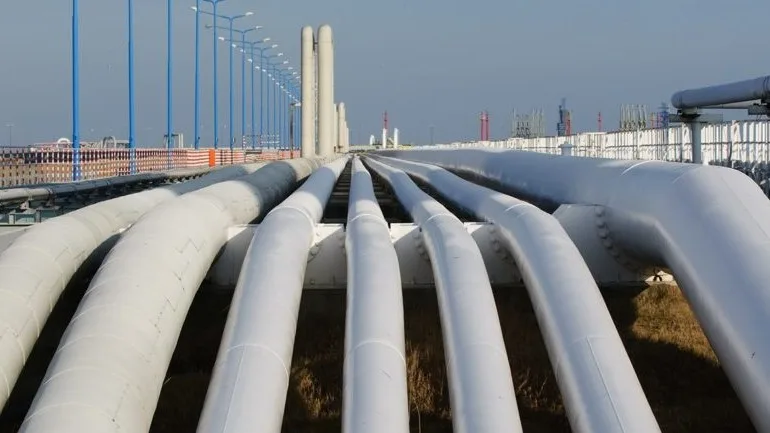

The latest bout of disruption in energy markets has again exposed a central vulnerability for Europe and Asia: dependence on imported oil and gas remains largely intact. That is the core argument made by Leon Stille in an analysis published by OilPrice.com.
According to the article, Houthis have taken control of Yemen’s Red Sea coast, the port of Mokha and Perim Island, which splits the Bab el-Mandeb Strait into two channels. From those positions, the group can monitor or threaten one of the world’s most important shipping lanes.
At the same time, severe disruption has already hit the Strait of Hormuz on the other side of the Arabian Peninsula. As a result, Saudi Arabia relied more heavily on the East–West pipeline to move crude from the Gulf to Red Sea export terminals. But that pipeline was attacked as well. Its temporary shutdown, the author argues, is a clear example of how exposed the fossil-fuel system remains.
The article says every bypass route removes one risk while adding distance, cost and another piece of infrastructure that has to be protected. In that sense, the issue is no longer just one strait, one militia or one war. It is an energy system that depends every day on huge volumes of fuel crossing unstable borders and narrow waterways.
The emergency keeps changing names
Stille argues that markets still tend to treat each disruption as a separate, exceptional event: Russia’s invasion of Ukraine, the closure of the Strait of Hormuz, Houthi attacks in the Red Sea, or damage to pipelines, LNG plants and tankers. But after so many exceptions, the pattern should be clear.
The author notes that Europe spent decades deepening its reliance on low-cost Russian pipeline gas. When Moscow cut supplies in 2022, prices surged and governments rushed to refill storage and build LNG terminals. Part of that dependence was then replaced by larger purchases from the United States.
That shift improved diversification and was necessary during the crisis, Stille writes, but it did not create autonomy. The article points to the 2025 framework under which the EU pledged to facilitate $750 billion of US energy purchases over three years, even though Brussels could not directly control such volumes. The broader point, according to the author, is that any supplier controlling fuel Europe needs every day also gains leverage over European decisions.
Fifty years of warning signs
The analysis argues that the current crisis was not unforeseeable. It recalls the 1973 Arab oil embargo, which more than tripled prices and exposed Western dependence on Middle East crude. It also cites the 1979 Iranian Revolution, the Iran–Iraq War, Iraq’s 1990 invasion of Kuwait, and later examples from Libya and Venezuela, where political turmoil and sanctions also disrupted supply.
Among more recent cases, the article highlights the 2019 attacks on Saudi Arabia’s Abqaiq facilities, which temporarily removed around 5% of global oil supply. It also references the Nord Stream explosions and the rise of cheap drones capable of rerouting global trade.
By the figures cited in the article, roughly 20 million barrels of oil per day moved through Hormuz in 2024, equal to about one-fifth of global petroleum consumption. Bab el-Mandeb carried around 8.7 million barrels per day in 2023. Rerouting cargoes adds weeks to shipping times and pushes up fuel use, insurance costs and freight rates.
Reserves buy time, not independence
The article stresses that Europe and Asia are not without defenses. Governments maintain strategic reserves, LNG cargoes can be redirected, and producers outside the Gulf can raise supply. Pipelines and alternative ports also provide useful redundancy.
Still, those buffers do not alter the model itself. Reserves are depleted when used, diverted tankers must come from somewhere else, and spare capacity belongs to another producer. If a crisis drags on, competition for finite fuel returns at a higher price.
Stille also notes that this year’s conflict has created what the IEA describes as the largest oil-supply disruption in market history, surpassing even 1973. In his view, the rational response is not to abandon reserves or alternative routes, but to reduce the number of essential services that depend on them.
Electrification as a structural response
The author’s central argument is that electrification can cut exposure to daily fuel deliveries. As he puts it, an electric vehicle does not care whether Bab el-Mandeb is open, a heat pump does not need an LNG tanker next Tuesday, and wind turbines and solar panels keep generating after the ships that delivered them have left.
At the same time, the article cautions that renewables also require grids, storage, backup capacity and resilient supply chains for raw materials. For that reason, Europe should not only accelerate renewables and electrification, the author argues, but also build more diversified mining, processing and recycling chains for critical materials.
The overall conclusion is that the next oil shock will not be the last as long as major economies continue to anchor their energy security in imported fossil fuels.



