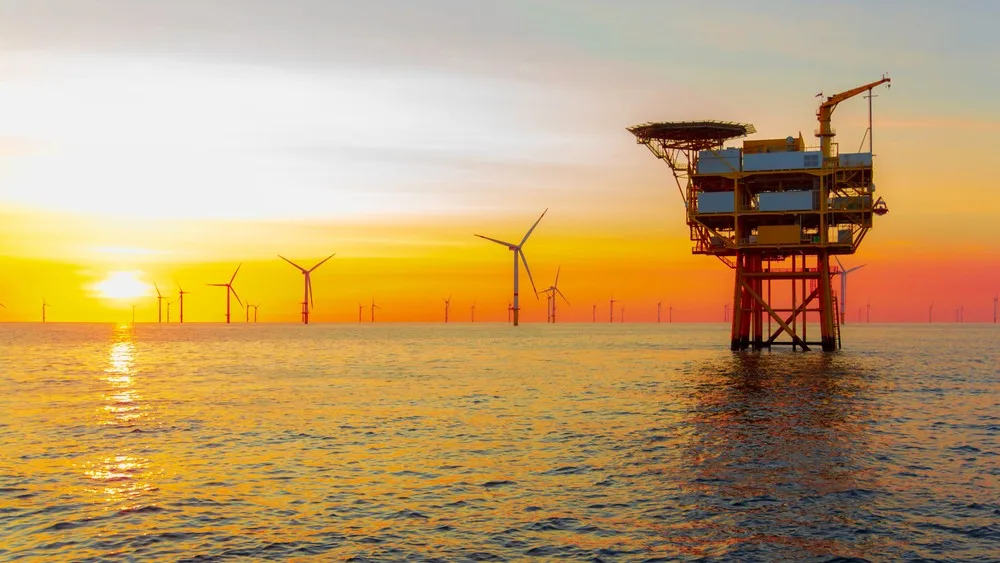

Wind power generation in the United Kingdom reached a record 86.4 TWh in 2025, supplying 29.5% of the country’s electricity. According to OilPrice.com, that momentum continued into early 2026, helping cushion Britain from the impact of rising oil and gas prices on its energy system.
Data from National Energy System Operator (Neso) show that wind was the single largest renewable electricity source in the U.K. in 2025. Combined output from wind, solar, hydro and biomass topped 127 TWh, accounting for about 44% of the country’s electricity. Fossil fuels made up 32.3% of generation, almost entirely from natural gas.
Figures from the Department for Energy Security and Net Zero show wind produced more than 85 TWh last year, or nearly 30% of Great Britain’s electricity. Offshore wind alone generated 52 TWh, a record 17.7% share of the U.K. power mix.
RenewableUK CEO Tara Singh said the latest auction round secured a record volume of offshore wind capacity that is expected to bring more than £30 billion in private investment into the U.K. She added that the latest auction showed onshore wind costs half as much as new gas-fired plants, while offshore wind is 40% cheaper.
London Stock Exchange data show wind farm output rose by 31% in the first three months of 2026 compared with the same period a year earlier. That helped lift overall clean energy production by 16% and total power output by 4%.
The increase in wind generation is helping the U.K. diversify its energy mix and reduce reliance on fossil fuels. In 2026, stronger clean power output also reduced the country’s exposure to global oil and gas shortages that worsened after the closure of the Strait of Hormuz, a key trade corridor linking Europe and Asia.
Oil and gas prices have surged in recent months amid trade restrictions that triggered a global fuel shortage. Against that backdrop, ongoing geopolitical disruption has again highlighted how heavy dependence on fossil fuels can weaken energy security for many countries.
At the same time, development activity for new onshore wind projects in England has reached its highest annual level in a decade. The Guardian reported that 45 applications for new wind farms were submitted in the year to March, equal to roughly 36 MW a month. Since Labour lifted the de facto ban on onshore wind in England in 2024, capacity entering the planning system has more than tripled.
The U.K.’s onshore wind project pipeline across all stages of development now exceeds 50 GW, up by more than 3 GW over the past year. Scotland dominates the sector with 75% of the current onshore wind portfolio, followed by Wales with 12%, England with 8%, and Northern Ireland with 5%.
Offshore ambitions are also expanding. In January, German chancellor Friedrich Merz said he wants the North Sea to become the “largest reservoir of clean energy worldwide.” That forms part of plans by the U.K. and nine other European countries to accelerate offshore wind deployment in the 2030s and build a North Sea grid that would turn the ageing oil basin into a “clean energy reservoir.”
The plan calls for offshore wind farms linked directly to multiple countries via high-voltage subsea cables, with a target of delivering 100 GW of capacity, enough to power 143 million homes.
The Crown Estate’s U.K. Offshore Wind Report, published in May, highlighted a 93 GW pipeline of fixed and floating offshore wind capacity in the U.K., either in planning or identified as future potential. Around 40,000 people are already employed in the country’s offshore wind sector, and that number could rise to 94,000 by 2030. In addition, offshore wind displaced an estimated 20.8 million tonnes of carbon dioxide in 2025 alone.
Overall, the rapid expansion of wind energy is giving the U.K. a path toward a more diversified power system with lower dependence on fossil fuels. If the current project pipeline stays on track, wind is likely to become one of the country’s main pillars of energy security over the coming decade.



