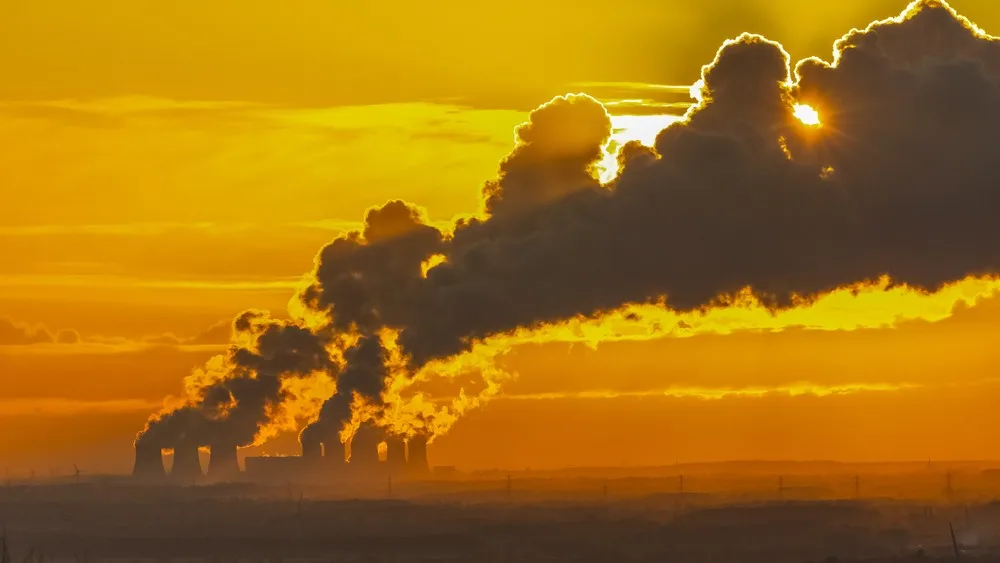

A new report by the UN Environment Programme, UNEP, says the world is likely to exceed the 1.5°C warming threshold above pre-industrial levels within the next few years. According to the report, even if current climate commitments are fully delivered, global temperatures are still expected to rise by at least 1.8°C.
The report comes after a summer marked by record heat, drought and wildfires in Europe, as well as deadly floods in parts of Asia. UNEP warns that further warming will intensify extreme weather events, including heatwaves and floods, while also accelerating glacier melt, sea-level rise and coral bleaching.
The document also points to possible shifts in critical global systems, including the weakening or collapse of ocean currents that carry heat northward from the tropics. UNEP says such changes could have long-lasting and far-reaching consequences for the world.
Speaking at the launch of the report, UN Secretary-General António Guterres said “every fraction of a degree will cost lives, destroy livelihoods, deepen inequality, and push ecosystems closer to irreversible damage.” He called for a faster phaseout of fossil fuels and a stronger renewables push, alongside cuts in methane pollution and better protection for land, forests and oceans.
Guterres said governments must over-deliver on national climate plans and net-zero commitments, while developed countries should triple adaptation finance and ensure it reaches the countries most at risk. In his words, the fight for 1.5 degrees is a fight for humanity.
UNEP does not stop at outlining the risks. It proposes what it calls an “overshoot, peak and decline” pathway, under which the world temporarily moves above 1.5°C, warming peaks as low as possible, and temperatures later decline toward or below 1.5°C by the end of the century. The agency presents this as the best remaining option if crossing the threshold can no longer be avoided.
The report stresses that such a pathway would require immediate and deep cuts in greenhouse gas emissions, combined with removing carbon dioxide from the atmosphere. UNEP says carbon dioxide removal will be necessary, but it cannot substitute for steep emissions reductions. Measures cited include massive forest planting and carbon capture and storage (CCS) technologies, although CCS has faced heavy criticism in recent years and has yet to achieve major commercial success.
After the report was published, critics said UNEP did not speak clearly enough about the need for a rapid fossil-fuel phaseout. While countries committed at an international climate summit in 2023 to move away from oil, gas and coal, many are falling short and emissions continue to rise. The source also notes that the Trump administration withdrew the United States from the Paris Agreement, significantly hindering climate progress.
At the same time, a number of Least Developed Countries (LDCs) are trying to push their own priorities as higher-income countries continue to delay stronger action. In September, ministers and representatives from various LDCs met at the LDC Group on Climate Change High-Level Ministerial Meeting ahead of the COP31 climate summit in November. The meeting concluded with the adoption of the Dili LDC Group Ministerial Declaration on Climate Change, setting out the group’s main priorities.
H.E. Marcos Da Cruz, Minister of Agriculture, Livestock, Fisheries, and Forestry of the Democratic Republic of Timor-Leste, said the least developed countries cannot afford another year of promises without delivery. He said finance must reach those countries, adaptation must be scaled up and implemented, and loss and damage must be addressed. He also said those with the greatest responsibility and capacity must lead with deeper and faster emissions cuts.



