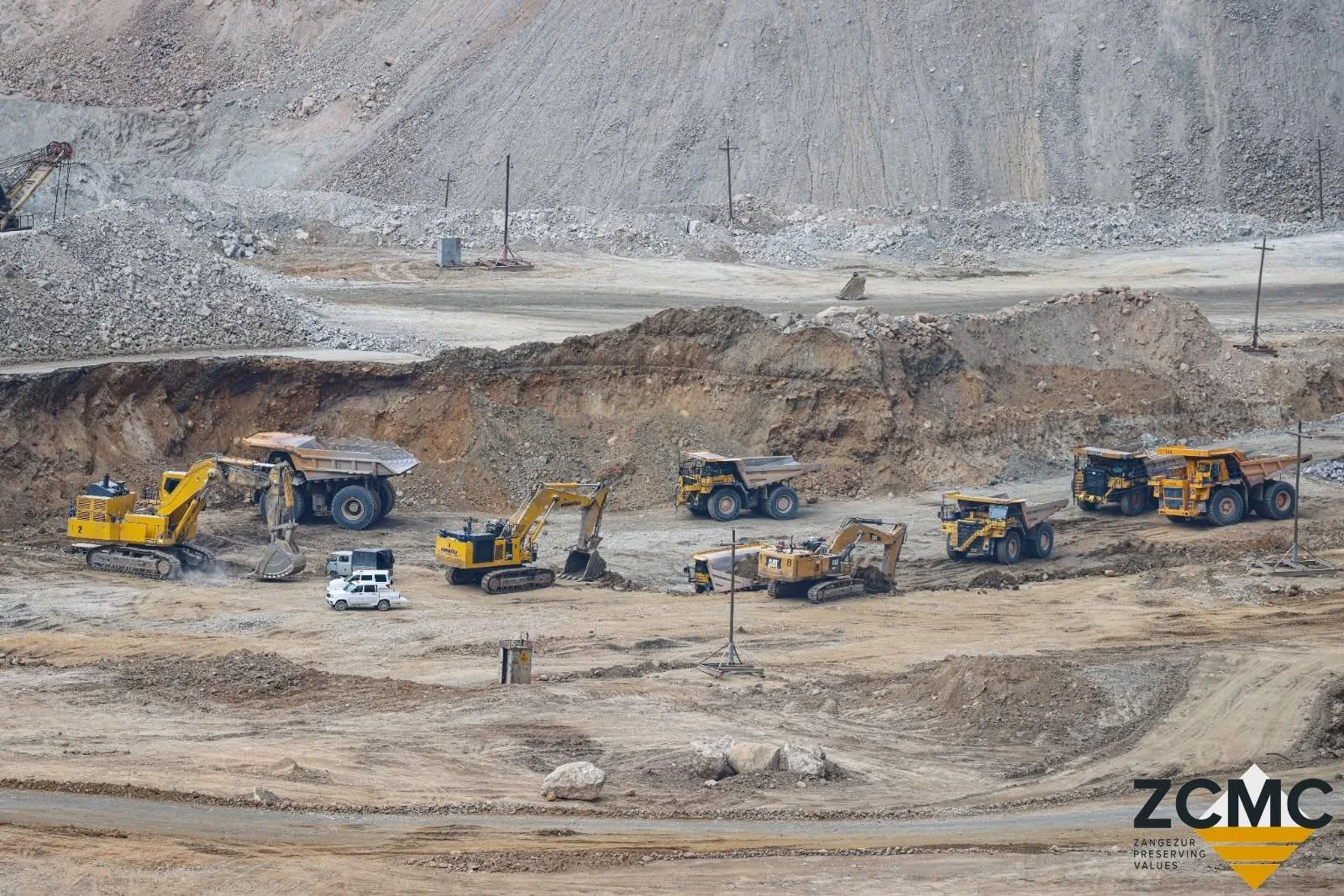

Copper concentrate ranked first in Armenia’s export basket in the first half of 2026. According to Customs Service data, the country exported 201,000 tonnes of copper concentrate in six months, with a total value of $514 million.
Compared with the first half of 2025, export volumes rose by 29%, while export value jumped by 92%. That suggests the increase was driven not only by higher shipment volumes, but also by stronger prices. The average export price rose to about $2.6 thousand per tonne this year from roughly $1.7 thousand a year earlier. Copper concentrate alone accounted for a $247 million increase in exports.
Earlier in September, during budget discussions, Finance Minister Vahe Hovhannisyan said Armenia’s overall exports had fallen 6.7% in the first half because of lower re-exports, while exports of Armenian-origin goods had surged 30%. He did not specify which product groups were behind that increase, but the copper concentrate figures show it was one of the main drivers.
Copper has therefore regained its leading place in Armenia’s exports after being overtaken in recent years by re-exported gold, mobile phones and diamonds. Copper concentrate shipped from Armenia is later processed in importing countries into refined copper.
The price rally has been driven by global market conditions. At the start of 2025, copper on the London Metal Exchange was still below $10,000 per tonne, but it has now approached the $15,000 mark. The main factors behind the rise include lower output in major producer countries, which has created a serious shortage in the concentrate market, and stronger demand from electric vehicle manufacturing, renewable energy infrastructure and the expansion of data centres.

Higher international copper prices are having a visible short-term positive effect on Armenia’s economy. They are boosting both export figures and tax payments from mining companies. Rising exports also bring more foreign currency into the country, which can help stabilise or strengthen the Armenian dram. Still, it is difficult to isolate the precise impact of copper exports on the exchange rate because remittances, tourism, central bank monetary policy and capital flows also play a role.
Over the longer term, however, that dependence also creates risks, making the economy more sensitive to swings in global commodity markets. In addition, a stronger dram does not necessarily benefit all sectors of the economy equally.
Production has also increased. Statistics Committee data show that Armenia produced 172,000 tonnes of copper concentrate in the first half of 2026, up 31.4% from the same period a year earlier.
ZPMC remains Armenia’s largest producer and the biggest exporter of copper and molybdenum. Based on full-year 2025 data, around 70% of copper concentrate exports by value came from ZPMC, which ships to China, Bulgaria and the Netherlands. The other main exporter is Teghut, which sends copper concentrate to China. Akhtala Ore Processing Plant also exported smaller volumes to Bulgaria and the Netherlands.
China remains the main buyer of Armenian copper. In the first half of 2026, about 65% of Armenia’s copper exports, both by value and by volume, went to China. Bulgaria was the second-largest market, accounting for 34% by value, while Switzerland held a small share of about 1%.
In previous years, Armenia also exported small amounts of copper waste and scrap, but there were no such exports in the first half of this year. At the same time, exports of refined copper increased, reaching $12 million over the six-month period.
Customs Service data show that Armenia exported $526 million worth of goods to China in the first half of 2026, an increase of 83% from a year earlier. However, that growth was driven largely by copper concentrate and semi-processed platinum rather than by a broad diversification of exported goods.
There is an important distinction here: copper concentrate counts as a product of Armenian origin, while unprocessed or semi-processed platinum falls under re-exports. A comparison of foreign trade data shows that the platinum was imported from Russia and then re-exported to China. It is not known whether it underwent any processing before being re-exported.
As a result, China’s share in Armenia’s total exports surged to 15.3% in the first half of 2026, making it the country’s second-largest export destination after Russia. Armenia also increased exports of molybdenum and precious metal concentrates, although those volumes remain much smaller than copper.