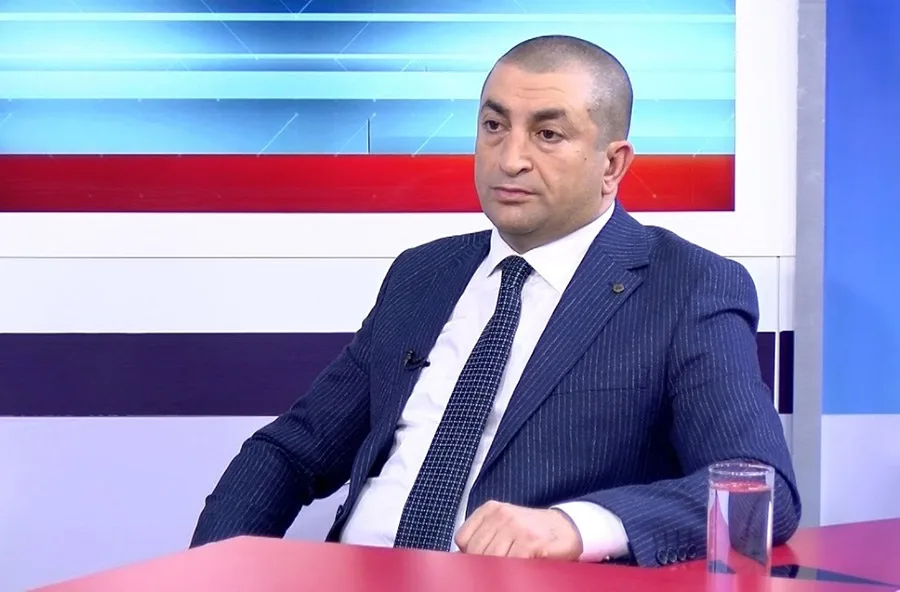

Political analyst Gagik Hambaryan has sharply criticized government-side comments on the possibility of higher gas prices in Armenia, arguing that such a move would hit households particularly hard.
According to Aravot, his remarks came after Civil Contract lawmaker Vilen Gabrielyan, who chairs the National Assembly Standing Committee on Defense and Security, said that if Russia raises the gas price for the Republic of Armenia, Armenia could in turn increase the fee for the presence of the 102nd Russian military base in Gyumri.
Hambaryan called that position surprising. He said the 102nd Russian base does not pay rent to the Republic of Armenia and that 50% of the base’s expenses are in fact covered by the Republic of Armenia from the state budget. In his view, such a statement reflects either a lack of awareness or outright illiteracy.
He also pushed back against comments by lawmaker Taguhi Ghazaryan that a rise in gas prices is “not the end of the world.” Hambaryan argued that the consequences should be assessed from the perspective of regions with long heating seasons. He specifically pointed to Shirak Province, where, in his words, people often have to heat their homes for 7-8 months a year.
The analyst linked the risk of higher gas and fuel prices to mounting tensions in global energy markets. He said developments in the Persian Gulf and the Bab el-Mandeb Strait have sharply intensified the fuel and energy crisis, as the Strait of Hormuz and Bab el-Mandeb are key routes for oil, gas and gasoline supplies.
Hambaryan said the price of the cheapest regular gasoline in the Republic of Armenia has already reached 580 drams, compared with 470-480 drams about a month earlier. He also argued that international gas prices have risen steeply, saying the price of one cubic meter on the global market has reached 700 US dollars, while the Russian Federation sells gas to Armenia at 177.5 dollars per 1,000 cubic meters.
He further said domestic pricing is being affected by the tax burden. According to Hambaryan, taxes imposed on Gazprom Armenia mean gas is sold on the Armenian market at 400 dollars per 1,000 cubic meters. He added that even under those conditions, the gas price at the Armenia-Georgia border is, in his assessment, twice lower than the price paid by consumers in the Republic of Armenia.
Hambaryan warned that any further rise in gas prices could amount to a return to the “dark and cold years” for the population. He also tied that risk to the consequences of Armenia’s foreign policy and questioned what gains could justify such severe social sacrifices.



