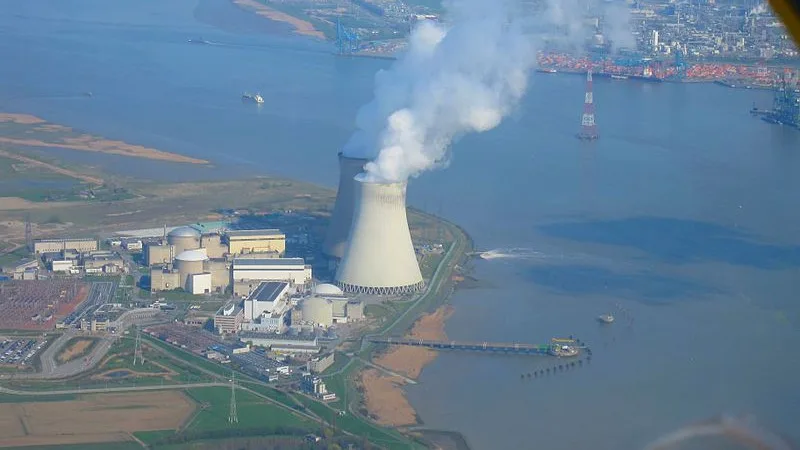
Italy’s Senate has given final approval to a government plan to bring nuclear power back into the country’s energy mix, nearly four decades after Rome turned away from the sector. Reuters reports that the government now has 12 months to prepare an executive decree setting out reactor licensing rules, safety standards, waste management requirements and site selection criteria.
Rome is focusing on small modular reactors, or SMRs, and other advanced nuclear technologies rather than a revival of the large plants of the past. The government argues that newer technology could help decarbonize industry, strengthen energy security and reduce dependence on imported energy. Officials also say advances in technology and safety have made the assumptions behind the 1987 anti-nuclear vote outdated.
Italy once operated four reactors, but a 1987 referendum, held in the aftermath of the 1986 Chernobyl disaster, led to a nuclear phaseout. The country’s last reactor was shut down in 1990. A second referendum in 2011, after the Fukushima accident in Japan, found that more than 90% of voters opposed nuclear power plants.
The rethink comes as high energy costs and geopolitical shocks reshape Europe’s energy debate. Wars in Ukraine and the Middle East have disrupted supply chains and strengthened arguments inside Italy for more stable domestic energy sources. According to Reuters, Prime Minister Giorgia Meloni’s administration wants to shield the economy from surging energy prices and cut reliance on foreign oil supplies.
Italy imports more than 90% of its total energy needs. The country remains heavily dependent on fossil fuels, with natural gas and petroleum accounting for roughly 80% of total supply, while the remaining 20% comes from renewables including solar, wind, hydroelectric, geothermal and bioenergy. The report also notes that Italian electricity rates have risen by about 80% over the past year.
Electricity demand is expected to increase in the coming years as global electrification advances and power-hungry data centers expand alongside the push for artificial intelligence. Those trends are adding weight to the case for nuclear generation.
Still, major hurdles remain. A June poll found that 51% supported restarting nuclear power generation, but a majority opposed having a plant built near their homes. Italy also still lacks a permanent national repository for radioactive waste from its earlier nuclear program, with waste continuing to be stored at temporary sites across the country.
Across Europe, governments are investing in new reactors, plant life extensions and small modular reactor projects to improve energy independence and meet climate goals. The article notes that France remains Europe’s nuclear leader, while Hungary, Slovakia, Czechia, Romania, Poland, the Netherlands, Sweden and Belgium are also expanding or revising their nuclear strategies.




