

Iranian Foreign Minister Abbas Araghchi said Tehran is prepared to reopen the strategically vital Strait of Hormuz within seven days and restart nuclear talks with the United States if the Trump administration accepts its conditions.
The proposal was made on the sidelines of the United Nations General Assembly, shortly after Iranian President Masoud Pezeshkian pushed back against President Donald Trump’s threat of “annihilation.” It also comes nearly seven months after the U.S. and Israel launched their war against Tehran.
According to Iranian state media, Araghchi told reporters that if certain conditions are met, the strait would be reopened after seven days and negotiations would resume. He said the demands presented to Washington are not new and are based on the Islamabad MOU signed by the U.S. president.
The Islamabad Memorandum of Understanding refers to a June ceasefire arrangement between the U.S. and Iran that ultimately collapsed in early July. The Trump administration has previously said it will not return to the terms of that June deal.
Oil markets reacted with modest declines on Friday morning. Brent crude futures for November delivery were down 0.4% at $106.22 per barrel, while U.S. West Texas Intermediate futures for November delivery were 1% lower at $93.61.
Pezeshkian said Thursday that it is up to the U.S. to decide whether to end the seven-month war. In an interview aired on Fox News, he said America must choose whether it wants to bring the conflict to a close.
At the same time, regional tensions continued to intensify. Saudi authorities said the Houthis launched dozens of missiles and drones at Saudi targets on Friday morning, and that six ballistic missiles were intercepted. Emergency alerts were issued in Mecca, Jeddah and Yanbu.
Saudi Arabia, Turkey and Pakistan were planning an urgent meeting of their chiefs of staff to discuss support for the kingdom under the Mecca Joint Defense Agreement. Pezeshkian, meanwhile, sought to distance Tehran from the escalation, saying the Houthis are responsible for their own actions and that Iran is not at war with Saudi Arabia.
Saudi Arabia’s Grand Mufti struck a far tougher tone, telling troops to be ready to “lay down their lives” in the fight against the Houthis until the group is removed from power.
Against the backdrop of Trump-Xi talks
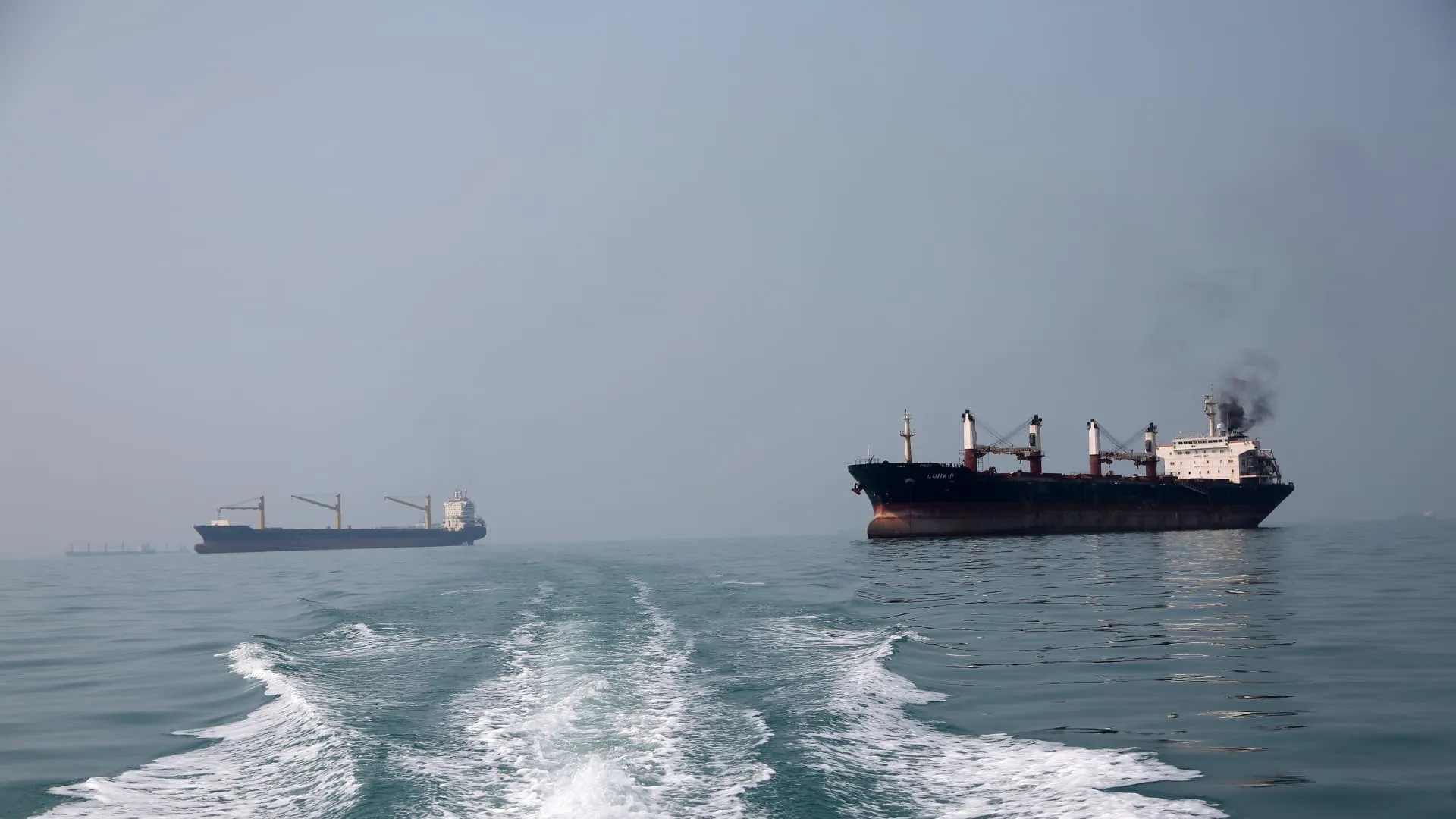
Shipping through the Strait of Hormuz, which normally carries about a fifth of global oil supply, has fallen sharply. Reuters, citing preliminary ship-tracking data, reported that only 9 vessel transits were recorded on Friday, far below peacetime levels.
Diplomatically, the conflict has also become tied to this week’s U.S.-China summit in Washington. Chinese President Xi Jinping is on a three-day state visit to the United States and is meeting Donald Trump to discuss trade, artificial intelligence, Taiwan and Iran.
China’s special envoy for the Middle East, Zhai Jun, said at an event in Singapore that the Middle East situation was a major topic in the leaders’ recent discussions and that the consensus they reached could be important for lowering the temperature of the conflict.
CNBC reported that Trump is also seeking Beijing’s help in pressuring Tehran toward a settlement, after indirect U.S.-Iran talks resumed this week on the sidelines of the U.N. General Assembly in New York.



