The Universal Health Insurance Fund demands the return of financed amounts from several medical institutions. The fund argues that certain cases did not meet the criteria set by the government. This means that the fund initially approved the treatment, then financed it, and months later demanded that clinics return the money.
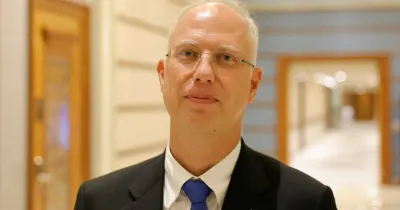
“After the decision was made, when we were conducting regular monitoring, we noticed that there were consultations with our family doctors where the diagnoses did not correspond to Appendix 8. We sent them a circular and warned them during meetings,” said Samvel Khazaryan, the acting director of the Universal Health Insurance Fund, in an interview with Azatutyun.
A group of doctors insists that this demand should be suspended until legal and technical issues are clarified. They want to understand on what legal basis the funds are being demanded back if the services were accepted, verified, and financed by the fund through the “Armed” system.
Of the dozens of doctors who contacted Azatutyun, only one agreed to speak about the issue personally, but anonymously. A family doctor with 25 years of experience asks why the demand for the return of funds was made only six months later, and how it happened that hundreds of doctors understood the mechanism of work in the same way.
“It turns out that we have been working incorrectly for more than six months because the insurance fund decided that doctors should work according to the so-called list of diseases in Appendix 8. The insurance is refusing to reimburse the funds provided in previous months,” said the Azatutyun interlocutor, adding, “If ‘Armed’ has problems, that is ‘Armed’s’ problem, not the doctor’s; if they understood that the funds are too much, then something is wrong.”
Two medical associations consider the fund's comments to be disputable. They state that the complete list of diagnoses for outpatient treatment is not included in Appendix N 8, and the requirement for “first-time diagnosed disease” is not specified as a general limitation.
“We understand that this relates more to hospital treatment referrals than to outpatient care. There are diagnoses that are absurd to treat in a polyclinic. If all these diagnoses were supposed to be only those that should bring additional compensation to the family doctor, why was this not said in advance, but we were told that all acute cases could be presented as a direct opportunity for additional funding for the doctor,” noted the Azatutyun interlocutor.
According to them, the demand for the return of funds could create serious problems for medical institutions, as they have already allocated these funds for salaries, taxes, social contributions, and other obligations.
The anonymous Azatutyun interlocutor is not sure that the higher salary he received in recent months will not be reclaimed. “If we are receiving 4 million less per month, the management says, ‘If I reduce funding by 4 million a month, how will I get out of this situation?’”
The associations question how the fund can demand the return of previously verified, approved, and paid amounts based on a new clarification, and whether the entire financial responsibility should rest with the medical institutions.
The acting director of the fund insisted that they had regularly warned medical institutions about such deviations. After six months, they demanded the return of the funds. They even developed a mechanism for repayment so that medical institutions could settle their debts to the fund over several months: “We agreed that when financing, we would take this deviation into account and finance 1/6 less each month for six months. [...] If this may affect their ability to meet current financial obligations, we are ready to make these reductions more long-term.”
Samvel Khazaryan insists that the list of diagnoses for outpatient treatment established by the government is exhaustive. This list pertains to cases where the patient is treated in a polyclinic or outpatient setting without hospitalization. Therefore, in cases of diagnoses not included in the list, treatment costs are not reimbursed.
At the same time, the fund responded to the associations that polyclinics receive separate funding for each registered patient, and this amount does not depend on the list of diagnoses. And for diseases included in the list, the doctor also receives the amount intended for consulting that patient.
However, the fund is skeptical that suddenly many people in clinics have started to be diagnosed with these diseases for the first time. But in a response letter, they acknowledged that this wording could lead to the risk of misinterpretation and promised that appropriate changes would be made.
According to Khazaryan, the returned funds should not be deducted from doctors' salaries, and the responsibility lies with the heads of medical institutions who, according to him, have failed: “Medical centers do not fulfill their direct obligations, and we must also demand appropriate actions against these individuals, I don’t know, give them a warning or something. In other words, administrative actions must be taken. What is the purpose of the manager if he does not inform his employees, monitor, and oversee the process?”
In the near future, the leaders of the associations and a group of doctors will meet with the head of the fund and, as the doctors insist, also with the Minister of Health.
The fund did not clarify how many medical institutions are facing this issue and what the total debt of all these institutions is.