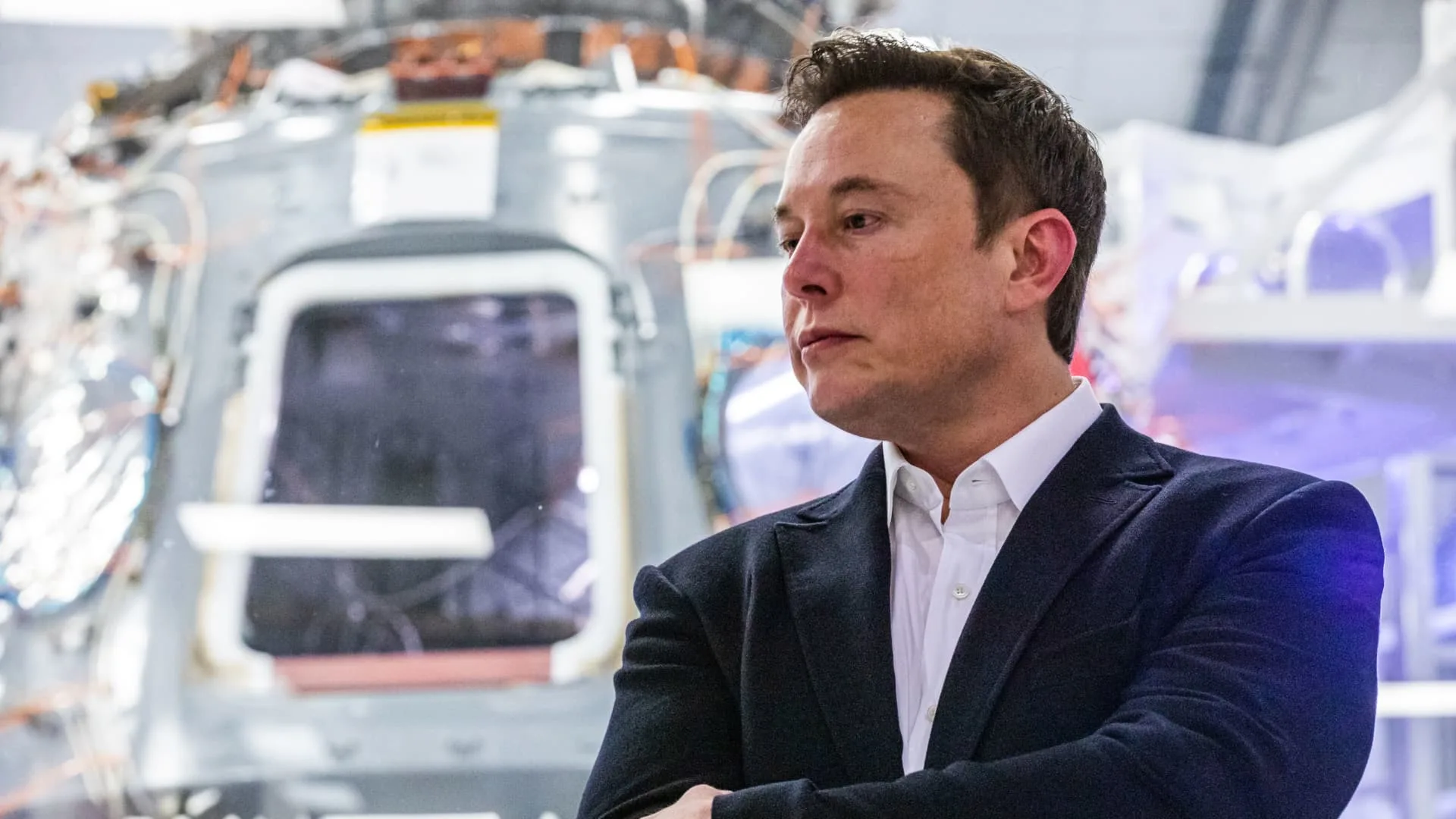
Elon Musk’s latest week in artificial intelligence highlighted once again how fluid his alliances and public messaging can be. CNBC reports that Musk backed calls from Anthropic CEO Dario Amodei and OpenAI chief Sam Altman to slow the pace of foundation model development, while also aligning himself with opposition to tougher industry regulation.
Speaking at the All-In Summit, Musk said companies should test one another’s new models before release to identify and fix safety issues. He framed that as a better option than heavy government intervention. “You can always escalate the amount of regulatory oversight, but it is very difficult to reduce it,” he said, arguing that regulation tends to move in only one direction.
At the same time, The Wall Street Journal reported that behind the scenes Musk joined Nvidia CEO Jensen Huang and Meta CEO Mark Zuckerberg in urging U.S. President Donald Trump to oppose an industry-funded regulator. Trump, whose latest financial disclosure shows holdings in Nvidia and SpaceX, dismissed fears of runaway AI as a “hoax.”
CNBC presents the conflicting signals of the past week as a snapshot of Musk’s broader decade-long history in AI. He was an early backer of DeepMind before Google acquired it in 2014. A year later, he co-founded OpenAI with Sam Altman and others as a nonprofit research lab. Over time, however, his relationships with major industry figures repeatedly frayed, including with Larry Page and Altman.

The stakes are now far higher. Tech giants are spending hundreds of billions of dollars a year on AI infrastructure, while insiders continue to warn about potentially existential risks. Against that backdrop, Musk’s own business exposure to AI has deepened significantly. SpaceX merged with xAI in February, completed a $60 billion acquisition of AI coding tools company Cursor in August, and in between went public in the largest IPO on record. CNBC says that briefly made Musk a trillionaire. Meanwhile, Tesla continues to push into so-called physical AI, including driverless cars and humanoid robots.
For years, Musk has paired warnings about AI “superintelligence” with expansion of his own AI ventures. In 2014 he told CNBC there could be “some scary outcomes,” and he later told students at the Massachusetts Institute of Technology that AI development was like “summoning the demon.” Around that time, his foundation donated $10 million to the Future of Life Institute, which sought to raise awareness of AI’s existential risks. In 2015, he also signed the group’s open letter calling to “pause AI.”

Musk vs. Altman
The split inside OpenAI deepened in 2018, when Musk, according to CNBC, privately pushed to take control of the lab and turn it into a for-profit Tesla subsidiary. That same year, he left OpenAI’s board after recruiting key talent from the organization to Tesla.
OpenAI’s November 2022 release of ChatGPT triggered the generative AI boom while Musk was largely on the sidelines. But in March 2023 he again signed a Future of Life Institute letter calling to “pause AI.” Around the same time, he was incorporating xAI in Nevada, though he kept the move quiet until July.
The legal fight came next. In August 2024, Musk sued OpenAI and its co-founders, arguing they had broken a promise to keep the lab nonprofit. He lost that high-profile California trial in May 2026, when a jury and federal judge found the case had been filed outside the statute of limitations. Musk said he would appeal, but has not yet done so.
Correspondence disclosed in the case suggested that Musk’s drive to create OpenAI was partly rooted in fears that Google would dominate the technology after buying DeepMind, even as he and Altman publicly emphasized the mission’s more altruistic side.
Now Musk has returned to safety-focused rhetoric. After Dario Amodei published an essay last weekend urging the industry to “pace the frontier,” Musk wrote on X: “Dario is right.” That marks a sharp contrast with February, when he called Anthropic “misanthropic and evil” and said it “hates Western civilization.”
CNBC says the reversal partly coincided with changing business incentives. In May, Anthropic agreed to pay SpaceX up to $1.25 billion a month to rent computing infrastructure in Memphis, delivering badly needed AI revenue ahead of SpaceX’s IPO. By July, Musk was posting: “I was clearly wrong about Anthropic. They are obviously currently the leader in AI.”
Musk’s own AI record has also drawn scrutiny. He has expanded data centers in and around Memphis, Tennessee, while facing lawsuits from nearby residents over air and noise pollution. In addition, according to U.S. Department of Justice legal filings, a version of xAI’s Grok models sold through SpaceX to the U.S. military “enabled U.S. forces to deploy over 2,000 munitions to 2,000 distinct targets within 96 hours.”
The article also notes that xAI, now known as SpaceXAI, has sued to block state-level rules that would ban Grok’s “nudify” features in Minnesota and require disclosure about the data used to train its models in California.

As Musk, his rivals and his peers argue over how large a role government should play in AI safety, lawmakers and outside researchers are growing increasingly skeptical that the industry can police itself. Tyler Whitmer, CEO of Legal Advocates for Safe Science and Technology, told CNBC that self-regulation alone is not enough to protect the public from current and future harms tied to AI systems. In his view, meaningful rules and government-enforceable requirements for independent third-party evaluators are needed.



