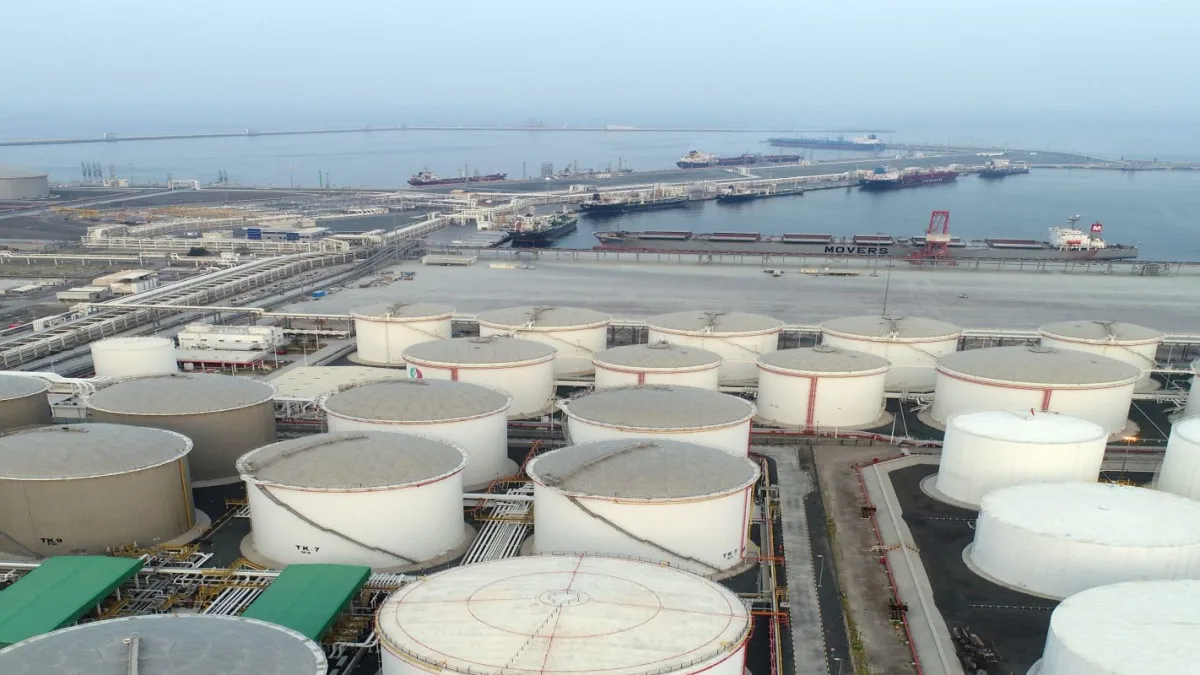
Middle Eastern oil exporters are increasingly relying on pipelines and ship-to-ship transfers to bypass the heavily constrained Strait of Hormuz. According to OilPrice.com, those alternatives are keeping supplies moving, but they are also driving up the delivered cost of crude.
Oil prices fell this week after news that Saudi Arabia had restarted its East-West pipeline. The line was damaged in Houthi strikes last week, and some market participants had expected repairs to take months. The reaction underlined how central Middle Eastern energy infrastructure has become to trader sentiment.
Before the disruption, the East-West pipeline had been rerouting about 4 million barrels per day across Saudi Arabia to Yanbu. After drone attacks from Yemen forced the shutdown earlier this month, Aramco had to send more crude back to the Persian Gulf, selling tens of millions of barrels for movement through Hormuz and for ship-to-ship transfers near Oman.
The method, once associated mainly with sanctioned producers such as Venezuela, Iran, and at times Russia, is now becoming a more routine part of Gulf oil logistics. Crude is first loaded onto smaller vessels, which travel short distances to the Gulf of Oman, where the cargo is transferred onto larger tankers outside the Strait of Hormuz.
That workaround is viable, but it adds to export costs and is forcing some suppliers to offer discounts. Iraq is especially exposed because its geography leaves it with few practical alternatives to Hormuz.
Recent Kpler data cited by Reuters show that oil flows through the Strait of Hormuz have averaged about 6.5 million barrels per day since the start of the month. That compares with roughly 20 million barrels per day moving out of the Persian Gulf before the United States and Israel began bombing Iran at the end of February. Even with that steep drop, traders appear to have adjusted to the new export pace, and any sign of higher production or exports is pushing prices lower, despite an underlying supply deficit.
Reuters data also indicated that Aramco has not loaded any crude from Yanbu since September 16, yet the market focused more on the East-West pipeline restart. At the same time, freight costs have surged. On the Middle East-to-China route, shipping now accounts for as much as 25% of the total cost of moving crude. Freight for a very large crude carrier on that route has climbed to $30 per barrel, an all-time high.
The main driver is shipping risk. Few tanker owners are willing to operate under current conditions, so rates have jumped and a shortage of supertankers has emerged. Reuters reported that this has prompted the UAE to use smaller vessels for ship-to-ship transfers in the Gulf of Oman. That strategy appears to be working: the country’s exports this month are estimated at 3.6 million barrels per day, versus 3.4 million barrels per day last year, when the Strait of Hormuz was fully open.
OilPrice.com concludes that regional producers are adapting to what may be a lasting new reality. It is a far more difficult operating environment, but as long as some crude continues to leave the Persian Gulf—even well below pre-war rates—the market is likely to remain relatively calm. That has held even after President Trump’s latest threat to “annihilate” Iran unless it agrees to a deal, and Tehran’s response that any violence would be met in kind.




