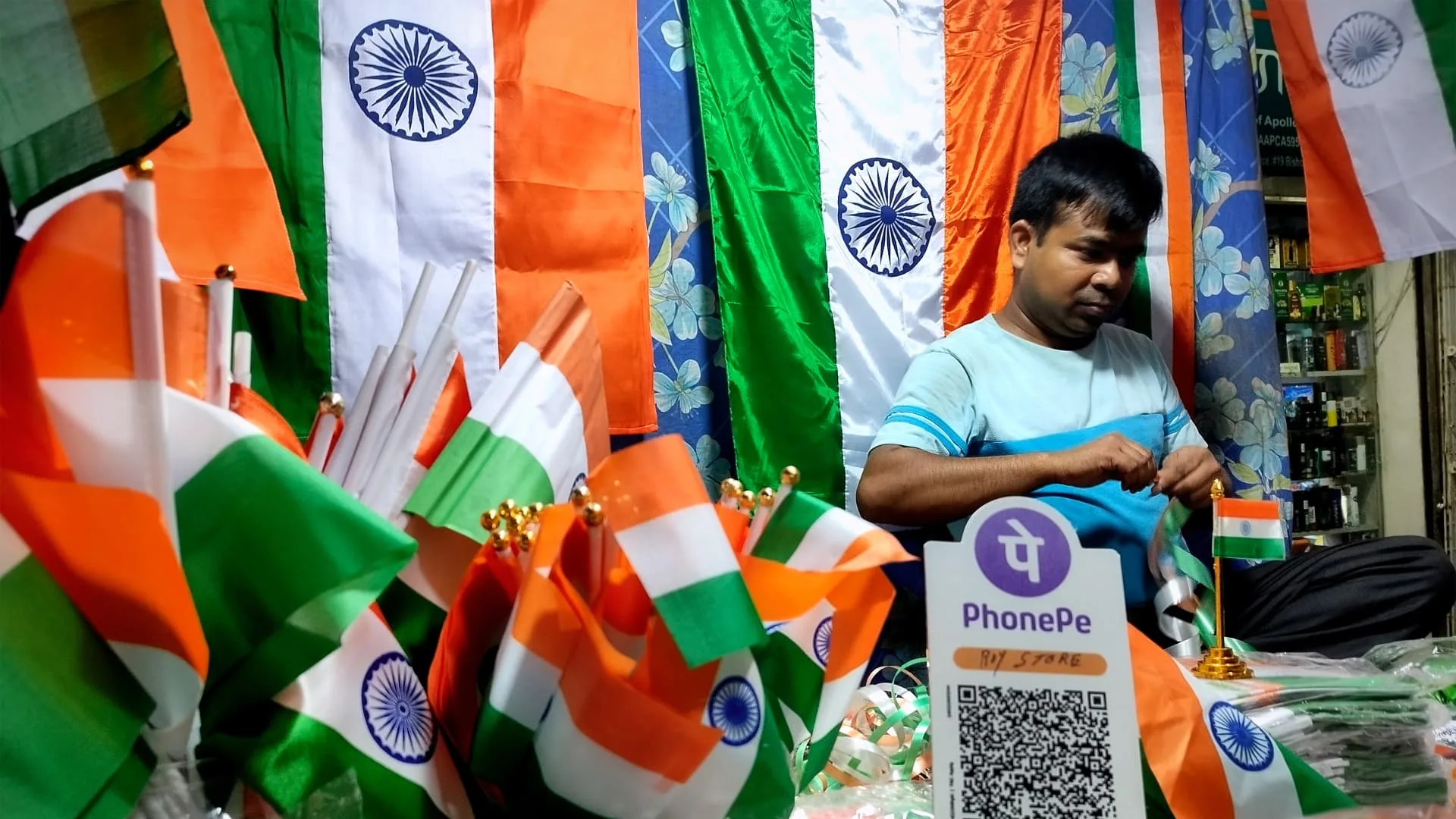
India is heading into a fresh debate over digital payments after the National Payments Corporation of India announced a new fee for some merchant transactions on the Unified Payment Interface, or UPI. From next month, merchants will pay 0.4% on incoming UPI payments above 2,000 rupees ($20.84). For transactions above 75,000 rupees, the charge will be capped at 300 rupees per transaction.
NPCI, which oversees India’s retail payments and settlement systems, said person-to-person transfers on UPI will remain free. It also stressed that the new rate is still well below the 0.9% typically charged on debit card payments and the 1.5%-2.5% range for credit cards.
UPI has become the backbone of India’s digital payments market in recent years. In 2020, the government cut the merchant discount rate to zero to accelerate the adoption of cashless payments. Since then, official data show the value of UPI transactions rose tenfold to 213 trillion rupees over roughly six years through January 2025.
Even so, the shift away from a fully free model has drawn criticism. Opponents of the government are questioning why a fee is being introduced for a service previously described as a “digital public good.” The opposition Indian National Congress says the move could benefit U.S. technology firms and take money “from the pockets of Indians” to the advantage of platforms such as PhonePe, Google Pay and Amazon. Former BharatPe CEO Ashneer Grover has also argued that any levy on UPI is effectively a form of tax collection.
Parts of the fintech industry, however, have welcomed the change. Girish Krishnan, director of payment experience at Amazon Pay, told CNBC that UPI’s success was built on zero-cost adoption for consumers, small shopkeepers and micro-enterprises, and that the notified MDR framework preserves that foundation. Meta’s WhatsApp Pay head Kunal Shah called it a “great move forward,” while Paytm said the step would create additional revenue from merchant business.
The scale of UPI helps explain why the policy matters. According to NPCI data for September, the system processes more than 1.1 million transactions every two minutes on average. In January, the Indian government said UPI had already surpassed Visa in daily transaction volumes, accounting for 85% of digital payments in India and 50% globally.
That rise has also drawn scrutiny from Washington. Earlier this year, the U.S. Trade Representative said policies governing India’s electronic payment services appeared to favor domestic suppliers over foreign ones. The USTR report also said U.S. electronic payment providers could not fully participate in parts of the Indian ecosystem, including credit transactions on UPI and the domestic card network RuPay.
Still, analysts told CNBC the new merchant fee is unlikely to help card companies such as Visa, Mastercard and Amex. Neil Shah, vice president of research at Counterpoint Research, said the 0.4% rate remains far below card pricing and gives merchants a strong economic reason to continue favoring UPI rails.
The revenue opportunity, however, could be substantial. Reuters reported that UPI transactions above 2,000 rupees make up only 4% of merchant payment volumes but about 67% of transaction value. Ambit Capital estimated that the new fee on transactions above that threshold could unlock a “highly lucrative” revenue pool of as much as 245 billion rupees ($2.5 billion) for banks and fintech firms. The brokerage added that India’s zero-MDR UPI model had pushed fintech players to rely on cross-selling financial products and value-added services to generate returns.





