
Legislative changes proposed by Armenia’s Ministry of Internal Affairs would sharply raise state fees for acquiring and renouncing citizenship, while also tightening eligibility requirements for applicants. If approved by the National Assembly, the fee for obtaining citizenship would increase from $138 to $689 starting on January 1, 2028, while the fee for giving up citizenship would rise from $413 to $4,132.
The draft also sets stricter residency thresholds. Citizenship applicants would need to have held legal residency status in Armenia during the previous five years and to have been physically present in the country for at least 915 days over that period. Applicants would also be required to demonstrate sufficient knowledge of the Armenian language and the Constitution, and the oath ceremony is expected to take place in Armenia.
Separate, though still demanding, rules are proposed for people who have been legally married for at least two years to a citizen of the Republic of Armenia, as well as for applicants who have a child or parent who is a citizen of Armenia, and for refugees. Those groups would need three years of legal residence and at least 549 days of physical presence in Armenia.
Specific conditions are also set for ethnic Armenians. They would be eligible for citizenship if they establish legal residence in Armenia during the previous two years and have spent at least 366 days physically in the country. Armenian origin would be certified by a special commission of the Ministry of Internal Affairs on the basis of submitted documents, archival records, and certificates issued by churches or community organizations.
The proposal further states that people who previously renounced Armenian citizenship would be allowed to reapply only after five years, provided that they have lived in Armenia for at least 366 days during the preceding two years. An application could also be denied if a person’s activity harms, or there is reasonable suspicion it could harm, state and public security, public order, public health and morality, or the rights and freedoms of others. Under the draft, a presidential decision rejecting an application on national security or public order grounds would not be subject to administrative or judicial review.
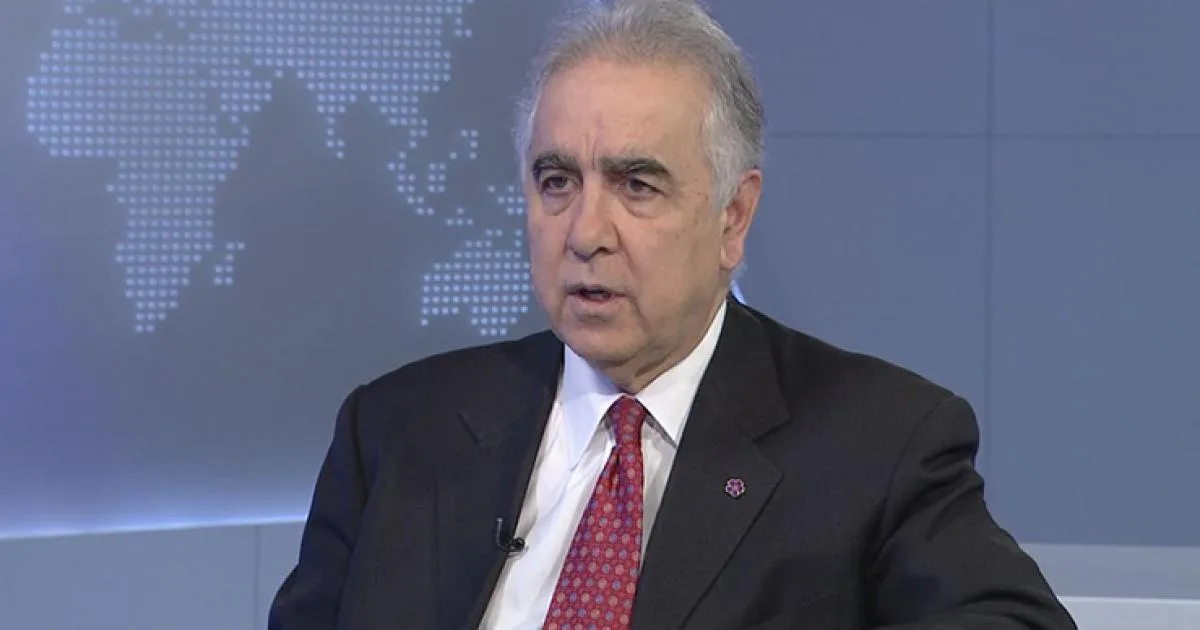
Harut Sassounian, the author of the commentary, argues that the more expensive and stricter framework conflicts with the Armenian government’s stated goal of increasing the country’s population. In his view, it would be more logical to simplify the process and make it less costly, especially for diaspora Armenians.
Sassounian says the initiative may rest on two motives. The first, he argues, is to generate additional budget revenue. In that context, he notes that Armenia’s state debt stood at $7 billion in 1991-2018, and after Pashinyan came to power it doubled over the past eight years to $14 billion. The second possible motive, he says, is to limit the number of people seeking to immigrate to Armenia, whether ethnic Armenians or non-Armenians.
He is particularly concerned that the proposed approach could discourage diaspora Armenians from engaging more closely with Armenia and weaken their connection to the homeland. A more effective policy, he argues, would be to encourage dual citizenship, reduce or eliminate the citizenship fee, and remove the residency requirement. In his view, holding an Armenian passport represents not only legal status for diaspora Armenians, but also an emotional and practical bond with Armenia that can encourage visits, investment and, in some cases, permanent relocation.
Sassounian also highlights the roughly $4,000 fee for renouncing citizenship, calling it one of the most absurd provisions in the package. He argues that such a high charge could be especially problematic for dual nationals living in countries that require them to formally give up their second citizenship.
He concludes by urging the Armenian government to scrap the proposed revised rules and instead launch a global campaign through its embassies and consulates to encourage diaspora Armenians to become dual citizens.



