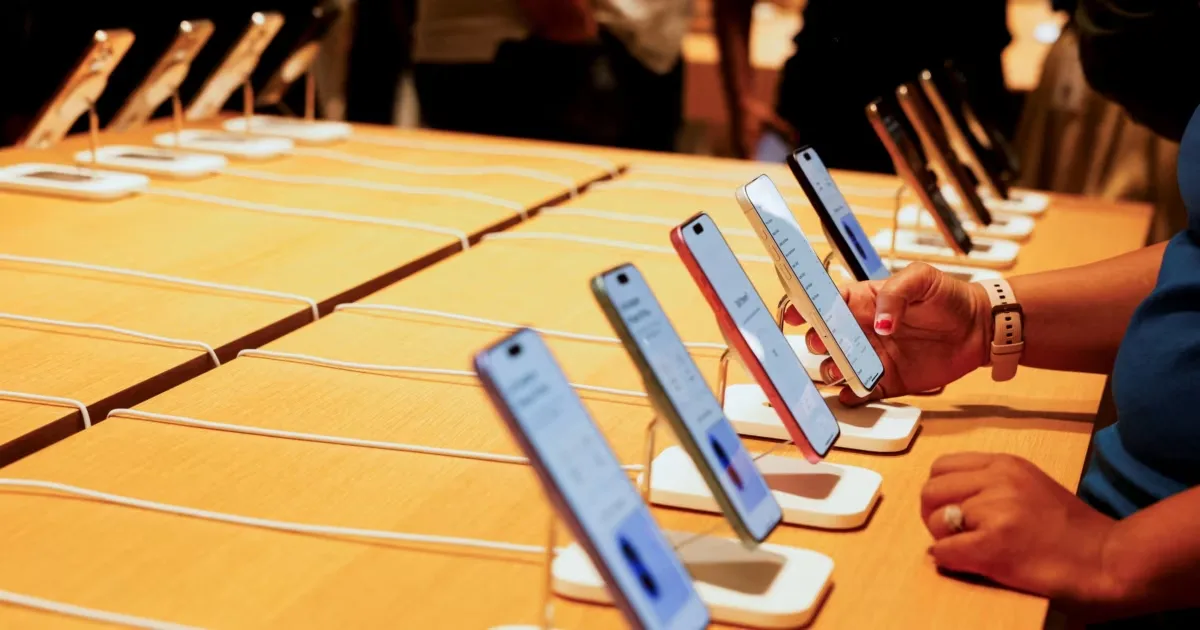

Armenia’s reexports of mobile phones to Russia maintained strong growth in the first half of 2026, even as tensions between the two countries continued to rise. The trade has expanded in the wake of Western sanctions on Moscow, which disrupted direct supplies of a range of goods to Russia.
According to Armenia’s State Revenue Committee, almost 1.27 million handsets worth around $400 million were shipped to Russian retailers in January-June. That was 38% higher than in the same period of 2025. The shipments accounted for nearly one-third of Armenia’s total exports to Russia, even as overall exports to the Russian market fell by more than 4% year on year because of Russian bans on Armenian agricultural goods.
The scale of those profitable reexports also explains why Mobile Center, a company importing smartphones made by Western manufacturers, became Armenia’s top corporate taxpayer last year. In January-June 2026, the State Revenue Committee collected 38.2 billion drams, or about $105 million, in various taxes from the company, up by roughly 16% from a year earlier.
Mobile Center is an official distributor of leading global smartphone makers, including Apple, Samsung and Xiaomi. Like many other Armenian firms and individual traders, it has benefited from the export restrictions imposed on Russia after Moscow’s 2022 invasion of Ukraine. Since then, reexports have been one of the main drivers of Armenia’s economic growth.
The sector now stands out as one of the few bright spots in Russian-Armenian commercial ties, which have come under growing pressure from Russian trade restrictions introduced in May and June. Citing sanitary concerns, Moscow blocked imports of Armenian fruit, vegetables, cut flowers, mineral water, fish and some alcoholic beverages. Against that backdrop, Yerevan faced pressure to choose more quickly between pursuing membership in the European Union and remaining in a Russian-led trade bloc. Armenian exports dropped significantly in June and July.
Russian officials have also warned of other possible punitive steps, including a sharp increase in the price of Russian natural gas supplied to the South Caucasus country and restrictions affecting Russian tourists traveling there. Even so, Prime Minister Nikol Pashinian has ruled out any reversal of his government’s European integration policy.
Government data show that Russia remains Armenia’s top trading partner and export market, accounting for 27.5% of the country’s foreign trade in the first half of the year. Armenian exports to Russia stood at $1.23 billion, compared with $516 million exported to the European Union.



