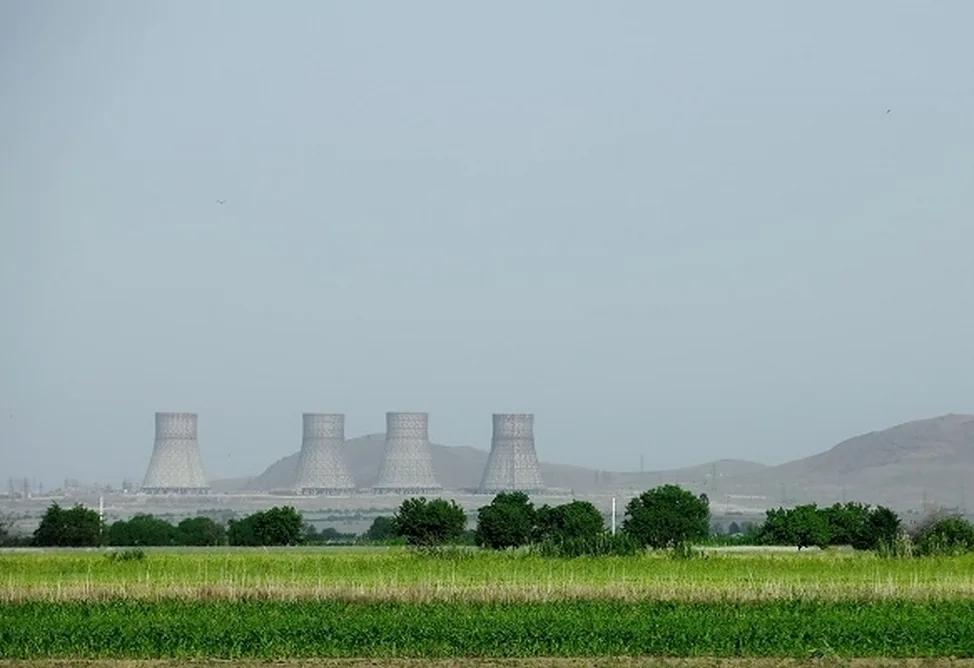

Armenia is pursuing two tracks at the same time: extending the service life of the second power unit at the Armenian Nuclear Power Plant and preparing to build a new nuclear unit. The main target horizon for the current plant is 2036, but a government-approved technical plan also provides for studies to justify operating certain irreplaceable and non-repairable components through 2041.
On September 9, Armenian NPP chief executive Eduard Martirosyan said some calculations at the plant are already being carried out with 2041 in mind. He said the current license runs until 2031, with an extension to 2036 under consideration and, if technical and regulatory grounds exist, potentially for a longer period.
At the same time, the government still has to choose the technology for the new power unit. Under Armenia’s 2026–2031 government program, the model has already been determined, while the technology must be selected no later than the end of 2027.
What the dates 2031, 2036 and 2041 mean
The central benchmark of the state program is 2036. In September 2023, the government approved by decision No. 1597-A a repeat life-extension program for the second unit of the Armenian Nuclear Power Plant and its action plan. That course is also reflected in Armenia’s 2026–2031 government program, which envisages full implementation of the extension program in 2026–2036.
However, 2036 is not the expiry date of the current operating license. According to Martirosyan, the existing license is valid until 2031, and any operation beyond that point requires both technical upgrades and regulatory approval.
The 2041 date refers to a different stage of planning. On June 20, 2025, the government approved by decision No. 819-A a revised action plan for the life-extension program. Clause 5.8 calls for justification of extending the operating life of irreplaceable and non-repairable elements of the second unit through 2041 after defining a modification of the emergency core cooling system. The deadline for that work is September 6, 2028.
Clause 5.9 requires conclusions to be prepared by March 1, 2029 on the feasibility, timeframe and conditions for operating those elements until 2041. In other words, 2041 is already part of the approved technical roadmap, but that does not mean a decision has been made to run the entire power unit until then. The issue is whether key components can technically remain in service longer.
What has been done in 2026
On April 1, the second power unit was shut down for an extended scheduled preventive repair campaign and work under the life-extension program. After inspections and testing, the unit was reconnected to Armenia’s power grid on September 1.
According to the Armenian NPP, around 20 integrated measures were carried out as part of the 2026 repair campaign to improve the reliability of systems and equipment, extend their service life and strengthen safety. Martirosyan said the shutdown lasted 153 days. During that period, important equipment assemblies were repaired and replaced, and samples of reactor vessel metal were sent to Russia for research.
The main work areas included safety assessment and upgrades, modernization of emergency and fire protection systems, inspection of equipment and elimination of identified non-conformities.
What procedures still lie ahead
The government plan calls for equipment life assessment, modernization, seismic safety evaluation, monitoring of reactor vessel metal properties after the annealing carried out in 2021, analysis of the probability of failure of the reactor vessel and steam generator collectors, as well as fire safety and other measures.
By December 30, 2029, reports in the required format must be submitted to the regulator to obtain permission for the second unit to operate in an additional period. The length of that period will depend on research results and regulatory procedures; the plan itself does not automatically authorize operation of the unit through 2041.
Funding and the new NPP project
On July 9, 2026, the government reviewed financing for the program. According to ARKA, the Armenian Nuclear Power Plant was approved for a 20.1 billion dram budget loan to fund repeat life-extension and modernization work on the second unit. Government materials put the overall size of the program at about $160 million. Publicly available documents do not single out a separate cost for measures tied specifically to the possible 2041 technical horizon.
Extending the current plant and preparing a new one are moving in parallel. In June, Minister of Territorial Administration and Infrastructure David Khudatyan said successful implementation of the repeat extension program would allow the existing station to remain in Armenia’s power system at least until 2036 and would give the government more flexibility in choosing a project for the new plant.
The authorities are leaning toward a modular nuclear plant format, but the specific technology, model and supplier have not yet been finalized. Armenia is studying proposals from potential partners in five countries: Russia, the United States, China, South Korea and France. The government program approved on August 20, 2026 provides for the launch of a program to build a new nuclear power unit, and its technology must be chosen by the end of 2027 at the latest.
On September 3, Prime Minister Nikol Pashinyan said Rosatom chief Alexey Likhachev was expected to visit by the end of September to present new Russian proposals for building a nuclear plant in Armenia. Pashinyan said the authorities do not see the project choice as a geopolitical decision and intend to base it on value for money.
Overall, Armenia is both preparing the current power unit for operation with a target horizon through 2036 and examining whether its key components can technically operate longer. At the same time, the government is advancing plans for a new nuclear unit, whose technology is to be selected by the end of 2027.



