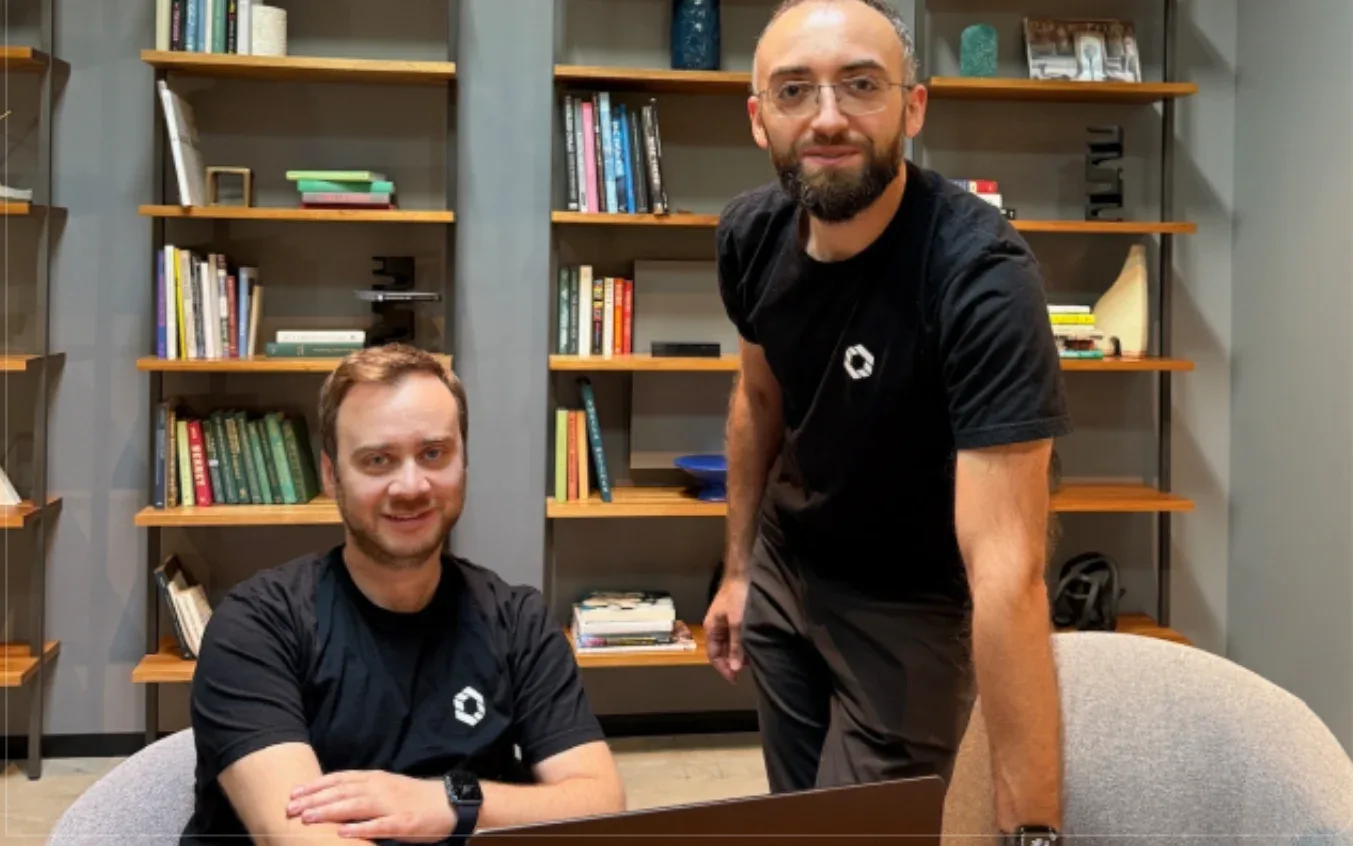

AI tools have sharply lowered the barrier to building websites and applications, but that is still not enough for a real business product. A full-scale digital service needs databases, authentication, infrastructure, monitoring, security and the ability to handle rising traffic. Armenian engineers Aram Shatakhtsyan and Eduard Piliposyan say this is the gap they want to close with Modelence.
As reported by PAN.am, the project is not positioned as just another AI website builder. Its founders want to remove the technical layer that is repeated across most software projects but has little to do with the underlying business idea. Their premise is that both technical and non-technical users should be able to describe what they need and get a fully functional website, web platform or mobile app without writing code.

From programming olympiads to a startup
The roots of Modelence go back well before the company itself. Aram Shatakhtsyan was introduced to programming at home: his father had worked as a software engineer since the 1980s. Shatakhtsyan says he began learning C++ at age 12, and visual programming later turned that early exposure into a lasting commitment.
Eduard Piliposyan followed a different route. He studied at Shirakatsy Lyceum and later at the Russian-Armenian (Slavonic) University, becoming deeply involved in informatics olympiads while still at school. He recalls that those competitions combined the intensity of sport with academic disciplines such as algebra, geometry and programming.
At first, the two were rivals rather than partners. Piliposyan competed for the Russian-Armenian University team, while Shatakhtsyan represented Yerevan State University. Shatakhtsyan says his first olympiad experience was disappointing, but after intensive preparation he made Armenia’s team for the international olympiad in Mexico. The following year he took first place in Armenia and won a silver medal at the 2007 international olympiad in Croatia.
Both later competed in ICPC, the international collegiate programming contest. Their collaboration began when an open tournament allowed students from different universities to form a new team. In that format, Shatakhtsyan and Piliposyan, together with a third participant, won as a team for the first time, taking first place in Armenia by a wide margin.
From rivalry to building together
Shatakhtsyan says that experience showed him that strong individual results do not automatically translate into a strong team. Piliposyan says their skills were different enough to complement each other, helping each fill the other’s gaps. That lesson later carried over into business.
When Aram Shatakhtsyan founded CodeSignal, Eduard Piliposyan was among the first people he asked to join. As they worked together on building and scaling production systems, they kept running into the same issue: whether a team was launching an online education platform or a car sales website, it still had to solve the same infrastructure problems again and again, from databases and authentication to deployment, monitoring and stability.
Shatakhtsyan says their years of experience building production platforms for some of the world’s largest tech companies showed that many applications rely on the same foundational blocks. Piliposyan adds that these tasks are separate from the actual business logic, yet every new product team has to repeat them in order to end up with reliable software. That observation became the basis for Modelence.

What Modelence is trying to do
The platform is designed for both websites and mobile applications. The founders’ idea is that users should focus on business needs and product functionality, not on whether the service can support 100 users now and 10,000 later. If a business wants to launch an online car dealership with listings, filters, contact forms and offers, they argue that such a product should be assembled within one environment.
Piliposyan compares the shift to driving a car. Decades ago, drivers often also needed to be mechanics. Today, most people can drive without understanding how an internal combustion engine works. In the same way, he argues, businesses should be able to create digital products without mastering the technical complexity that used to be mandatory.
A prototype is not yet a product
The founders stress that AI can quickly generate an attractive prototype or interface, but that alone does not make a finished product. Reliable data storage, resilience under load, incident handling and system visibility remain essential. If an online learning platform fails during an exam, for example, the problem is no longer a minor technical glitch but a risk to users’ results.
Shatakhtsyan says Modelence is meant to act both as a development framework and a production platform, helping users not only build applications but also deploy, run and scale them. He argues that experienced users often move away from traditional AI app builders toward their own tools, such as Claude Code, Cursor or Codex, partly because usage credits can become too expensive over time. In his view, Modelence is different because it is focused less on short-term prototype appeal and more on long-term production reliability.

In that sense, Modelence is targeting a practical problem for startups and digital businesses: reducing the technical complexity of creating and launching software products while preserving scalability and reliability.



