
The rapid advance of artificial intelligence is reshaping how software is built: describing an idea in plain language can now produce an initial version of a website or app. But that alone is not enough for a business-ready product. A full-scale digital service still needs databases, authentication, monitoring, security, service integrations and infrastructure that can handle user growth.
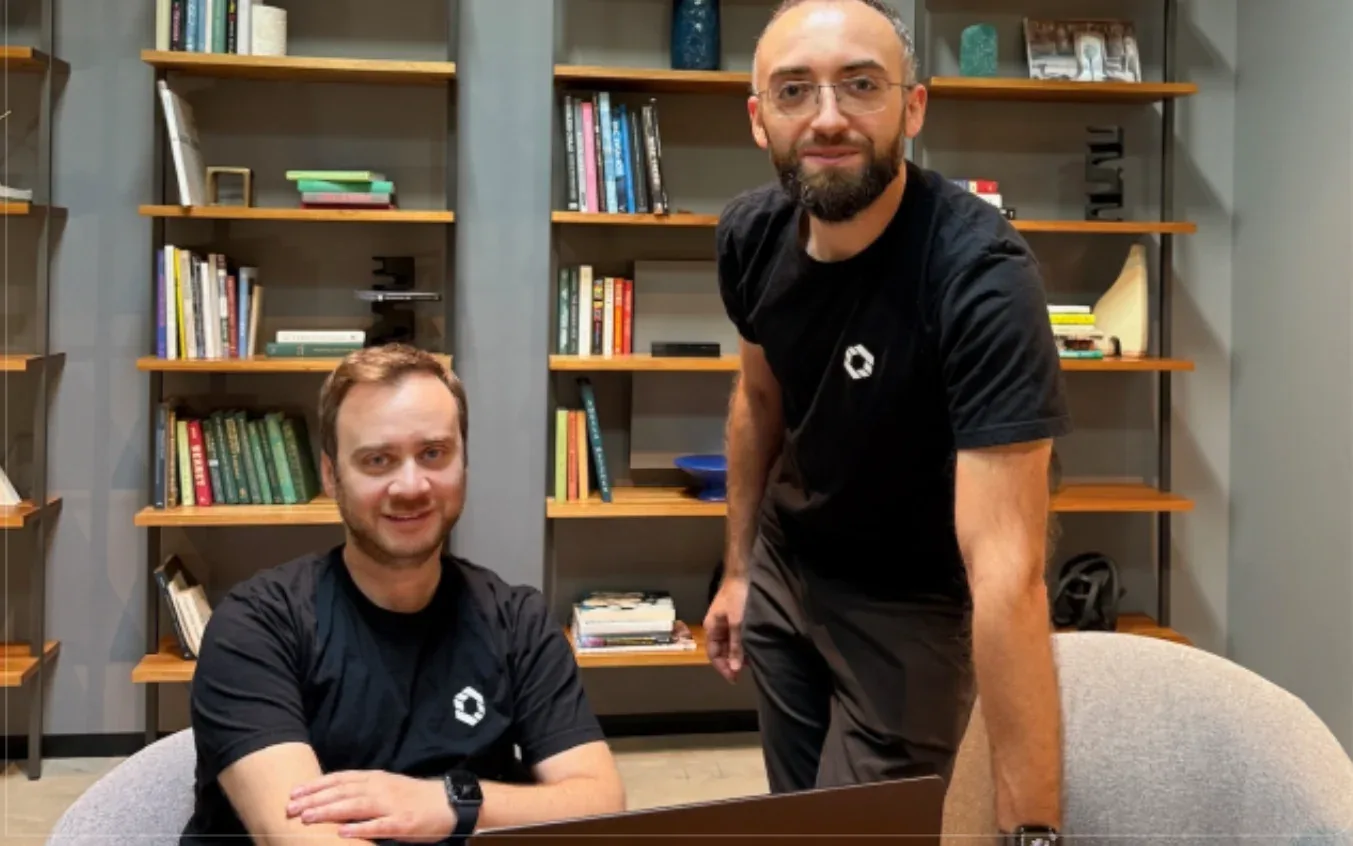
That is the problem Aram Shatakhcyan and Eduard Piliposyan say they are addressing with Modelence. According to PAN.am, the company is not positioning itself as just another AI website builder. Instead, it aims to automate the technical layer of software development that is repeated across most projects and is often separate from the core business logic behind a product.

Modelence is designed for both technical and non-technical users. The idea is that a user can describe the product they want, and the platform will help generate a working website, web platform or mobile application without requiring deep coding expertise.
From olympiads to a startup
Both co-founders entered programming at an early age and built their backgrounds through algorithms, mathematics and competitive programming. Aram Shatakhcyan was introduced to programming at home: his father was a software engineer and began teaching him C++ when he was 12. After an initially difficult start, programming became a lasting pursuit, and he later went on to win a silver medal at the international olympiad held in Croatia in 2007.
Eduard Piliposyan studied at Shirakatsy Lyceum and later at the Russian-Armenian (Slavonic) University. From his school years onward, he was actively involved in informatics and programming olympiads, including ICPC, the international collegiate programming contest.
At first, the two were competitors, with Eduard representing the Slavonic University team and Aram representing Yerevan State University. They later joined forces at an open competition, formed a team with another participant and won by a wide margin over the second-place finisher. In their telling, that was the moment they realized how effectively they complemented each other.
The partnership later continued in business. When Aram founded CodeSignal, Eduard was one of the first people he invited to join the team. As they worked together building and scaling production systems, they came to the conclusion that nearly every new digital product depends on the same technical foundations regardless of its specific use case.
Automating the repetitive technical layer
The founders argue that while each business has its own logic, a large share of the technical infrastructure remains the same from project to project. That includes databases, authentication, monitoring, production deployment, reliability and scalability. Modelence is meant to take over that layer so companies can focus on what their product actually does instead of repeatedly rebuilding similar engineering components.
They say this could be useful for any business with a digital idea or a process it wants to automate. As one example, they point to an online car sales platform that would need vehicle listings, filters, contact tools and price offer functionality. With Modelence, they say, such a product could be built in a way that can later support more data and a larger user base.

The co-founders stress that AI tools can now create a prototype quickly, but a polished interface does not equal a finished product. If a service is meant to support a real business, it must also be reliable, secure and scalable. Modelence, they say, is built to automate as much of that difficult layer as possible and make software creation accessible to a broader range of users.
In that sense, Modelence is being positioned not only as a code-generation tool, but as a platform that seeks to change the broader process of software creation, especially the part where technical complexity often slows down the launch of a business idea.



