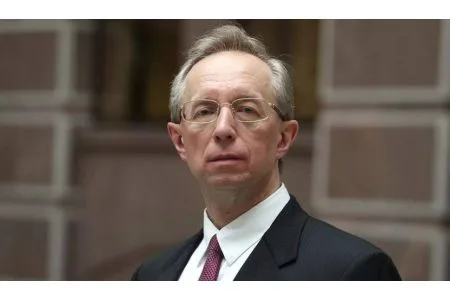


Armenia is showing signs of politically motivated “property redistribution,” Russian Deputy Foreign Minister Mikhail Galuzin said while commenting on earlier remarks by Russian Security Council Secretary Sergei Shoigu. The statement was relayed by Russia’s Foreign Ministry, according to the report.
Galuzin said Moscow regularly raises the issue of operating conditions for Russian businesses in Armenia in talks with Armenian counterparts. He added that although Russian officials had been assured at various levels that domestic investments faced no threat, recent developments, in his view, do not fully match those assurances.
According to the deputy foreign minister, a growing number of experts believe there are signs in the republic of politically driven redistribution of property. As an example, he cited the ongoing nationalization process involving Electric Networks of Armenia CJSC, linked in the report to businessman and Strong Armenia party leader Samvel Karapetyan.
Galuzin said Armenia’s ruling team is presenting its actions as part of an anti-corruption drive, an effort to return illicitly obtained funds to the state budget, and a move to improve the company’s efficiency. However, he argued that those explanations are open to doubt and that the case looks more like politically motivated retaliation against a domestic rival. He also said that before the businessman entered the country’s political life, there had been no complaints about the company’s work.
The Russian diplomat also referred to statements by Armenia’s leadership about the possible sale of the concession of South Caucasus Railway CJSC, a subsidiary of Russian Railways that operates Armenia’s rail network. Galuzin said it has been claimed publicly that the Russian presence deprives Armenia of competitive advantages because of the threat of Western sanctions, while in reality, he argued, the Russian company has for years reinvested its revenue in maintaining, upgrading and developing Armenia’s railway infrastructure.
He provided figures to support that argument. Since 2008, investments by South Caucasus Railway CJSC have totaled 30 billion rubles, or about $388 million, while tax payments have amounted to 15 billion rubles, or about $194 million, he said. More than 520 kilometers of track have been repaired, compared with an operating network length of about 700 kilometers. Fifty percent of sleepers have been replaced, and more than 50 structures have been repaired or reconstructed, including 38 bridges and two tunnels. The company also employs more than 2,500 people, according to Galuzin.
He said those efforts helped preserve one of Armenia’s strategic assets and created conditions for the country’s effective integration into the international transport network. At the same time, he argued that persistent discussion of selling the concession, without a clear explanation of why the Russian side would need such a move, may indicate an intention to remove and transfer the railways in the interests of the geopolitical projects of other states.
Galuzin stressed that Moscow is closely monitoring whether the legitimate interests of Russian economic operators in Armenia are being respected. Any violation of those interests, he said, would not only damage Armenia’s investment climate but would also draw an appropriate response from Russia.
The report also recalls that on September 17, Russian Security Council Secretary Sergei Shoigu said a hostile approach and open “double standards” were being shown toward Russian business operating in Armenia. He described what is happening to companies and entire sectors that received billions in Russian investment as a “raider seizure.” On September 18, Russian Security Council Deputy Secretary Alexey Shevtsov in turn said Armenia’s authorities were trying to devalue Russian assets in order to force owners to get rid of them.
Shevtsov warned that such tactics would amount to a “shot in the foot” for Armenia’s economy, given that Russian business has created tens of thousands of jobs in the republic, manages its assets effectively on a legal basis, and makes a significant contribution to Armenia’s GDP.



