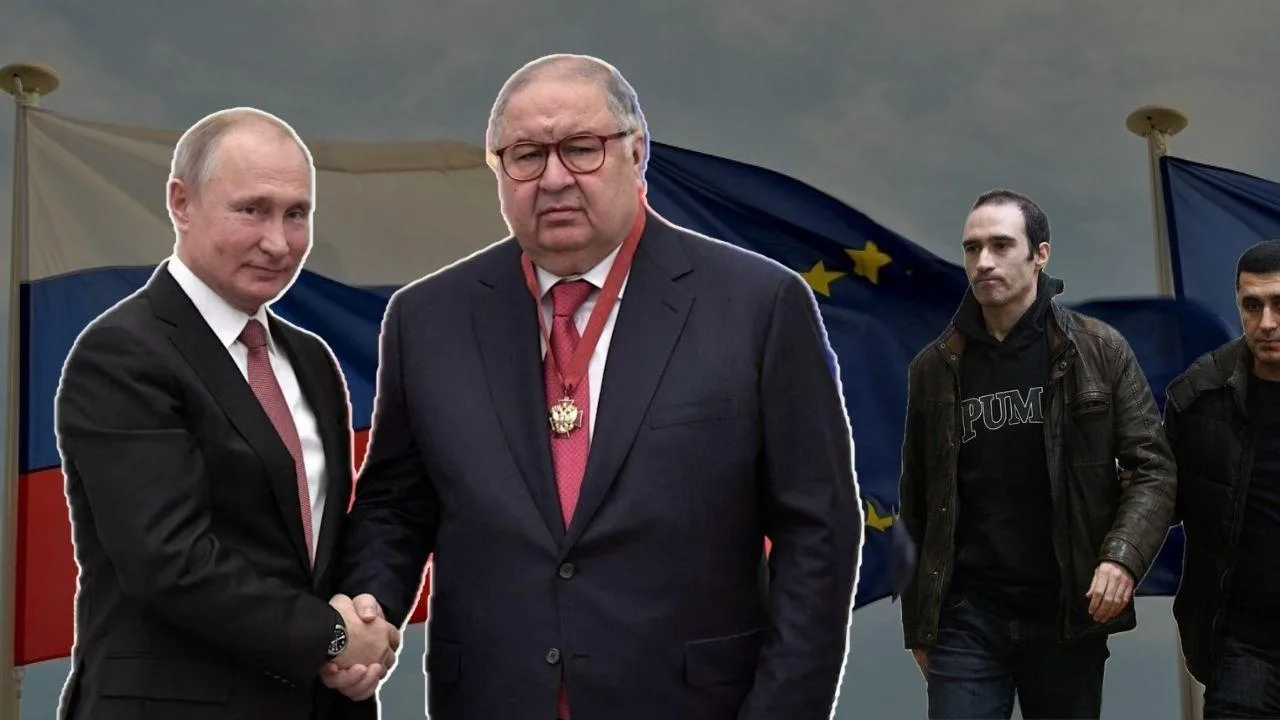

EU ambassadors have spent about a week trying to break a deadlock over renewing sanctions on roughly 3,000 individuals and entities linked to Russia. The impasse stems from demands by France and Slovakia to remove Russian billionaire Alisher Usmanov, who is of Uzbek ethnicity, from the sanctions list.
According to international media reports, France’s position is tied to two French citizens being held in Azerbaijan. One of them has already been sentenced to 10 years in prison on espionage charges. Reports say Paris and Baku have been engaged in confidential talks that may have influenced the French stance. Azerbaijan denies any such link, while France’s foreign ministry has declined to provide details, saying the matter falls under national security.
Divisions inside the EU
Under EU rules, extending these sanctions requires unanimous approval from all 27 member states. Since early summer, Slovakia has argued that both Alisher Usmanov and another influential Russian oligarch, Mikhail Fridman, should be removed from the list.
Last week, France unexpectedly joined Slovakia and vetoed a one-year extension of the measures. That forced emergency talks in Brussels, as the current sanctions term expires this week and member states need to reach an agreement before then.
EU ambassadors continued negotiations on September 21. Several compromise options are now under discussion. One proposal would keep Usmanov on the formal sanctions list while partially lifting some restrictions, including the EU travel ban and the freezing of assets.
The idea has split member states into different camps. Some countries, including Germany and Italy, have signaled they could accept the French demand in order to break the deadlock. Others question whether collective EU sanctions should be used to serve national objectives. A larger bloc of countries remains firmly opposed to any concession, arguing that it would weaken the integrity of the sanctions regime and set a dangerous precedent. The EU is expected to present a common position by September 22.
The French detainees in Azerbaijan
One of the French citizens at the center of the dispute is Martin Ryan, who was arrested in December 2023 and later sentenced to 10 years in a high-security prison in Azerbaijan.


Azerbaijan accused him of spying for French intelligence. According to the charges, he gathered confidential information on Baku’s military ties with Turkey, Pakistan and Iran, as well as trade relations with Russia and China.
Ryan was also found guilty of recruiting Azerbaijani citizen Azad Mammadli, who was sentenced to 12 years in prison for treason.
Both the French government and Ryan have repeatedly denied the espionage allegations. In court, Ryan said he had acted unknowingly, while France described his detention as “arbitrary.” Very little public information is available about the second French detainee.
Reuters reported that French foreign ministry spokesperson Pascal Confavreux declined to comment on Azerbaijan’s possible role, saying only that the matter concerns “national security.”



