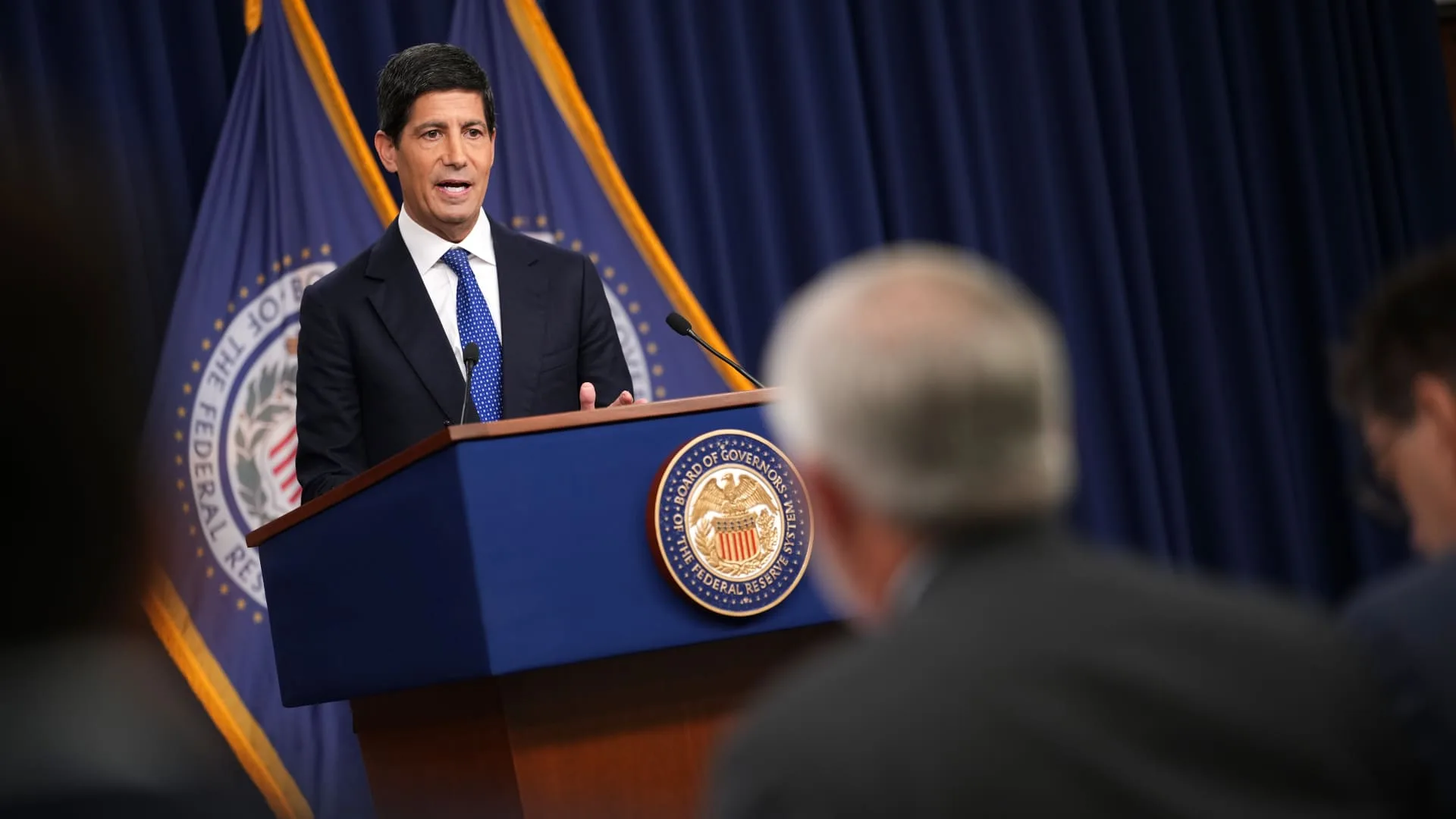
The Federal Open Market Committee unanimously raised interest rates by 25 basis points, with Federal Reserve Chair Kevin Warsh arguing that inflation remains above the Fed's 2% target.
The move came despite repeated public calls from Donald Trump and officials in his administration for lower rates, or at least no increase. At his press conference, Warsh avoided any political framing and said the decision was driven by the economic outlook.
Asked by a reporter whether he had a message for Trump, Warsh declined to engage, saying: “I've got nothing for you on a discussion with the president.”
White House spokesman Kush Desai later told Fox News that, from the administration's perspective, the Fed's decision “was not ... backed by a particularly compelling economic case.” Trump then appeared to respond on Truth Social, writing that U.S. interest rates should be “1%, or less,” because the country is “the Best Credit in the World — BY FAR.”


Trump chose Warsh in January to lead the Fed after souring on former Chair Jerome Powell, whom he had appointed during his first term. Trump was particularly angered by Powell's vote to cut rates by a half-point in September 2024, a move he viewed as political interference ahead of the presidential election. Powell, like Warsh now, said his decisions were based solely on the economy.
Before this week's meeting, Trump had dismissed Warsh's decisions to hold rates steady in June and July as the result of political motives among other Fed voters. Now that Warsh himself backed a rate increase, that argument becomes harder for the White House to sustain.
Some administration officials have argued that the Fed should avoid acting on the economy ahead of midterm elections. But the historical record offers only limited support for that claim. CNBC notes that since 1994, the Fed has changed rates at a comparable or shorter interval before elections in five election years: 1998, 2004, 2008, 2018, and 2022.
Since Warsh's nomination, some Democrats have argued that he would not be independent of the president who selected him. Wednesday's decision suggests those judgments may have come too soon.
At the same time, the article notes that Trump has other avenues if he is unhappy with Warsh's approach. In 2025, he attempted to fire Fed Governor Lisa Cook, but the Supreme Court blocked the move, saying proper process had not been followed. Last month, the administration restarted that effort, giving Cook until Aug. 26 to respond, and the next step is now up to the White House.
The U.S. Department of Justice also opened and later closed an investigation into Jerome Powell while awaiting a separate Fed inspector general inquiry into cost overruns in building renovations. The DOJ has said it reserves the right to reopen that matter once the report is issued.
Another review is underway into the 2023 failure of Silicon Valley Bank. Some analysts believe that process could provide the administration with a pretext to try to remove Michael Barr, who oversaw bank supervision in 2023. Barr has stepped down from that regulatory role but still holds a seat on the Fed board.
If Trump takes any of those steps, it could end the tacit truce between the administration and the Fed that has held since Warsh was chosen. Even so, Trump acknowledged back in January that candidates for the Fed job often change once they take office. “Problem is they change once they get the job,” he said at the time.



