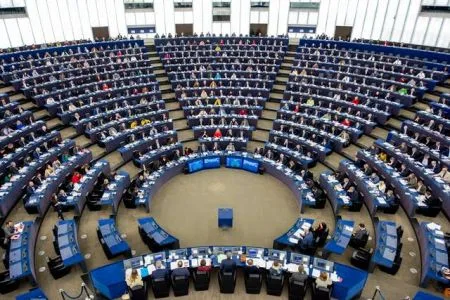
The European Parliament has approved temporary trade liberalisation measures for products made in Armenia (Autonomous Trade Measures) by 583 votes in favour, 49 against and 39 abstentions. The update was announced by Armenia’s ambassador to Belgium and permanent representative to the EU, Tigran Balayan.
In a post on X, Balayan said the European Parliament had backed the European Commission’s proposal to grant ATMs for products produced in Armenia, calling it another important step in the development of Armenia-EU partnership. He also shared a photo from the parliamentary vote.

Earlier, on September 2, the Council of the EU decided to introduce temporary trade liberalisation measures for Armenian goods in order to support Armenia’s economy after recent trade restrictions imposed by Russia.
According to the published details, the measures apply to around 80% of Armenian exports to the EU. The regulation provides for a temporary suspension of import duties on a broad range of Armenian products, including certain agricultural goods subject to tariff quotas.
At the same time, the preferential regime comes with conditions and safeguard mechanisms designed to protect the EU market if imports negatively affect European producers.
The measures will remain in force for two years from the date the regulation enters into effect. According to the source, they will cover nearly 99% of Armenia’s exports of fresh fruit, vegetables and plants to Russia, as well as more than 91% of beverages and alcoholic drinks.
The proposal is meant both to support Armenia after Russian trade restrictions disrupted the country’s export and transit routes and to strengthen trade ties between the EU and Armenia under the Comprehensive and Enhanced Partnership Agreement (CEPA).
The preferences remain conditional on Armenia complying with the existing rules of origin, engaging in administrative cooperation with the EU, refraining from introducing new trade restrictions on imports from the EU, and respecting the core elements of CEPA, including democratic principles, the rule of law and human rights.



