Financial Times reports on a new strategy of European automotive giants involving the engagement of Chinese competitors for joint production. Fiat's Cassino plant has produced only 6,700 vehicles in the last six months, while Stellantis is also seeking a partner for the revival of the Maserati brand.
The European auto industry is searching for unconventional rescue paths. Automakers are increasingly involving Chinese partners to load production lines and support loss-making enterprises. This trend is highlighted by Financial Times.
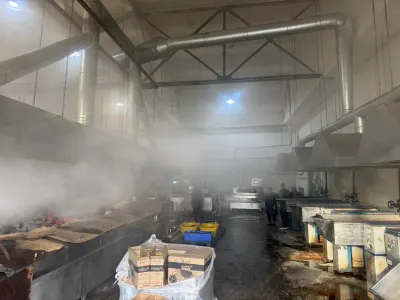
At risk is the Fiat plant in Cassino, located about 130 km southeast of Rome. Once the engine of the region's economy, it now operates only a few days a month. In the first half of 2026, only 6,700 vehicles left the factory, while its annual production capacity is 300,000 vehicles.
Fiat employees speculate that the brand's owner, Stellantis, will try to solve the Cassino plant's issues through cooperation with China.
This approach has already been implemented. Recently, agreements have been signed in Spain and France with Leapmotor and Dongfeng Motor companies, allowing them to assemble their models in local factories.
According to the publication, European auto giants are increasingly calling on Chinese competitors for help, including organizing joint assembly lines. This helps avoid the financial losses that would be inevitable in the case of complete factory closures.
“This is not just a means of survival and reaching new competitors, but also an opportunity to increase production volumes and growth in Europe,” said the head of Stellantis's European division to Financial Times, commenting on the partnership with Chinese companies.
He noted that a decision regarding the Cassino plant will be made by the end of the year. At the same time, the company is also seeking a partner for the revival of the Maserati brand, with collaboration with a Chinese automotive group being the most likely option.
The situation in Europe has changed irrevocably: the European auto industry accounts for about 7% of the EU countries' GDP and creates nearly 14 million jobs. However, the level of utilization of production capacities in the sector is currently below even 60%.
Approximately 2.5 million vehicles' production is at risk, while sales in the region are still nearly 3 million vehicles below pre-pandemic levels.