
Two developments unfolding at the same time in global energy and shipping markets suggest that major companies are spending more not just on production, but on the infrastructure needed to control the physical movement of energy. The focus is on floating LNG infrastructure and long-haul crude transport.
According to Reuters, ADNOC investment arm XRG in Abu Dhabi is considering acquiring up to 50% of Energos Infrastructure, a company valued at around $3 billion. There has been no formal confirmation from XRG, Apollo Global Management, or Energos, and the discussions are still described as preliminary. Even so, the report says Energos could be valued at more than $3 billion.
Energos Infrastructure operates 13 floating LNG assets, including floating storage and regasification units, or FSRUs, and LNG carriers deployed under long-term arrangements in Brazil, Egypt, Indonesia, Mexico and the Netherlands. The article argues that the strategic value of these assets lies not only in the vessels themselves, but in the speed and flexibility they offer in redirecting LNG access points.
The report highlights that FSRUs can turn a coastal site into an LNG import gateway much faster than a large land-based terminal can be built. That advantage became especially visible after the Russian invasion of Ukraine, and in a post-Ukraine, post-Hormuz and increasingly post-Bab el-Mandeb security environment, such infrastructure continues to command a high strategic premium.
The article links XRG’s interest to a broader expansion strategy. The company has increased its position in the Rio Grande LNG development in Texas, gaining exposure across all five planned trains, and has entered Argentina’s emerging LNG chain through upstream interests in Vaca Muerta alongside Eni and YPF. It also already has exposure to Mozambique’s LNG resources and floating liquefaction infrastructure. Its stated goal is to build a global LNG portfolio of roughly 25 mtpa by 2035.
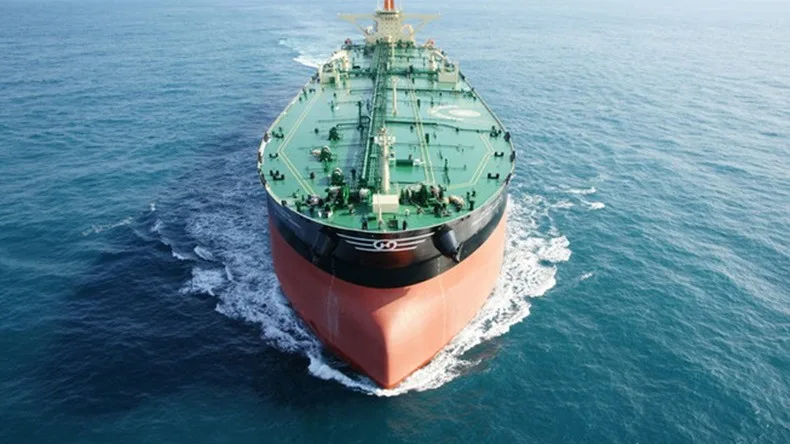
At the same time, the market is seeing a sharp rise in VLCC orders. By the publication’s estimates, 2026 contracting could total between 164 and 217 vessels, depending on methodology. Total investment is put at more than $20 billion. The report describes this as the strongest comparable ordering pace in at least 25 years.
Against that backdrop, the crude-tanker orderbook has reached about 130 million dwt, equal to roughly 27% of the operating fleet. At the same time, around 20% of the VLCC fleet is more than 20 years old, supporting replacement demand and helping segment the market, including under sanctions-driven conditions. But the article also flags risks, including clustered deliveries, eventual overcapacity and a possible collapse in freight rates if ton-mile demand normalizes.
The central conclusion is that the energy transition has not disappeared, but it is no longer setting the pace of investment. Supply security is increasingly taking that role. As geopolitical fragmentation, chokepoint insecurity and shifting trade routes reshape the market, companies are racing to secure ships, terminals and floating infrastructure that give them greater control over physical energy flows.



