
According to OilPrice.com, the conflict in Yemen should be viewed not only through the lens of the U.S.-Iran confrontation, but also as a separate war by the Houthis against Saudi Arabia that is already affecting regional energy supplies. The article’s main argument is that the group is pursuing its own military and political objectives, while the broader regional conflict is amplifying market and financial risks.
The report says the Houthis’ September 8 demands largely mirror the position they held in 2023, when they rejected a UN roadmap. That plan called for an end to Saudi military operations in Yemen, the lifting of restrictions on Houthi-controlled ports and airports, payment of salary arrears, and a share of Yemen’s oil and gas revenues.
The article says the one confirmed area of direct Iranian involvement is the offensive toward Mocha and the Hanish Islands. According to the report, the operation is overseen by IRGC Quds Force commander Abdolreza Shahlai and gives the Houthis what they have long sought: control of the coast, including the approaches to Bab el-Mandeb.
OilPrice.com also reports that last weekend U.S. officials met Houthi representatives at the American embassy in Muscat with Oman acting as intermediary. The Houthi delegation reportedly said it does not intend to attack U.S. vessels and remains committed to the ceasefire reached with Washington in May 2025. The same reports said the group also pledged not to target Israeli or other commercial ships, leaving Saudi vessels as the exception.
The article argues that the Houthis are trying to keep their conflict with Riyadh bilateral and avoid drawing the United States directly into the war. At the same time, the situation is becoming more complicated because Bab el-Mandeb has become a more strategic asset in 2026. The report also refers to intelligence suggesting the IRGC may be involved in designing a Houthi-controlled toll system at Bab el-Mandeb modeled on Iran’s approach in Hormuz, although the Houthis have denied that claim.
How much damage the attacks caused
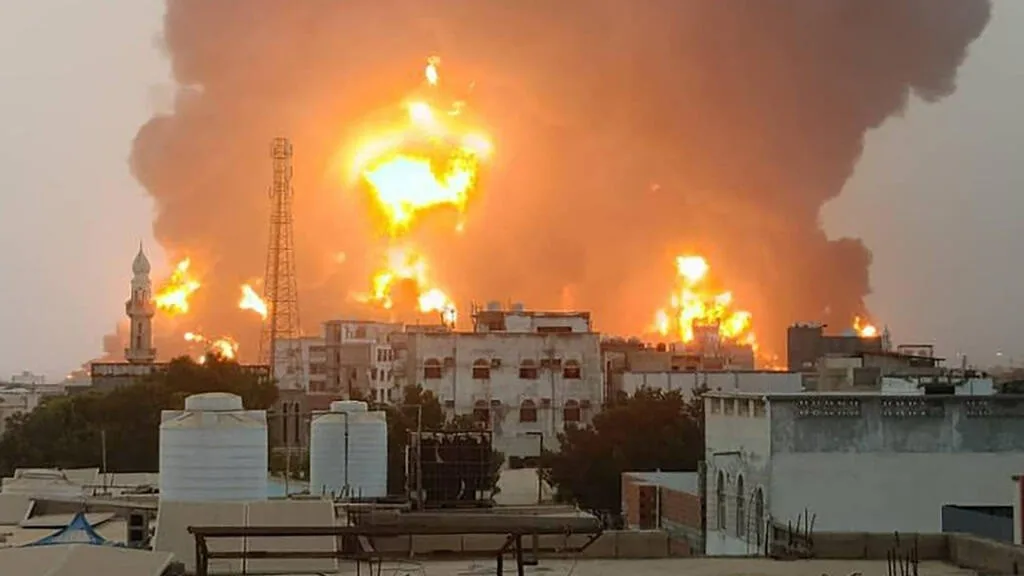
OilPrice.com says Houthi missiles and drones struck oil facilities and utility infrastructure in four southern Saudi cities on September 8 — Abha, Khamis Mushait, Jazan, and Najran. The attacks caused fires, wounded 73 people, and forced temporary shutdowns at some sites. Saudi Arabia’s Energy Ministry confirmed both the fires and the suspension of operations.
The report, however, distinguishes between confirmed and unconfirmed incidents. It says the damage to the East-West pipeline on September 10-11 — the strike that had the biggest impact on oil markets — came from drones launched out of Iraq by an Iran-backed militia, not by the Houthis. The September 16 drone incident involving Mecca, which drew heavy media coverage, caused no damage: Saudi authorities said the drone was intercepted before entering restricted airspace over the holy city, while the Houthis denied targeting Mecca and Iran suggested it may have been a false-flag event. The article says no independent evidence has emerged for either claim.
The piece also notes that claims of a strike on Yanbu’s export terminal and a second strike on the Khamis Mushait airbase have come only from the Houthis, with no confirmation from Saudi Arabia. It adds that the Houthis do not have the range or precision to hit Abqaiq on their own, and that such a strike would require capabilities comparable to Iranian systems used in 2019.
Implications for markets and consumers
The article stresses that the broader supply disruption is already being felt in the United States, where gasoline and diesel prices are rising as Saudi exports fall and uncertainty over regional oil flows intensifies. That makes developments in Yemen relevant not only as a geopolitical story, but also as a factor for fuel markets, shipping, and inflation expectations.
Inside Yemen, the report says the Houthis control Sanaa and have strengthened their position in Mocha, on Perim Island, and along the approaches to Bab al-Mandeb without triggering direct U.S. military involvement so far. While higher fuel prices are causing frustration among the population, the article says the group has maintained tight control, including over the exchange mechanism, allowing it to continue the conflict despite growing economic pressure.



