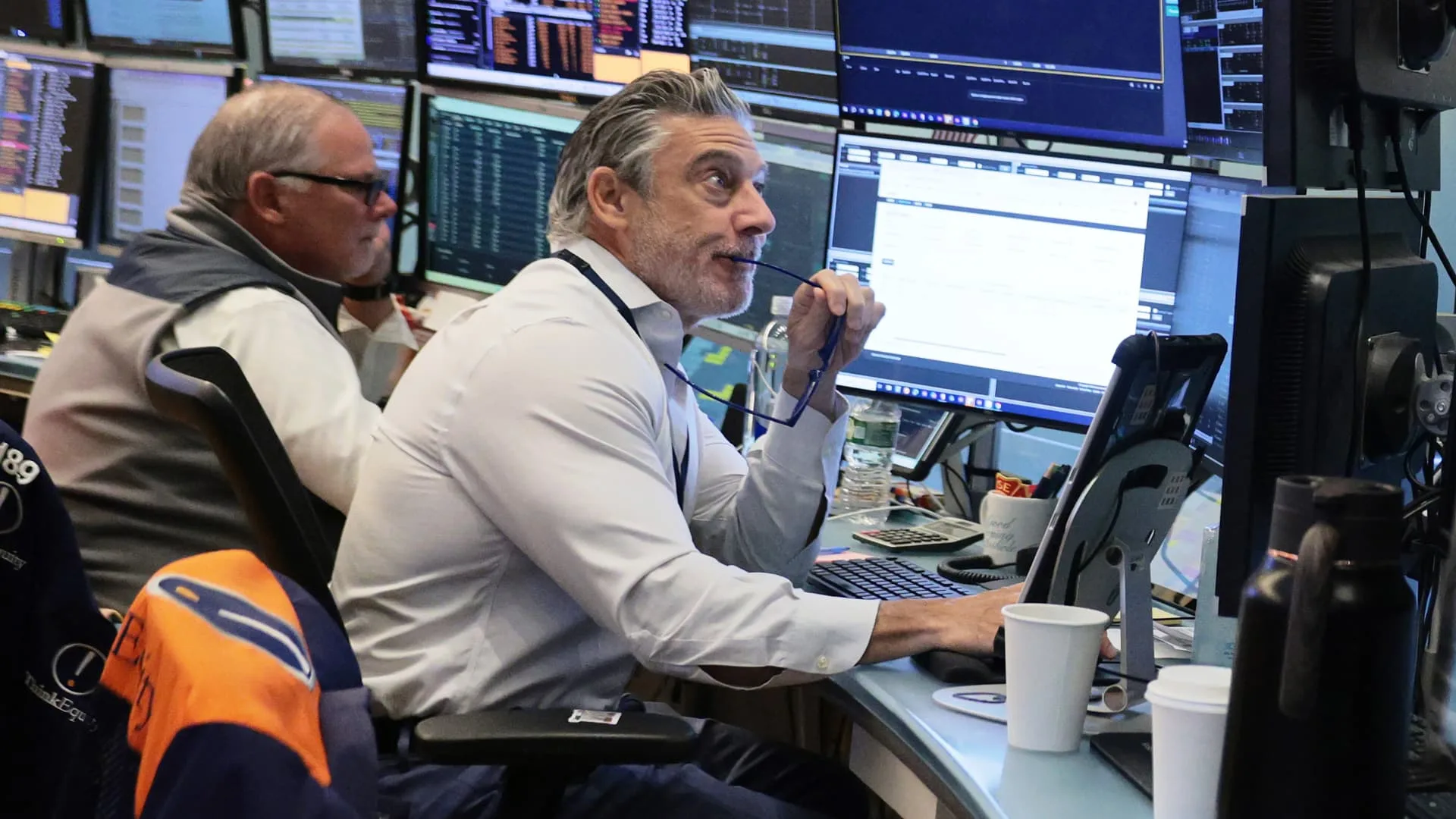


U.S. stocks closed the week with a mixed performance on Friday as the Dow Jones Industrial Average slipped, while the S&P 500 and Nasdaq Composite posted modest gains. Investor sentiment was pressured by rising U.S. Treasury yields, elevated oil prices and the Federal Reserve’s first rate increase in three years.
The 30-stock Dow fell 95.40 points, or 0.18%, to close at 51,682.64. The S&P 500 added 0.17% to finish at 7,650.50, while the Nasdaq Composite rose 0.39% to 26,522.55.
In the bond market, the 10-year Treasury yield, which had already moved above 5% earlier in the week and reached its highest level since July 2007, briefly climbed back above that threshold on Friday. It was last up nearly 6 basis points at 5.006%.
Oil prices were little changed on the week overall but remained above $100 a barrel. West Texas Intermediate crude futures fell 1.58% on Friday to settle at $100.30 a barrel, while Brent crude futures dropped 0.91% to close at $103.87 a barrel.
For the week, the major indexes turned in mixed results. The Dow posted its third straight weekly decline, falling 1.7% for its worst weekly performance since March. The S&P 500 slipped about 0.1%, while the tech-heavy Nasdaq was the only major index to gain, up 0.7%.
Markets had rebounded on Thursday after the Federal Reserve raised rates by a quarter percentage point and signaled that at least one more increase may come this year. Even so, the rally in technology shares suggested investors remain willing to focus on the artificial intelligence theme as a driver of future corporate profit growth.
Scott Welch, chief investment officer at Certuity, said the Fed’s move removed some uncertainty from the market, but he does not view the latest increase as a one-off step. In his view, the rate-hike cycle is only beginning and could weigh on equities in the coming months.
Welch said he expects the Federal Reserve to raise rates at least once more in 2026 and probably another one or two times in 2027. Under that scenario, he expects upward pressure on Treasury yields to continue and oil prices to stay elevated over the next few months.
He added that he is not bearish on the market overall, but expects a slower, more grinding environment rather than a strong rally through the end of the year.
Financial stocks lagged the broader market
Among sectors, financials underperformed this week. The SPDR Financials Sector Fund (XLF) fell more than 2% and is on track for its biggest weekly loss since March. The fund has now declined for four straight trading days.
Goldman Sachs and Bank of America were among the biggest drags, with both stocks down around 8% for the week. Coinbase and FactSet helped offset some of the weakness, rising more than 11% and 9%, respectively.
Investor sentiment turned more cautious
Market sentiment also deteriorated. According to the latest weekly survey from the American Association of Individual Investors, about 53% of individual investors were bearish on the six-month outlook for stocks. That was up roughly 14 percentage points from a week earlier and marked the highest level of pessimism since May of last year.
Less than 29% of respondents described themselves as bullish, the lowest reading in about a year. Peter Boockvar, investment chief at One Point BFG Wealth Partners, said such an extreme swing in one direction is worth watching closely.
Bitcoin climbed back above $80,000
In crypto markets, Bitcoin rose more than 5% to trade above $80,000 for the first time since Sept. 7. The move was supported by optimism after the Securities and Exchange Commission cleared a regulatory path for tokenized stocks.
Crypto-linked equities moved higher as well: Coinbase gained 11%, Strategy rose 12%, Robinhood advanced nearly 8%, and Mara Holdings added 9%.
BlackRock and State Street lawsuit could widen
Bloomberg reported that the Department of Justice is considering joining a lawsuit brought by Texas and attorneys general from 12 other Republican states against BlackRock and State Street. The states allege that the firms used their market power to pressure coal producers to cut output in pursuit of climate-related goals, contributing to higher electricity prices.
BlackRock shares fell after the report but later recovered and traded more than 1% higher on Friday. State Street also hit a session low before rebounding somewhat from those levels.



