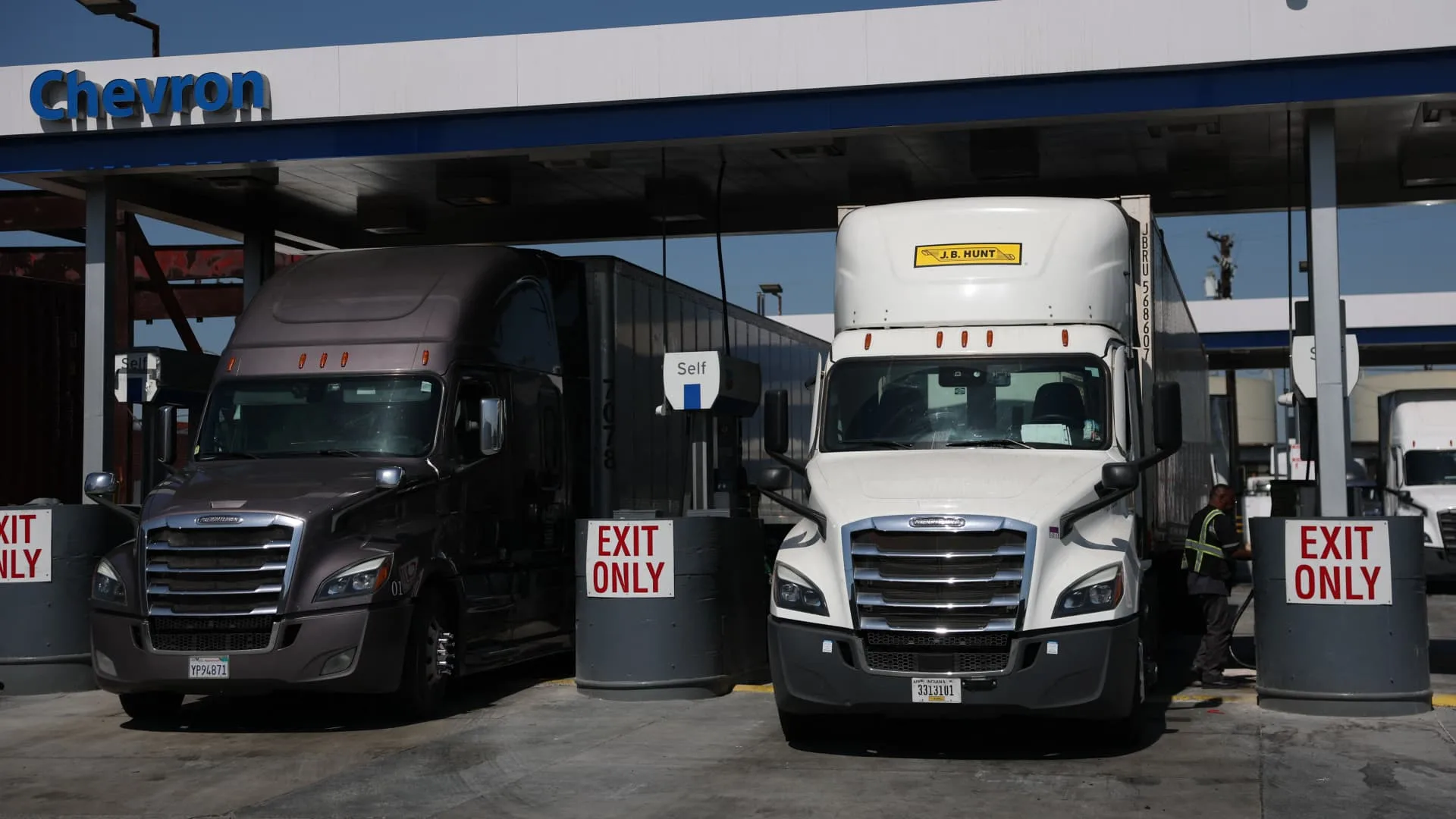
Diesel prices climbed to a record high on Friday as wars linked to Ukraine and Iran knocked refining capacity offline and tightened global fuel supplies. CNBC reports that the surge is adding to inflation concerns because diesel remains one of the most deeply embedded fuels in the economy.
Truckers in the U.S. are now paying an average of $5.85 a gallon, up nearly 60% from $3.71 a gallon in the same period last year. In California, diesel is selling for $7.70 a gallon, almost $2 above the national average.
Again Capital partner John Kilduff said higher diesel prices feed directly into inflation. Speaking to CNBC's “Morning Call,” he said that no matter how much shopping moves online, goods still have to be delivered to homes by trucks running on diesel, making the added cost unavoidable.
Rapidan Energy founder Bob McNally said diesel is more embedded in the economy than gasoline. On CNBC's “Squawk on the Street” on Aug. 17, he said the fuel is used in transportation, heating, agriculture and industrial activity, making it a key macro fuel to watch.
According to CNBC, prices are rising as Ukraine strikes Russian refineries, pushing Moscow to ban diesel exports. At the same time, refining capacity in the Middle East has also been taken offline due to Iran's attacks on tankers in the Strait of Hormuz and on regional energy infrastructure.
Valero Chief Operating Officer Gary Simmons said on the U.S. refiner's July 30 earnings call that the wars have shut down refineries with about 5 million barrels per day of capacity. On Phillips 66's Aug. 5 earnings call, executive vice president for marketing Brian Mandell said refining fundamentals are extremely tight and are getting even tighter because of problems in Russia and the Middle East.
Andy Lipow, president of Lipow Oil Associates, estimated that about 8% of the diesel needed to meet global demand of 28 million barrels per day is currently disrupted. He said Russia's diesel export ban affects about 800,000 barrels per day of supply, while disruptions in the Strait of Hormuz have affected about 1.2 million barrels per day. He also said Iran's Houthi allies knocked out Saudi Arabia's Jizan refinery, which produces about 200,000 barrels per day.
Lipow described diesel as a “stealth tax,” arguing that higher fuel costs are ultimately passed on to consumers through higher prices for goods and services delivered by truck and rail.