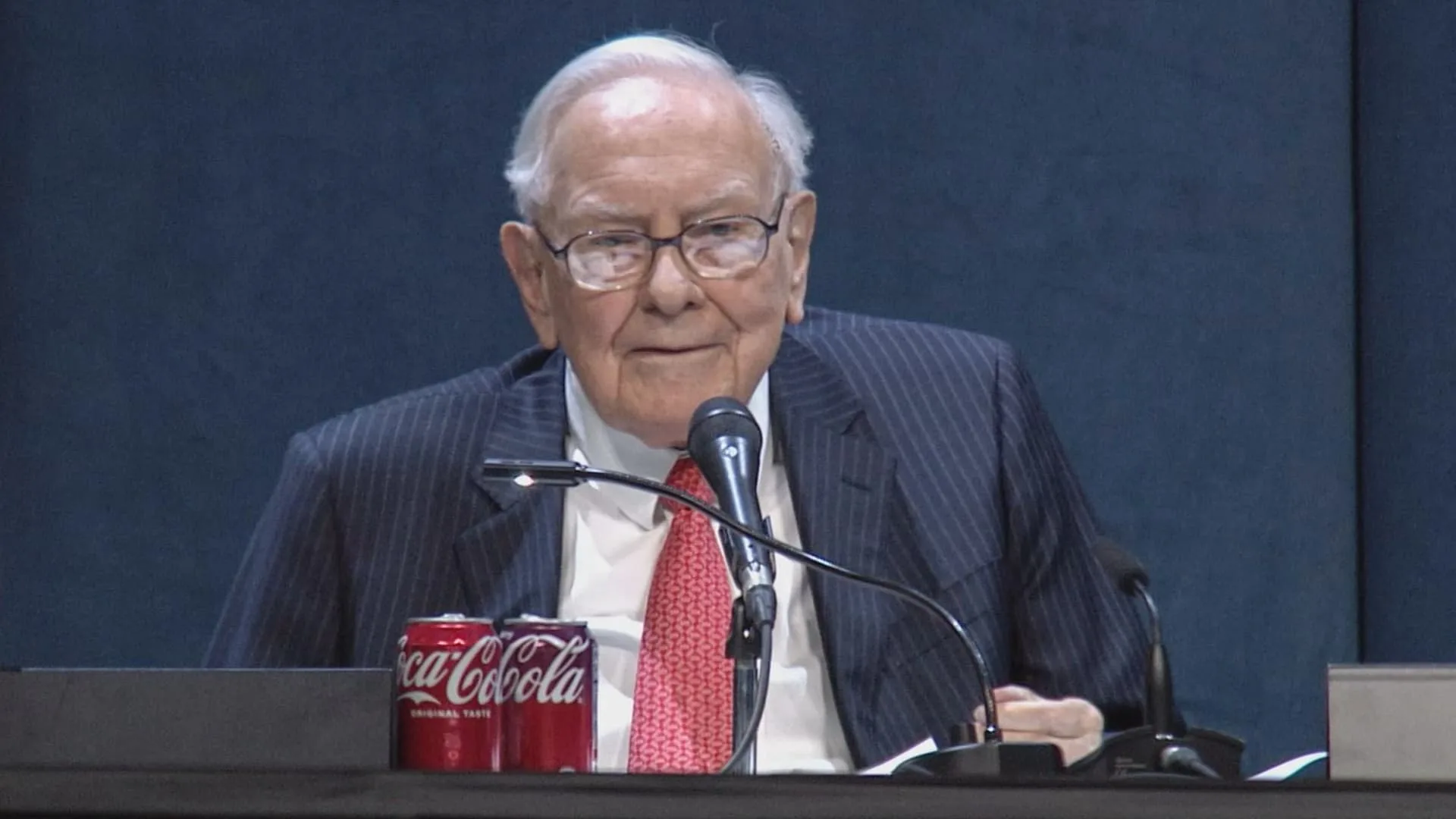
One of Warren Buffett’s biggest acquisitions, long viewed as a troubled deal, is drawing fresh attention as its value appears to be rising sharply. The focus is Precision Castparts, which Berkshire Hathaway bought for $37.2 billion in 2016 and which investors are now reassessing after GE Aerospace’s latest acquisition.
Six years ago, Berkshire Hathaway took an $11 billion write-down on the business, and Buffett acknowledged in his annual shareholder letter that he had paid “too much” for the company. He said Precision Castparts was still a strong business and the best in its field, but Berkshire had been overly optimistic about its earnings potential, especially after the aerospace downturn during the Covid pandemic.
Even when the transaction was first announced, Buffett said Berkshire was paying a very high multiple, while stressing his confidence in then-CEO Mark Donegan and in the company’s long-term prospects.
That confidence now appears to be paying off. Reuters reported that there is currently a shortage of the complex metal components made by Precision Castparts. Those parts are critical for jet engine turbine blades and are also used in natural gas turbines, where demand is increasing because of power needs from artificial intelligence data centers.
This week, GE Aerospace said it would acquire Consolidated Precision Products for $11.75 billion. Consolidated Precision Products is one of the few competitors to Precision Castparts. Barron’s described the price as expensive, valuing the deal at 26 times projected 2027 EBITDA.
Using the same multiple, Barron’s estimated that Precision Castparts could now be worth about $100 billion. That is well above the publication’s earlier estimate of $60 billion to $75 billion and nearly three times Berkshire’s 2016 purchase price. Barron’s said the unit has probably become one of Berkshire Hathaway’s more valuable divisions.
At the same time, Barron’s columnist Andrew Bary argued that Berkshire and its share price are not getting much credit for that increase in value. In his view, one reason is that Greg Abel, like Buffett before him, does not hold analyst calls or investor events that might highlight the unit’s performance.
Berkshire’s stock performance still presents a mixed picture. This week, both Class A and Class B shares rose almost 0.9%, while the S&P 500 fell 0.8%. Even so, Berkshire’s Class B shares remain more than 10 percentage points behind the S&P 500 so far this year.





