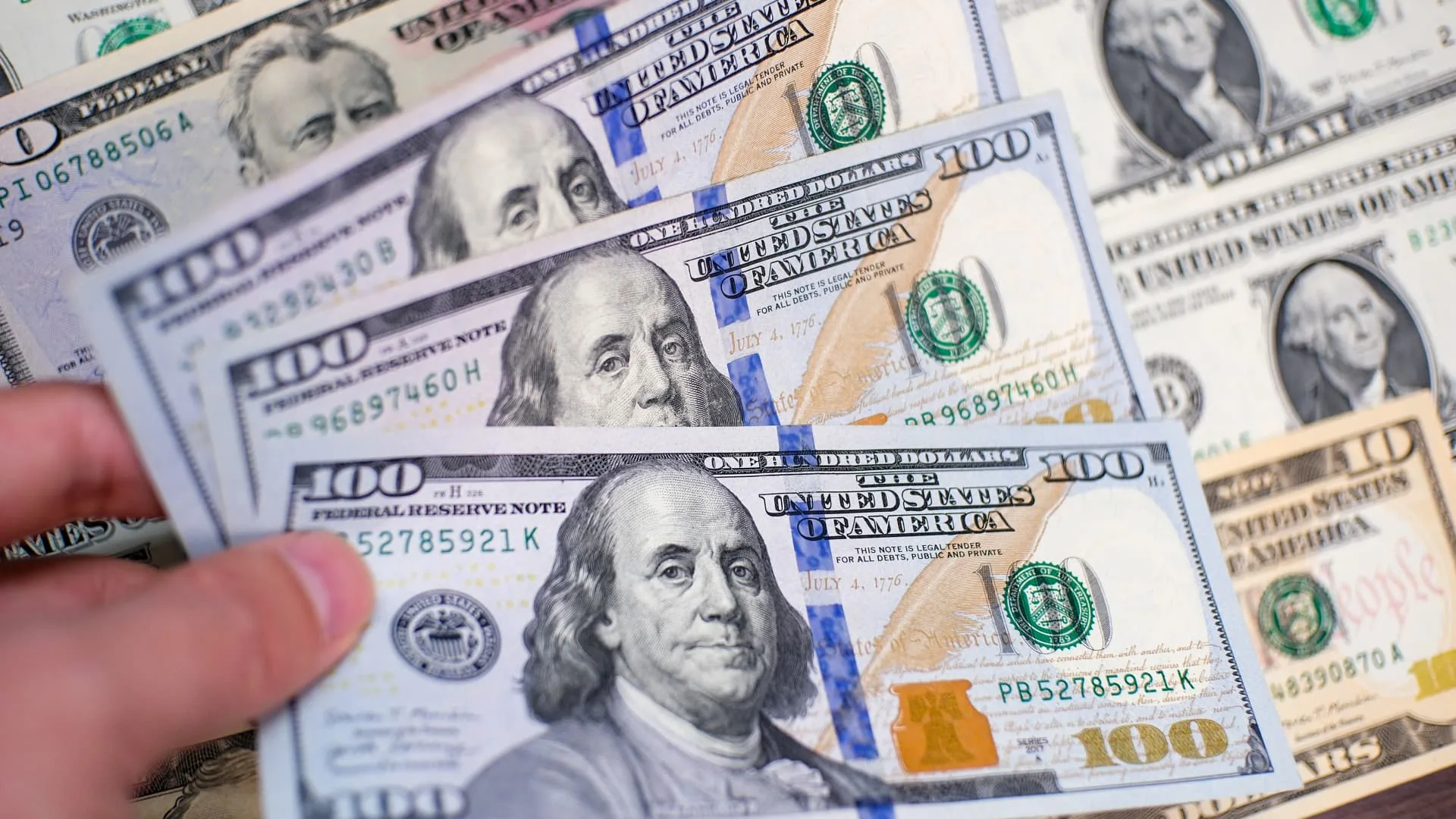
At the latest BRICS summit, the bloc’s leaders again argued for broader use of local currencies in trade among members. The push is being framed as a way to reduce dependence on the U.S. dollar amid geopolitical tensions, economic sanctions and U.S. tariff policy.
But experts cited by CNBC say the gap between rhetoric and execution remains wide. In their view, BRICS still lacks the unified institutional, financial and macroeconomic infrastructure that would be needed to challenge the dollar’s global liquidity, credibility and acceptance.
The U.S. currency continues to dominate international transactions. Bank of International Settlements data showed that, as of April, the dollar accounted for 89% of the foreign-exchange market, up 1 percentage point from a year earlier. The euro stood at 29% and the yen at 17%. Oil and gold, two of the world’s most traded commodities, are also largely priced in dollars.
South African President Cyril Ramaphosa told the BRICS summit that the bloc should move ahead with greater use of local currencies, stronger cross-border payment systems and deeper financial interconnectivity. Meanwhile, fellow members Iran and Russia, whose ability to trade in dollars has been constrained by U.S. sanctions, called for the development of BRICS payment, settlement and depository infrastructure.
Iranian President Masoud Pezeshkian said the current financial system is “vulnerable to political shocks” because it is concentrated in a limited number of currencies. Even so, analysts say the biggest barriers remain weak financial and macroeconomic integration, large trade imbalances and deep distrust between key members, especially China and India.
Incremental steps
De-dollarization is most often discussed in the BRICS context. U.S. President Donald Trump has previously threatened the bloc with tariffs if it moved away from the dollar. He said BRICS countries could face 100% tariffs if they created a new currency or backed another one to replace the U.S. dollar.
At the same time, BRICS has considerable economic weight. A March report by the United Nations Trade and Development said the bloc’s 10 members accounted for 27% of world output, 24% of merchandise exports and 22% of foreign direct investment inflows in 2024. But the same report noted that intra-BRICS trade represented only about 5% of world trade as of 2024.
Despite repeated calls to expand trade in national currencies, concrete action has been limited. The 2026 BRICS declaration did not mention a common currency or provide firmer details on settlements and investment flows in local currencies. Instead, the BRICS Payment Task Force was asked to work on “practical solutions for cross-border payments.”
According to Reema Bhattacharya, head of Asia research at Verisk Maplecroft, Russia and China now settle close to 90% of their trade in rubles and yuan. But she said that shift was accelerated by U.S. sanctions after 2022 rather than by any coordinated BRICS policy. She also noted that most BRICS currencies lack deep and liquid markets outside their home economies, discouraging exporters from accepting them and leaving dollar invoicing as the easiest option, especially for commodities.
China-India rivalry
Analysts say competing national interests within BRICS are another major obstacle. Bhattacharya described the China-India rivalry as the single biggest drag on cohesion across the bloc. While both Beijing and New Delhi want greater strategic autonomy from Washington, they remain direct competitors in manufacturing, technology, investment and regional influence.
That tension is reinforced by a widening trade imbalance. Total trade between China and India reached a record $151.1 billion in the year ending March 2026, but New Delhi’s deficit with Beijing also widened to a record $112.16 billion from $99.21 billion.
At the same time, India’s goods and services trade with the U.S. was about $239 billion in 2025. India recorded a goods trade surplus of $58.4 billion and a services trade surplus of $4.7 billion with the U.S. Against that backdrop, experts said moving away from the dollar does not clearly work in India’s favor, particularly given its large deficits with China and other countries.
Krishna Bhimavarapu, APAC economist at State Street Investment Management, said BRICS members also have sharply different priorities. Russia and Iran want to cut dollar exposure because of sanctions risk, China wants wider international use of the renminbi while maintaining capital controls, and India supports greater use of the rupee. In his view, no BRICS-led alternative currently matches the dollar in liquidity, market depth, credibility or global acceptance.





