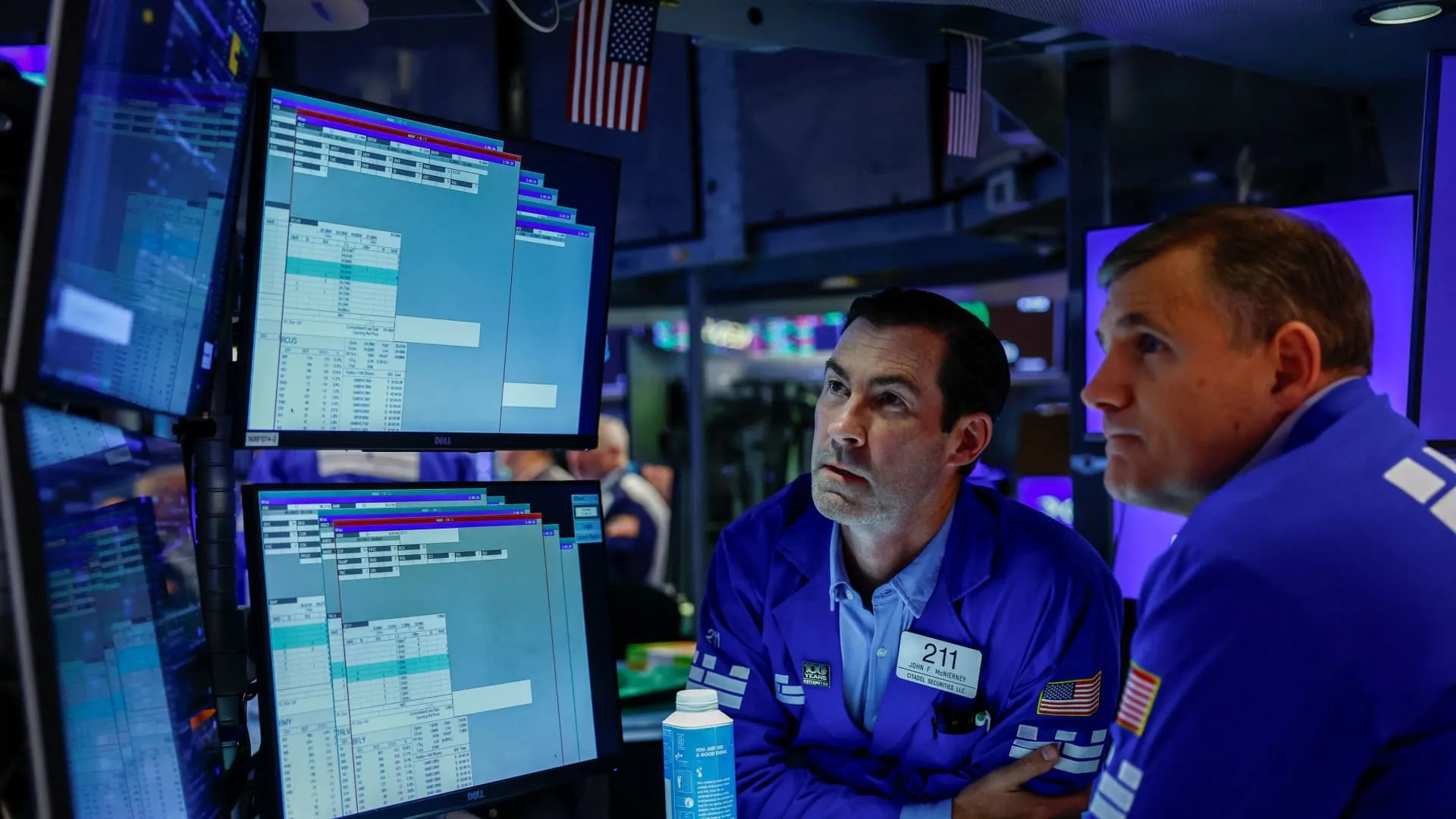
U.S. stocks faced several sources of pressure last week, including a fresh interest-rate increase from the Federal Reserve, oil-driven inflation concerns and a heated debate over artificial intelligence safety. Against that backdrop, the Dow Jones Industrial Average fell 1.7%, marking its third consecutive losing week.
The S&P 500 slipped just 0.08%, while the Nasdaq rose 0.7% as investors returned to AI-linked stocks after an early-week sell-off. Within the Dow, banks took the heaviest hit: Goldman Sachs lost nearly 8.5% over the week, while Wells Fargo, BNY and Capital One also posted sharp declines.
The Fed made stock picking harder
On Wednesday, the Fed raised rates by a quarter percentage point for the first time in three years, taking its benchmark range to 3.75% to 4%. After the meeting, Fed Chairman Kevin Warsh said inflation was “too high and has been for too long,” adding that the move should help bring price growth back to the central bank’s 2% target.
Although the increase had been widely expected, Warsh’s hawkish tone added to Wednesday’s market weakness. Stocks recovered some ground on Thursday and were little changed on Friday. Higher rates typically make borrowing more expensive, slow economic activity and make bonds more competitive with equities.
The 10-year Treasury yield ended the week back at 5% after climbing above 5.04% on Tuesday during the oil rally, a level close to two-decade highs. CNBC’s Investing Club argued that this does not mean investors should abandon stocks altogether, but it does make stock selection more important. In that context, BNY was presented as a relatively defensive holding because roughly 70% of its revenue comes from fees rather than lending activity.
AI safety fears shook the sector, but not the broader thesis
Artificial intelligence shares came under pressure early in the week as the industry’s debate over AI safety intensified. The discussion was reignited by Anthropic CEO Dario Amodei’s Sept. 12 essay calling for a slowdown in frontier model development. His concerns were quickly echoed by OpenAI’s Sam Altman and SpaceX’s Elon Musk.
On the other side, Nvidia CEO Jensen Huang and other industry figures pushed back against coordinated restrictions across the sector, arguing that companies can build their own safeguards. Speaking with Jim Cramer, Huang said firms should create products, test them thoroughly and keep refining them until they are ready for release.
The uncertainty initially hit AI-related names hard. Intel and Micron both fell a little more than 5% on Monday, while data-center plays GE Vernova and Eaton dropped about 9% and 8%, respectively. But the group recovered much of those losses later in the week as investors became less worried that the safety debate would materially slow the pace of AI development and spending.
Cybersecurity stocks, meanwhile, benefited from the same concerns. More powerful AI tools create new risks for companies, reinforcing the case for higher spending on digital protection. CrowdStrike and Palo Alto Networks were among the week’s top performers, rising almost 15% and 10%, respectively.
Salesforce pushes back against the software bear case
At its annual Dreamforce conference, Salesforce sought to convince investors that AI is becoming an opportunity for enterprise software rather than a threat. Earlier this year, software stocks were hit by fears of a so-called “SaaSpocalypse,” but the company’s latest announcements, together with strong earnings last month, have started to challenge that view.
During Investor Day at Dreamforce, Salesforce projected more than $63 billion in revenue for fiscal year 2030, above the $59.2 billion expected by analysts. The company also unveiled AIforce, a live interface that works across the Salesforce ecosystem, and Koa, its first reasoning model developed with Nvidia.
According to CNBC’s report, Salesforce’s main message was that AI can help clients make better use of their data across marketing, customer service, commerce and sales platforms. Jim Cramer said the market still is not giving the company enough credit for that shift, describing the stock as “way too cheap” at roughly 15 times forward earnings. Salesforce has also repurchased a cumulative $60 billion of its own shares, taking advantage of this year’s weakness.





