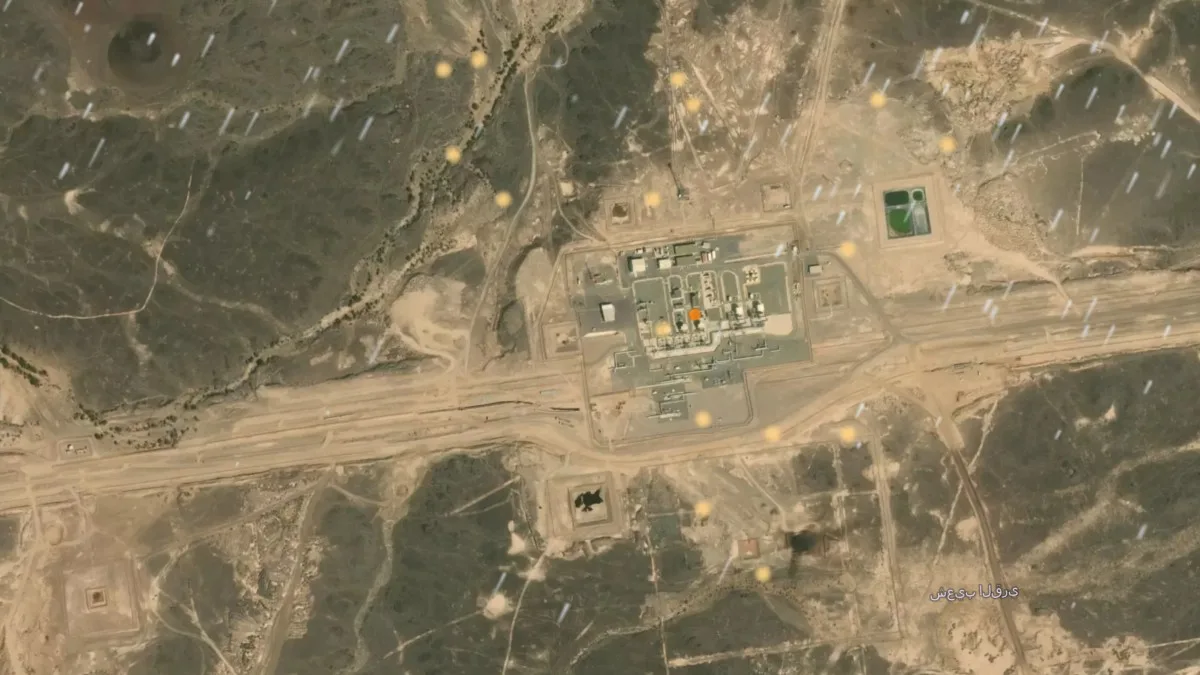

Saudi Arabia’s strategically important East-West oil pipeline system was hit on Thursday, with several pumping stations along the route struck, CNN reported, citing two U.S. officials familiar with the matter. The incident could affect one of the kingdom’s most important crude export corridors.
The confirmation followed earlier signs from satellite data. According to the report, NASA FIRMS detected several large fires near the East-West pipeline corridor, while Sentinel-3 imagery appeared to show a massive plume of black smoke stretching across western Saudi Arabia.
CNN said an initial U.S. assessment found that pumping stations located alongside the pipeline had been hit by projectiles. Satellite images obtained by the broadcaster were said to show extensive fire damage at a pumping station near Al Mesba'ah, while another image from Thursday showed fire and thick black smoke at a pumping station near Al Dhekra.
One U.S. official said the attack involved drones launched from Iraq, although responsibility for the strikes has not yet been established. Saudi Aramco and the Saudi government have not publicly commented on the incident.
It also remains unclear whether the East-West trunk pipeline itself was damaged and how long repairs to the affected pumping infrastructure could take. That distinction matters for oil markets because pumping stations can potentially be repaired much faster than a ruptured main pipeline.
The East-West pipeline has become particularly important since the outbreak of the U.S.-Iran war and the effective closure of the Strait of Hormuz. Saudi Arabia has been rerouting roughly 5 million barrels per day through the system toward Yanbu on the Red Sea. The pipeline’s total pumping capacity is around 7 million bpd. After attacks in April that temporarily knocked out about 700,000 bpd, the kingdom had previously restored the system to full capacity.
The latest strike comes as Saudi energy infrastructure is facing pressure on several fronts. Earlier this week, the Saudi Energy Ministry confirmed attacks on multiple energy facilities in the south of the kingdom, causing fires and temporary operational disruptions.
Saudi Arabia has also previously accused Iran-backed militias of launching drones from Iraqi territory against its oil infrastructure. In July, Riyadh said drones targeting petroleum facilities in eastern Saudi Arabia and Riyadh had originated in Iraq.
If the damage to East-West proves significant, Saudi Arabia’s main alternative crude export route could come under unprecedented strain at a time when disruption in Hormuz has intensified and Houthi forces are threatening shipping through the Red Sea.



