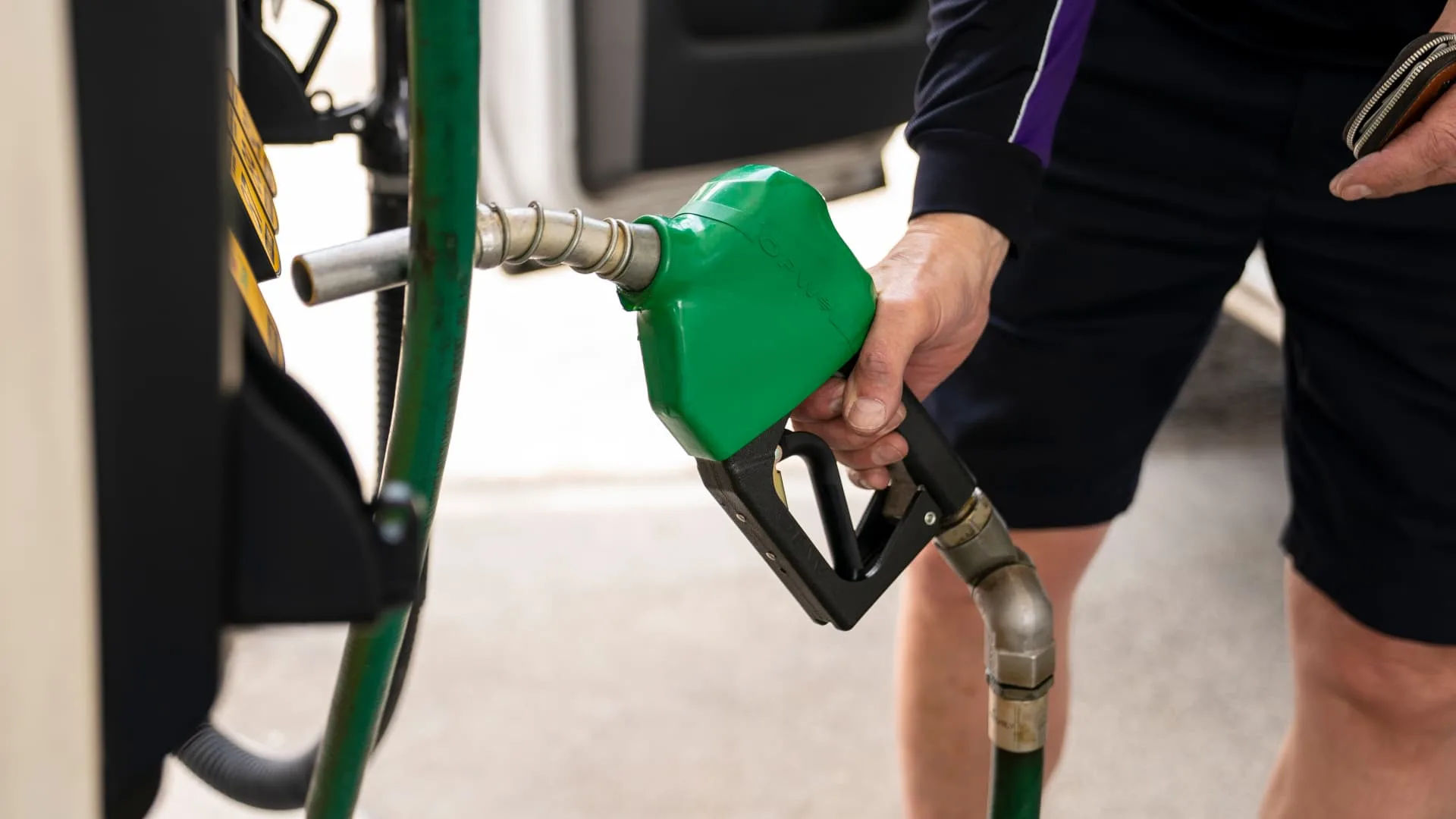
Average U.S. retail diesel prices rose above $6 per gallon for the first time on Friday, reaching $6.0556, according to AAA data. CNBC reported that the market is reacting to fuel supply disruptions linked to the wars involving Ukraine and Iran.
Compared with the same period last year, truckers and farmers are paying about 63% more to fill their semis and tractors. In California, the largest agricultural state in the U.S., diesel has climbed to $7.9827 per gallon.
The increase comes as crude oil prices have surged following a sharp escalation in fighting between the U.S. and Iran this month. U.S. crude futures topped $100 a barrel on Thursday for the first time since May. The contract is up about 20% in September.
Rapidan Energy president Bob McNally told CNBC that diesel is the economy’s “real lifeblood,” even if consumers tend to focus more on gasoline prices. Higher diesel costs are passed through into food, consumer goods and energy bills because the fuel powers trucks, trains and ships, as well as farm equipment and, in some cases, home heating and electricity generation.
GasBuddy head of petroleum analysis Patrick De Haan warned that diesel at these levels could become a “silent killer” for the U.S. economy. He said gasoline prices have also never been this high this late in the year, with pump prices earlier this week reaching a Labor Day record of $4.15 per gallon. Americans are spending about $700 million more per day on gasoline and diesel than they were a year ago, according to the analyst.
Supply pressure has intensified after Kyiv struck Russian refineries, prompting Moscow to ban diesel exports. At the same time, Iran and its allied Houthi militants in Yemen have hit the refineries of U.S. Gulf allies, while fuel exports through the Strait of Hormuz have been constrained by Iranian attacks on tankers.
Valero Chief Operating Officer Gary Simmons said on the refiner’s July 30 earnings call that wars in Eastern Europe and the Middle East have shut down refining capacity of about 5 million barrels per day. Andy Lipow, president of Lipow Oil Associates, said the world has lost nearly 8% of its diesel supply, with little spare refining capacity available to offset the shortfall.
Helima Croft, head of global commodity strategy at RBC Capital Markets, told CNBC that rising diesel prices pose an “enormous challenge” for the Trump administration. She said U.S. refineries are running at 98% utilization, leaving effectively no spare capacity.





