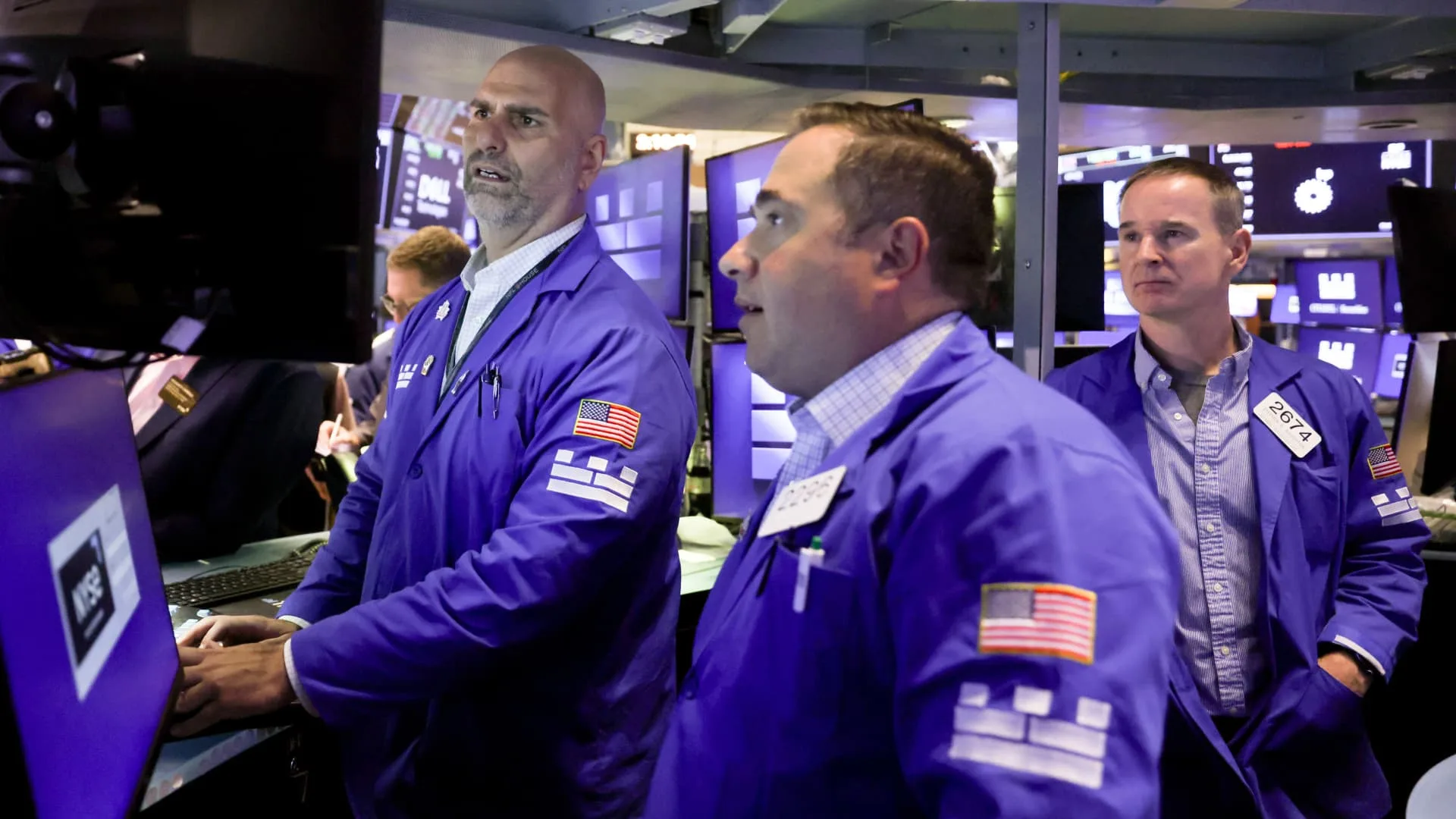

U.S. stocks moved unevenly on Thursday as investors weighed another jump in Treasury yields against a Reuters report that U.S. and Iranian negotiators in New York are discussing a possible agreement to reopen the Hormuz Strait.
The S&P 500 was little changed, the Nasdaq Composite slipped 0.1%, and the Dow Jones Industrial Average fell 204 points, or 0.4%. Earlier in the session, the main indexes had been under heavier pressure.
Reuters, citing sources, said the talks could lead to a phased de-escalation of the conflict in the Middle East, with Iran reopening the Hormuz Strait and the U.S. lifting its economic blockade on Tehran. That report lent some support to equities, though the market reaction remained restrained.
Oil prices rose on the news but came off their session highs. Brent crude gained 2.5% to $105.69 a barrel, while West Texas Intermediate added 2.3% to $94.30.
At the same time, pressure in the U.S. government bond market persisted. The 30-year Treasury bond yield touched 5.446%, its highest level since June 2004. The benchmark 10-year Treasury note yield, which is closely tied to mortgage rates, climbed to 5.15%, near levels last seen in July 2007. The 2-year note yield was little changed on the day after reaching a 2023 high earlier in the week.
As yields rose, so did expectations for further tightening by the Federal Reserve. According to the CME FedWatch tool, futures markets now imply a roughly 66% chance that the Fed will raise its key rate again in October, up from about 55% a week earlier.
Higher bond yields typically add pressure to household finances by lifting borrowing costs at a time when consumers are already facing higher fuel expenses. Still, Wednesday’s S&P Global purchasing managers' indexes for manufacturing and services suggested that U.S. business activity remains strong.
Jason Stephens, founder of Evertern Wealth, told CNBC that the economy continues to show “remarkable resilience,” but that strength is also keeping inflation concerns alive and pushing interest rates higher. In his view, the bond market may be the most important market to watch right now.
Stephens argued that the bigger issue is no longer whether the Federal Reserve hikes rates again, but how long rates stay elevated and what a 10-year Treasury yield above 5% ultimately does to housing, corporate borrowing, private markets, and equity valuations. He also said energy remains one of the biggest swing factors because any sharp move in oil feeds directly into the inflation and rates debate.
That leaves markets facing what he called an “interesting contradiction”: investors are worried about rates not because the economy is breaking down, but because the data remain strong.
Among individual names, Oracle was one of the session’s notable laggards. Its shares fell more than 4% after Bloomberg News reported, citing sources, that the company had invoked force majeure protections tied to a data center project under construction in New Mexico in an effort to shield itself from extra costs if the project is delayed. Oracle said Project Jupiter remains on schedule.
Single-stock moves and policy signals
Other companies also drew attention. Charles River Laboratories rose 5% after reaffirming its fiscal 2026 guidance. Nebius Group climbed more than 6% after Bank of America raised its revenue expectations for 2026, 2027 and 2028 and reiterated a buy rating with a $310 price target.
On monetary policy, Philadelphia Federal Reserve President Anna Paulson said additional, though “modest,” tightening may still be needed to return inflation to the 2% target. She said last week’s quarter-point increase, which took the key funds rate to a 3.75%-4% target range, brought policy closer to where it needs to be, while future moves will depend on incoming data.
Separately, Switzerland’s central bank kept its key interest rate at 0% on Thursday, defying the tightening cycle under way across many other major economies.





